
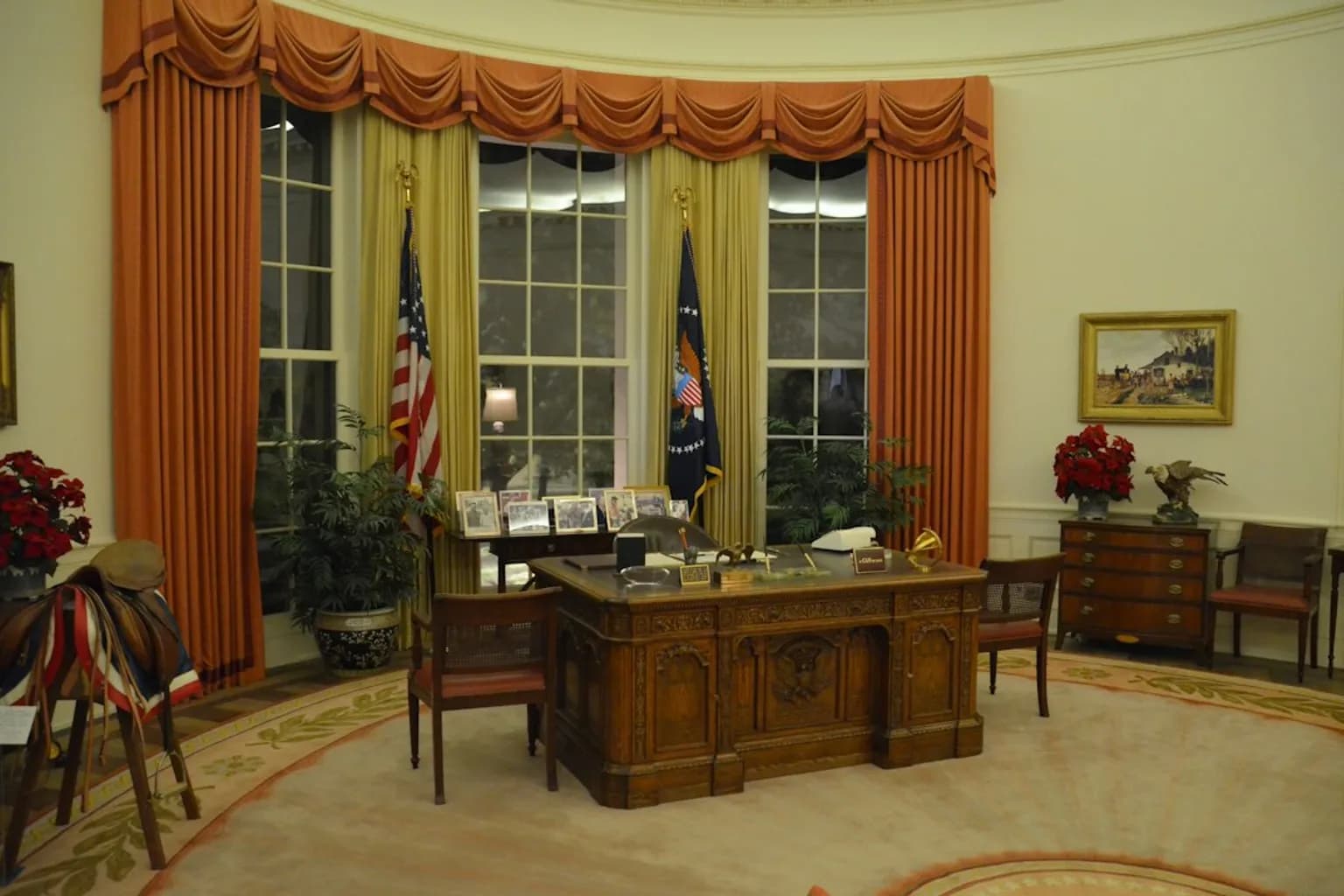
Future presidents will be able to redecorate the Oval Office and Cabinet Room, or reverse Donald Trump’s designation of them as national monuments.
Trump signed the proclamation on Thursday to preserve the two rooms as a national monument, presenting the move as protection for spaces he called “landmarks for the ages”.
A red baseball cap bearing the word “VETO” sat on the Resolute Desk in the Oval Office as Trump signed the document.
“will not be allowed to be touched by anybody, destroyed, ripped down by stupid people, in order to build something in a slightly different shape,” Trump said. “We like the Oval Office, and it's a symbol, like the White House itself.”
Trump has remade both rooms since returning to the White House, filling the Oval Office walls with gold-framed portraits, a copy of the Declaration of Independence and golden accents. New chandeliers were installed in the Cabinet Room, which Trump said addressed “very bad lighting”.
His changes have reached beyond the presidential workspace. Trump demolished the East Wing to make room for a ballroom, and has made changes to the Kennedy Center, a public golf course and local parks in Washington DC.
He has faced several lawsuits alleging that his Washington beautification projects went ahead without necessary approval.
Last month, Trump said the Secret Service had proposed demolishing the Oval Office and constructing a more secure replacement. “My a–, you can't build a new one,” he said he replied.
The proclamation directs the Interior secretary to manage the monument. It calls for “documentation, review, and consideration of alternatives before any action that would substantially alter or demolish the monument”.
Trump said a future president seeking to change the room’s defining shape would need to go to Congress. “If they want to say, Let's not have oval any more, let's make it square, what happens is they have to go back to Congress,” he said.
Its terms preserve broad authority for a president over the rooms’ appearance and operation. The document says nothing in it will “restrict the President's authority to redecorate the monument, select furnishings, or make ordinary operational and security modifications that do not substantially impair the monument's historic structure or architectural character”.
That would allow successors to remove Trump’s gold trim and paintings so long as they did not substantially alter the structure. The designation itself could also be rolled back, as Trump has reversed national monument designations made by predecessors.
On Thursday, Connecticut Senator Richard Blumenthal sent letters to known donors to Trump’s ballroom. Blumenthal, the top Democrat on the Homeland Security Committee’s Permanent Subcommittee on Investigations, demanded information and warned that donors could face “alternative measures to obtain compliance”.


Comments (0)