
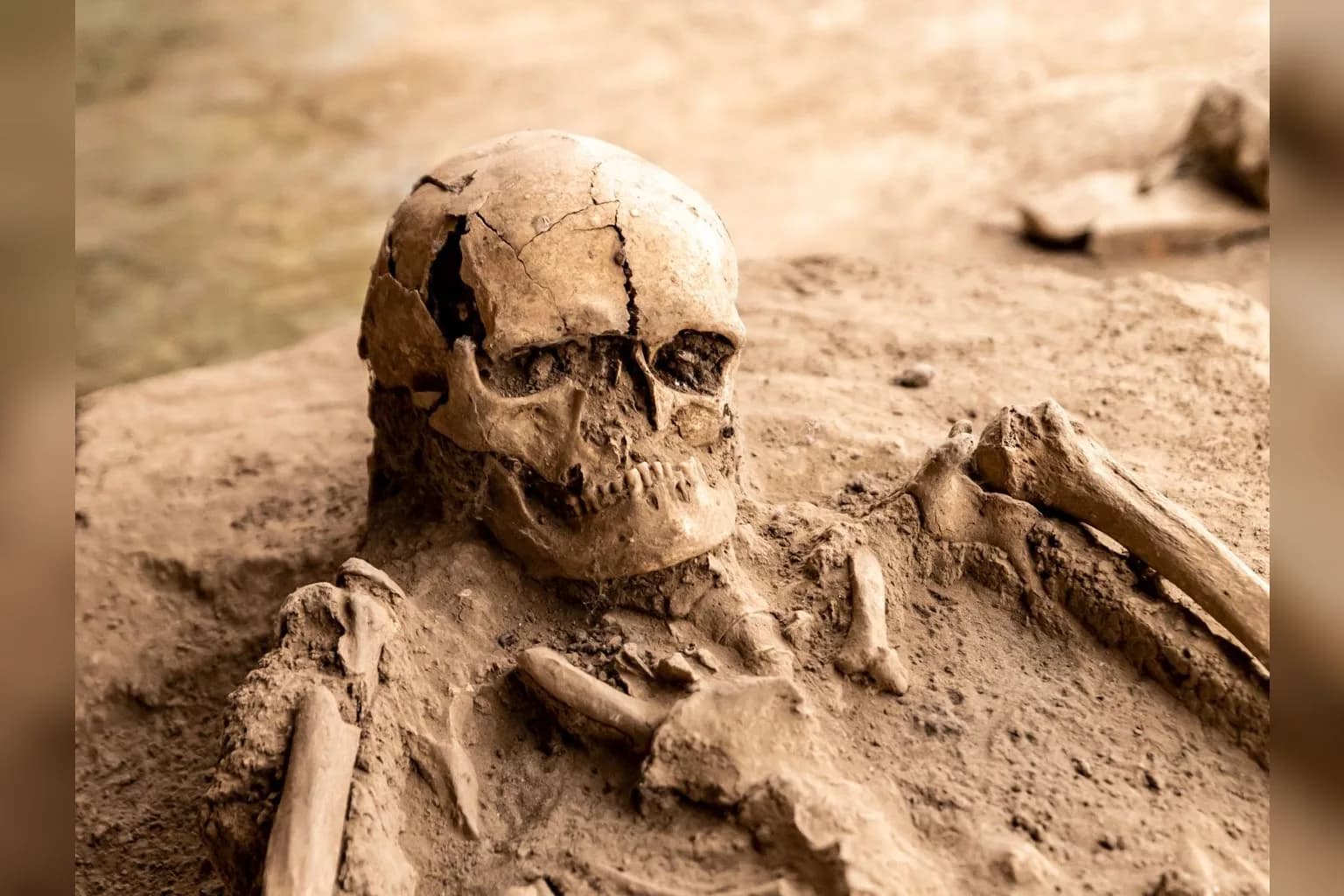
Gino Caspari, an archaeologist at the Max Planck Institute of Geoanthropology in Jena, Germany, and the University of Bern, led a study of a 2,800-year-old Siberian tomb where cannabis seeds lay among the dead and preserved hair carried chemical traces of the drug. “The molecular traces in the hair and the cannabis seeds come from the same grave and suggest that cannabis was used for its intoxicating properties,” he said.
The grave is the Tunnug 1 royal burial mound in the Uyuk Valley of southern Siberia, dating to the Scythian era. The Scythians were nomads known for military skill and horseback archery who ranged across a huge expanse of Eurasia.
Within the mound, archaeologists found four wooden structures containing several log coffins. Six elite people, mostly men and one woman, had been buried there in tree-trunk coffins and wooden structures.
The site also records the violence of the burial rites. Sacrificed horse cadavers covered the mound, while its lining held the remains of sacrificed humans and dozens of sacrificed horses close to the surface.
More than 1,400 cannabis seeds were recovered at Tunnug 1. Almost 1,000 whole seeds came from an excavation trench at the mound’s centre, while others were scattered through the decaying log coffins alongside human remains.
Radiocarbon dating placed the seeds between 800 and 760 B.C., around the start of the 8th century BC and some 2,800 years ago. Their small size suggests they came from wild plants rather than cultivars.
Human hair recovered from the grave included a strikingly preserved braid. Every hair sample tested contained low levels of tetrahydrocannabinol, or THC, and relatively higher levels of cannabinol, which results from THC breaking down.
The combination makes this the first archaeological case in which the plant material and its biomolecular traces have been found in the same setting. It is also the earliest definitive evidence of cannabis being used as a psychoactive drug.
The dating moves the firm evidence for cannabis use as a drug back by 300 years. The previous earliest evidence came from chemical traces on wooden braziers in China, indicating that people were smoking cannabis in funeral rites 2,500 years ago.
The researchers say human sacrifice may have taken place alongside cannabis use in the rituals. They wrote that cannabis “may have been a final send-off” and “a useful agent to calm individuals who were to be included in the rituals.”
The study was led by anthropologists from the Max Planck Institute and published in Science.



Comments (0)