
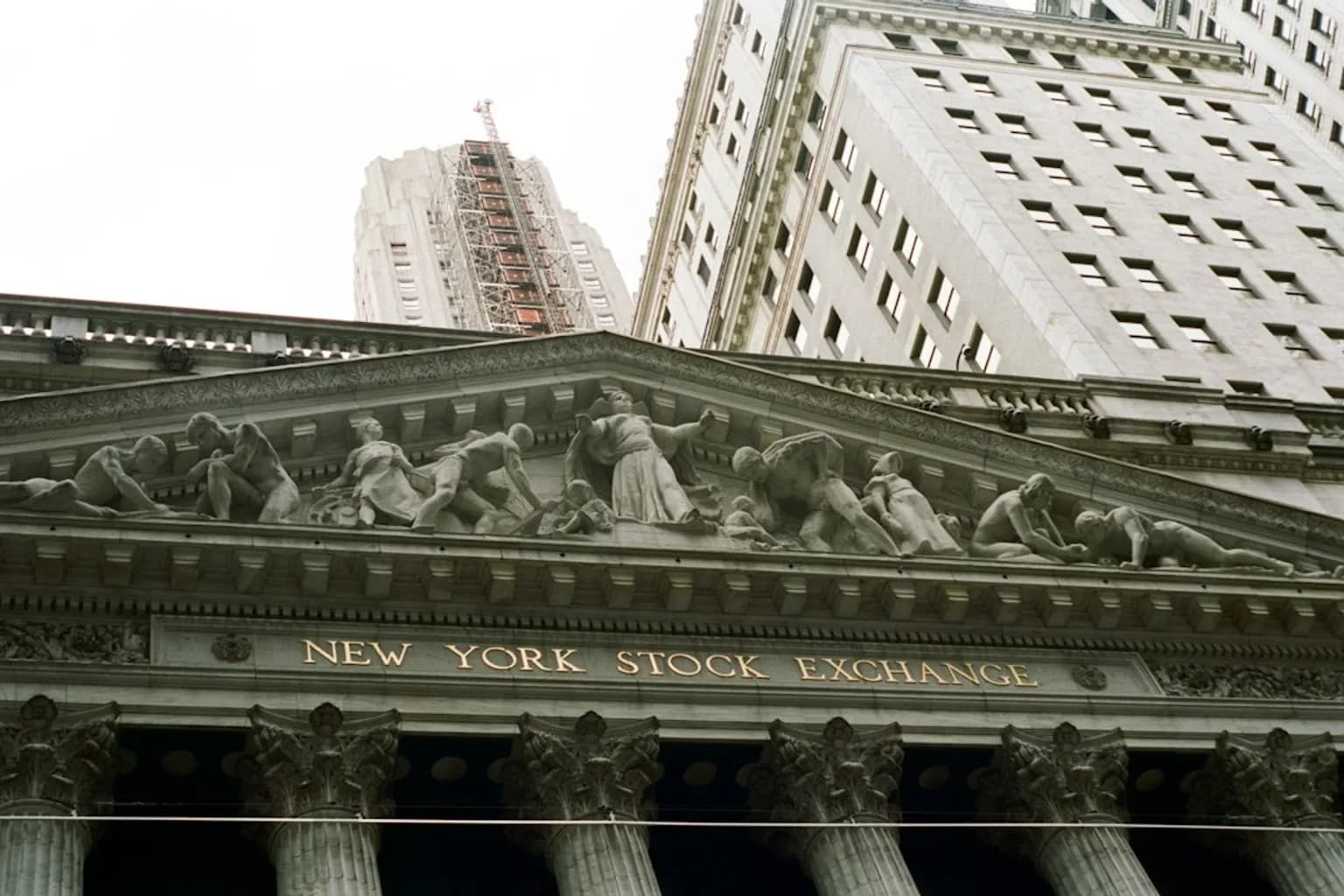
Investors holding AI and semiconductor shares faced steep losses on Thursday, while heavy trading in volatility options pointed to a rush for protection against further market swings.
The reversal followed Democratic victories in Tuesday’s midterms, after campaigns in which slowing AI and the expansion of data centres had become political issues. Investors were reassessing what Democratic majorities could mean for investment in AI infrastructure.
Markets had initially moved the other way. On Wednesday, the Dow Jones Industrial Average rose 2% after the opening bell as Democrats won majorities in the House and Senate. Yet Wednesday was also the first day in market history when the VIX fell by more than 4 points while the VanEck Semiconductor ETF was down 3%, according to OddStats.
Rising electricity prices had helped make the rapid construction of power-hungry data centres an election issue, with some Democrats calling for restrictions or pauses on new projects. Gina Hinojosa, Texas’ Democratic governor-elect, campaigned heavily against data centres and pledged a moratorium on new construction.
At the WSJ Tech conference in Napa, California, on Wednesday evening, Greg Brockman, OpenAI’s president and co-founder, said people had been surprised by the reaction to data centres.
On 5 November, phones rang off the hook on Wall Street as investors sought guidance during the rapid unwinding of the AI trade. About 90 minutes after Thursday’s opening bell, the Cboe Volatility Index rose as much as 5.7 points above 28.
The VIX ultimately jumped 11.75 points to an eight-month high of 28.36, travelling more than 11 points between its intraday low and high. It reached its highest reading since 31 March.
The index’s rise exceeded any single-session move since President Donald Trump’s April 2025 “Liberation Day” announcement of broad import tariffs. Trump said: “The Stock Market suffered one of the Worst Days in History based on the results of the Election”.
Steve Sosnick, chief strategist at Interactive Brokers, said investors were reversing Wednesday’s rally and retreating from the heavily favoured AI trade. A day earlier, he said, investors had felt no need for protection. Now it was: “Oh my god, we need it”.
Jakub Rochlitz, an eToro market analyst, said: “The obvious catalyst for the sharp selloff is that markets are pricing in the midterm results, after yesterday saw markets rise across the board as the political risk premium unwound.”
The S&P 500 was down 3% during Thursday’s session as it headed for its worst decline since April 2025. It closed down 4.36%, while the Dow Jones Industrial Average ended 3.44% lower.
The Nasdaq Composite fell 5.52%, wiping $2.5 trillion from its market value in its worst day since April 2025. Nvidia fell about 9.26%, while AMD and Micron each dropped more than 15%. The Philadelphia Semiconductor Index sank more than 12%.
IREN, Applied Digital and Nebius Group, which operate data centres, each fell more than 14% as investors factored in potential regulation under the new Democratic Congress.
Jim Carroll, a senior wealth adviser and portfolio manager at Ballast Rock Private Wealth in Charleston, South Carolina, said: “The steamroller showed up today.”
Noel Smith, a trader and analyst, said: “My data says to de-risk, but my gut says this is a blowout that could create a dip-buying opportunity.” He added: “I do not see macro stuff causing this, like oil or rates. Those things are relatively unchanged. The tape looks like a liquidation and that's exactly what it is according to what I'm hearing with regards to a hedge fund.”
By midday Thursday, close to 800,000 VIX call options had changed hands, roughly 3.5 times the index’s 30-day average. Leveraged exchange-traded funds were expected to sell about $47 billion of stocks into the close as they rebalanced, the second-largest amount in Nomura’s data going back to July 2006.
A Goldman Sachs prime brokerage report sent to clients said large multi-strategy hedge funds were down “significantly” because of outsized exposure to large AI stocks. John Flood, a partner and managing director in Goldman Sachs’ global banking and markets division, wrote in a note: “Our phones are exploding with asks for colour.”


Comments (0)