
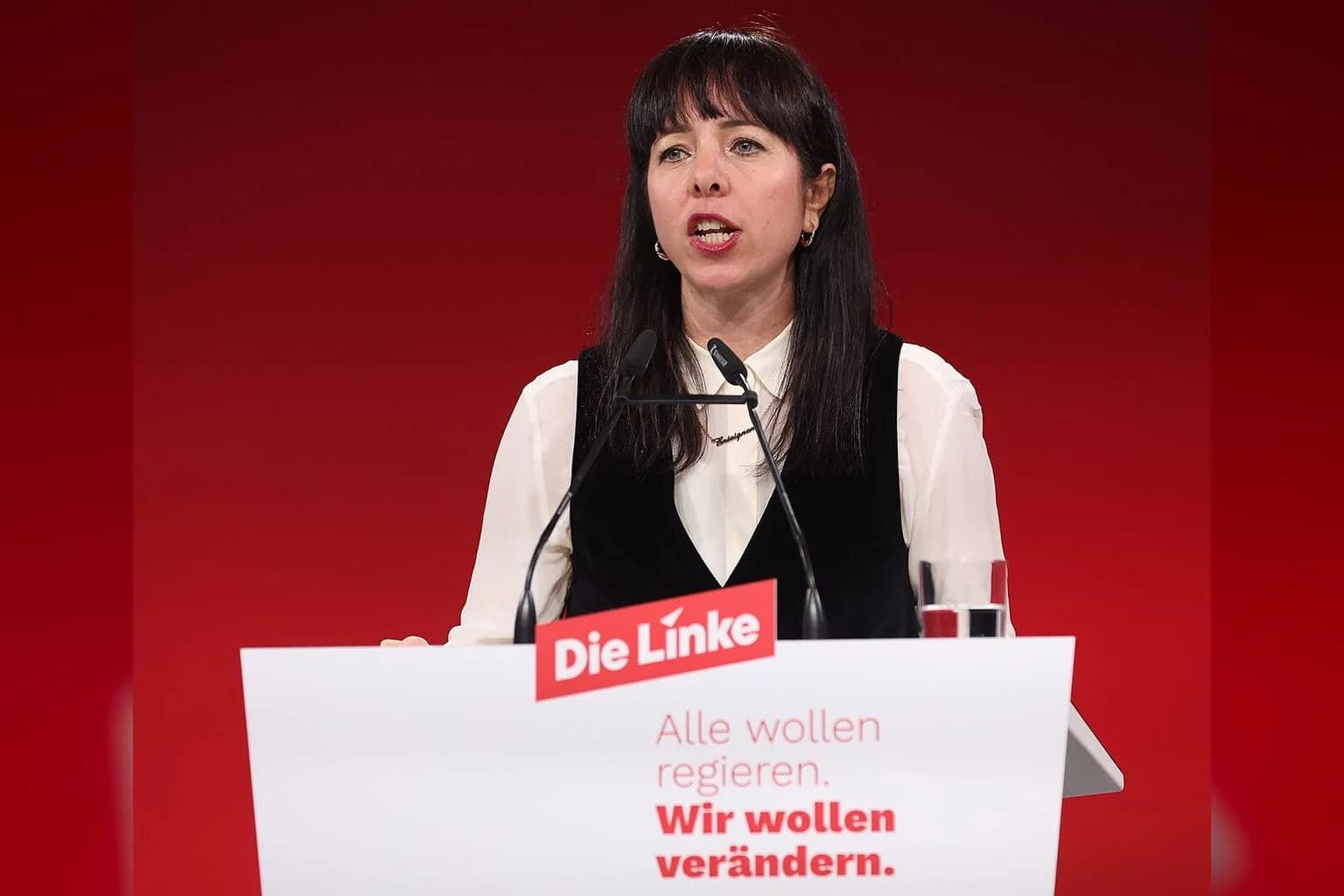
On Monday, Elif Eralp sat for an interview with Der Spiegel in her office at Berlin’s House of Representatives. The 45-year-old parliamentary group leader of Die Linke is the Left Party’s mayoral candidate and is positioned to become Berlin mayor.
The interview later returned to Der Spiegel with Eralp’s private annotations and deletions still visible. Her office had accidentally sent the publication the Word document during the authorisation process.
The episode has brought an unwelcome question into the coalition negotiations that follow the Left Party’s election win: whether a candidate who says that naming people with Hamas connections could endanger her family can assure Berliners of their safety.
The Left Party won the 20 September Berlin election with 25.7% of the vote, and is due to hold coalition talks with the Social Democrats, known as the SPD, and the Greens.
That night, Ibrahim Ibrahim attended the party’s victory celebration in Neukölln and posed for photographs with party members. Ibrahim, a pro-Palestinian activist, has described Yahya Sinwar, the former head of Hamas in Gaza, as a ‘martyr’ and a ‘hero’. Security authorities describe him as a leading figure in VPNK, an umbrella organisation for supporters of the PFLP and Hamas.
Der Spiegel asked Eralp about antisemitism within her party and whether she meant Ibrahim when discussing boundaries crossed at campaign events. Eralp initially answered yes, then sought to remove the exchange from the transcript.
Her annotations set out why. “The LKA said at the time that they recommend never naming specific individuals. Back then, it was about organized crime. Now it’s about people with connections to Hamas,” she wrote.
In another private note, Eralp wrote: “I cannot put myself and my family in danger for Der Spiegel. What do we do now? Cancel the entire interview?”
The document also included the line: “I cannot put myself and my family in danger for Der Spiegel. What do we do now? I should never have agreed to this interview.”
Der Spiegel decided to publish the notes after receiving the annotated transcript by mistake, doing so overnight on Thursday. It framed its report with the question: “Can a woman who is too afraid to confirm the name of a terrorist sympathiser in an interview be responsible for the safety of all Berliners?”
Ibrahim said through his lawyers that he was not a Left Party member and rejected antisemitism. “I categorically reject the accusation of supporting terrorism,” he said.
By Thursday midday, Eralp had appeared before the press and said she would act with utmost determination against every form of organised crime, violence and terrorism.
She declined to address the leaked remarks directly. “I will not comment because private, internal information has been published. But what I can say very clearly is that, as governing mayor, I will ensure the safety of all Berliners,” she said.
Eralp also condemned a “truly toxic debate” and said she would not be intimidated. Her spokesperson said the prospective mayor had faced insults and threats every day for months.
The reaction from other politicians has sharpened the stakes for the coming talks. Karl Lauterbach, an SPD politician, said: “I would advise my party to distance itself from an alliance with the Left Party.”
Josef Schuster, chairman of the Central Council of Jews in Germany, said: “The SPD and the Greens have a duty not to hand governmental responsibility for Berlin and for the security of the Jewish community to the Left Party.”
Michael Müller, a former Berlin mayor and Social Democrat, warned that Eralp could be vulnerable to blackmail.
Stefan Evers of the CDU, Eralp’s opponent in the recent election, came second and asked: “How could Elif Eralp, as mayor, guarantee the safety of millions of people, when she herself is afraid of the Islamist element within her own party?”
Comments (0)