
A statement posted on Poland’s Constitutional Court website on Friday night said its president, Bogdan Święczkowski, and his deputy, Bartłomiej Sochański, had been suspended for one month. It said Anna Korwin-Piotrowska would lead the institution during that period.
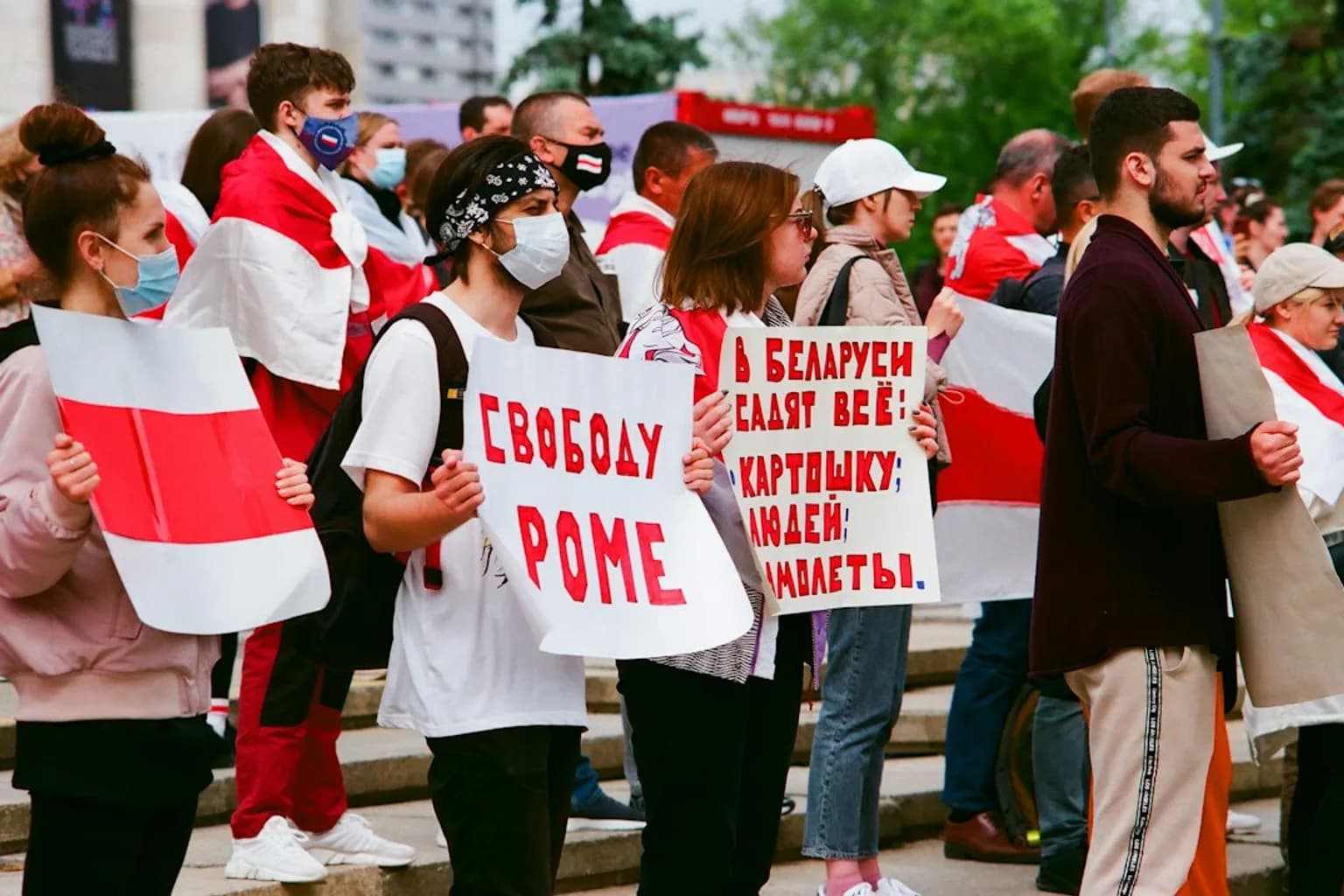
Outside the court building in Warsaw, protesters gathered as riot police secured the grounds around the time of the announcement, which appeared at around 6 p.m. local time. Some protesters threw objects at officers.
Supporters of Święczkowski used a circular saw to cut through a chain securing a gate, allowing him to enter the tribunal’s grounds briefly. He then left and called for calm.
Police detained three people after protesters breached the tribunal’s fence. They said they had received requests for deployment from the prosecutor general and Korwin-Piotrowska, who cited possible threats to judges and staff.
The court’s official X account said everyone involved in the suspension was committing “the crime of coup d'état” and alleged that the tribunal’s website had been unlawfully taken over.
Święczkowski rejected Korwin-Piotrowska’s authority and described the move as a “coup d'état.” Jarosław Kaczyński, the leader of the Law and Justice party, known as PiS, joined the protest and tried to force his way into the building. He accused Tusk of carrying out a “coup” against the court and creating a “police state.”
President Karol Nawrocki, a PiS ally, cancelled a planned trip to Senegal and returned to Poland. “At a moment like this, the president must be in Poland,” he said. After landing in Warsaw, Nawrocki held an emergency meeting with Zbigniew Kapinski, the head of Poland’s Supreme Court.
Justice Minister Waldemar Żurek has filed five requests to remove the judicial immunity of Święczkowski and Sochański, supported by 50 volumes of case files.
Tusk, whose centre-left government took office in 2023 promising to restore judicial independence, said the suspension was intended to “restore the rule of law.” Writing on X, he said: “After years of PiS-led lawlessness, this is a difficult process, sometimes painful, and it requires decisive action. There is no other way.”
The dispute follows years of struggle over the court. The PiS-led government, in office from 2015 to 2023, moved quickly to appoint judges and gained a majority on the tribunal. Święczkowski was among judges politically aligned with PiS.
Leading European courts later found that PiS had improperly appointed three judges by duplicating posts already validly filled by the previous parliament. The European Court of Human Rights and the Court of Justice of the European Union also found that Poland’s Constitutional Court was no longer an independent and impartial tribunal.
After winning the 2023 parliamentary election, Tusk’s alliance said it would reverse PiS judicial reforms. His government has since relied on the European court rulings to stop publishing the tribunal’s decisions.
Nawrocki has refused to swear in five judges selected by Tusk’s parliamentary majority. When the judges instead took their oath before parliament, Święczkowski denied them access to the court building and prevented them from hearing cases.
Korwin-Piotrowska was elected to the court by parliament but was not sworn in by Nawrocki. She issued the suspension order and took temporary charge on the basis of her seniority as a judge.
Marcin Matczak, a lawyer and critic of PiS-era judicial reform, said the suspension lacked a legal basis. He wrote: “Today's action at the Constitutional Court buries this body and the issue of the rule of law for two decades.”
The immediate question is whether the suspension and Korwin-Piotrowska’s authority will survive the legal and political challenge now under way. For the moment, Tusk’s attempt to reshape the court has brought the contest over judicial power out from behind courtroom doors and into the streets of Warsaw.




Comments (0)