
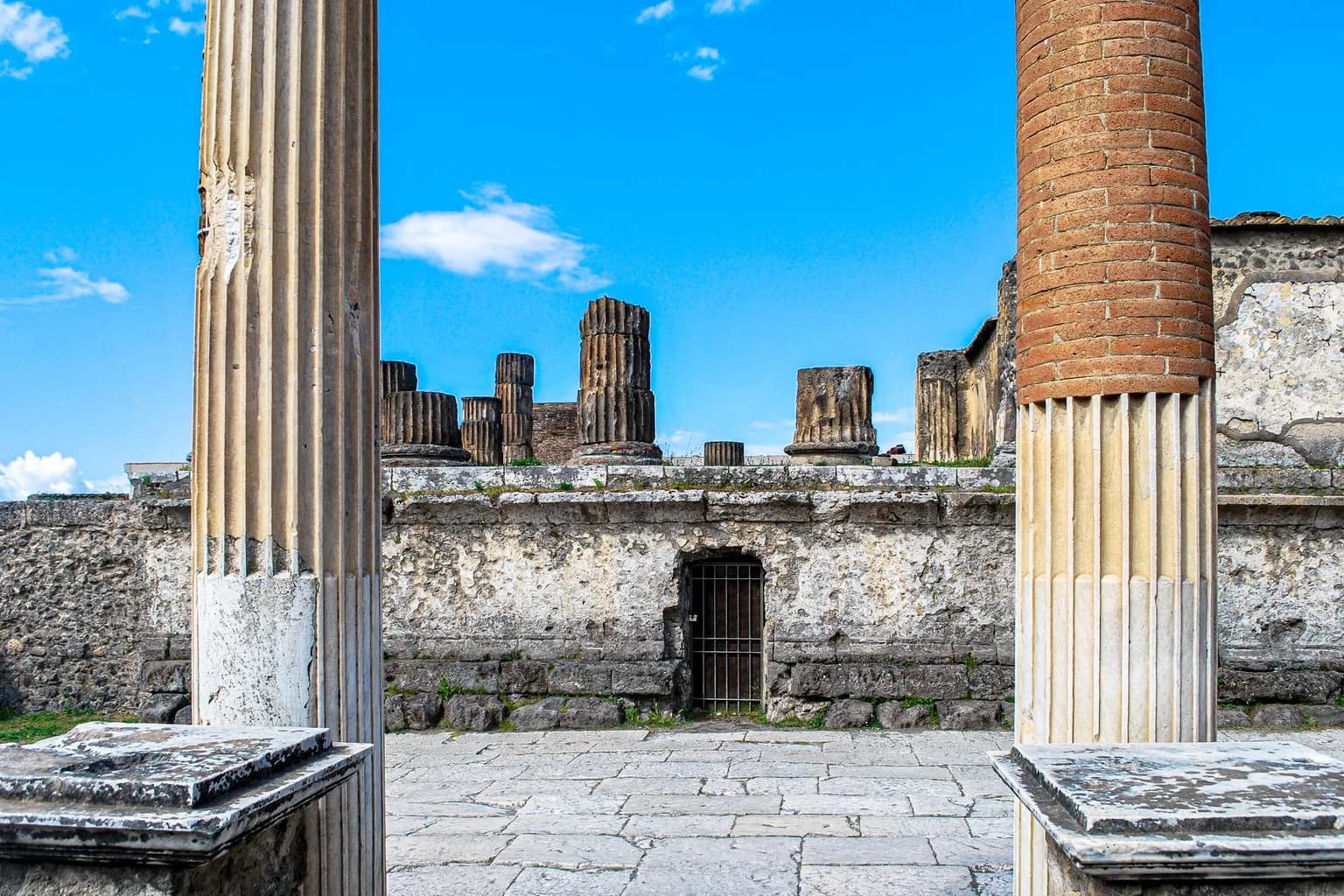
On Via dell'Abbondanza, one of ancient Pompeii's busiest streets, a household had put away its pots, grooming tools, coins and keepsakes in a wooden wardrobe. The room had fine fourth-style wall paintings associated with the workshop of Via di Castricio, while renovation work was under way elsewhere in the house.
Then Mount Vesuvius erupted in 79 CE and buried Pompeii under metres of ash. The household fled, leaving the wardrobe and objects that included money and a child's charm necklace behind.
Archaeologists have now uncovered the wardrobe in House IX 11, 7, also known as the House of Cornelius Maximus, facing Via dell'Abbondanza. No one had opened it again after the eruption.
Its shelves preserved bronze, glass and ceramic pots and pans alongside grooming implements and personal possessions, arranged as they had been left.
Among the smaller objects were tweezers, a small pestle used to mix makeup, a glass perfume bottle and an incense burner.
There was also a necklace with at least 24 tiny charms, made from faience, bone, glass paste and rock crystal. Its motifs included Bes and Mercury, as well as feet, hands, pine cones and bunches of grapes.
This kind of necklace was called a crepundia and was traditionally worn by children. Its charms rattled, helping parents keep track of children and potentially identify them.
A small woven basket, or cistella, contained 38 bronze coins. A bronze lamp lay beside lead weights kept in a small wooden box. The weights suggested that somebody in the house was involved in trade.
The mezzanine held another record of the house. Inside an amphora were the remains of at least two wood mice, identified in laboratory analysis as Apodemus sylvaticus.
The mice had not fully grown. Researchers recovered 117 tiny bone fragments.
The house's facade was first excavated in 1912. The rooms behind it were investigated for the first time during a large restoration and access project at the neighbouring Insula of the Chaste Lovers.
Gabriel Zuchtriegel, director of Pompeii archaeological park, said the money and personal objects left inside may indicate that the owners had to escape at short notice. He said the fragments bring researchers closer to the household's everyday habits, work and memories.




Comments (0)