
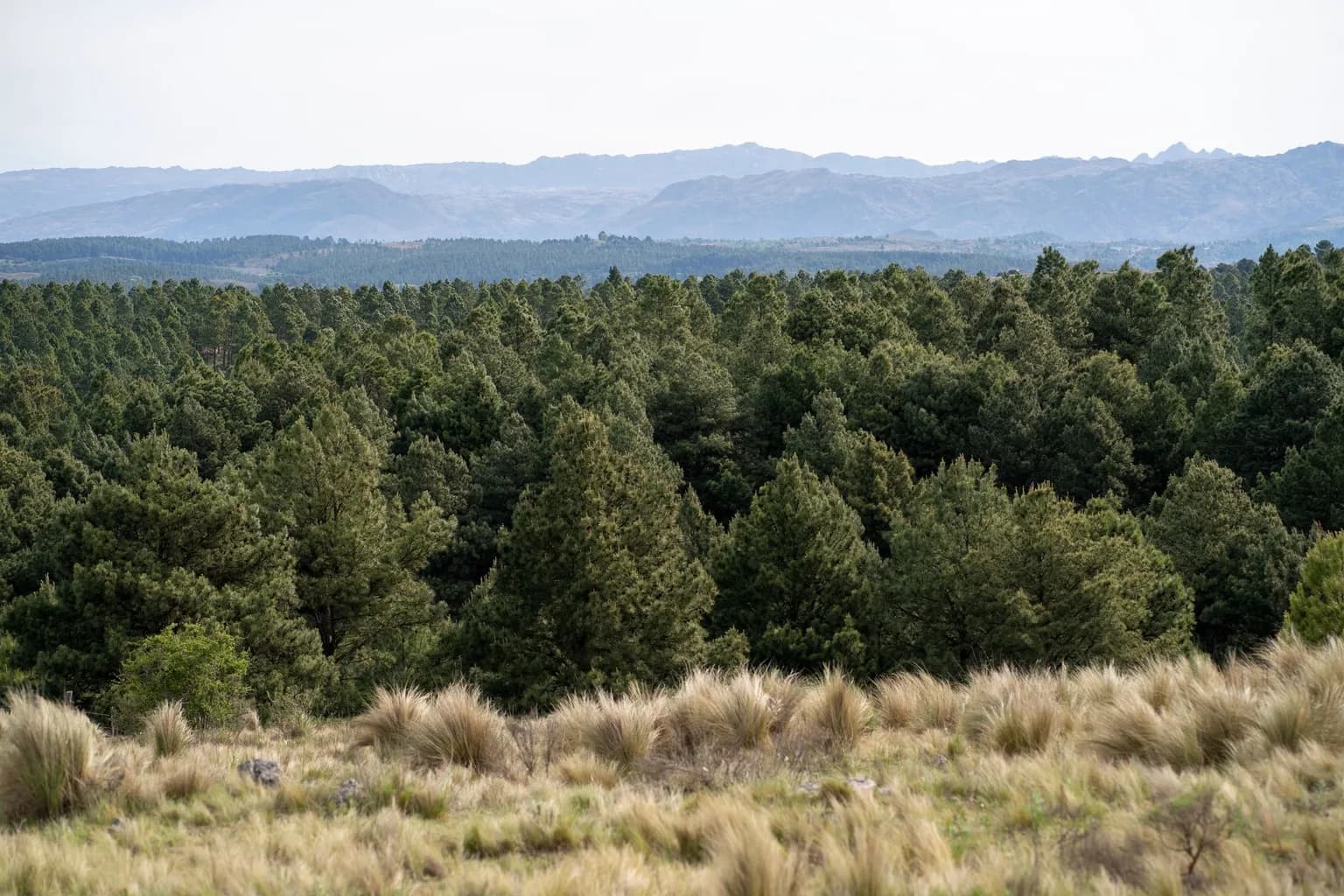
For efforts to store carbon in forests, conifers that grow up to four times faster and withstand drought better in the Southern Hemisphere pose a difficult choice: they may thrive as plantations while introduced pines reduce native species richness in grasslands and shrublands.
Alex Fajardo, a researcher at the Institute of Ecology and Biodiversity and professor at the University of Talca, led the study of nine species in the pine family at 192 sites around the world. The research involved more than two dozen researchers across multiple continents and was published in Nature.
The project began in 2020 to assess how conifers fare inside and outside their native ranges. It drew on a standardised tree-ring survey across four continents, comparing native stands in North America and Europe with plantations and self-sown invasions in Argentina, Chile, New Zealand and South Africa.
The researchers sampled rings from lodgepole pine, slash pine, ponderosa pine, radiata pine, Scots pine, European larch and Douglas-fir. The broader group of conifers includes pines, spruces, firs, cedars and other species.
They measured basal area increment, the cross-sectional area of wood added each year. Among trees between thirty and fifty years old, those in the Southern Hemisphere retained markedly higher basal area increments.
The trees also held higher concentrations of carbohydrates including sugars and starches. Their lower carbon isotope ratios, expressed as δ13C values, indicated that their stomata stayed open more freely during photosynthesis.
The result was faster growth and greater drought resistance among Northern Hemisphere conifers planted in the Southern Hemisphere than among the same species in their native ranges.
Stephen Brewer, a University of Mississippi ecologist and Ole Miss professor of biology, was among the researchers. He said the finding ran against an expectation in ecological theory.
“That result is surprising because ecological theory predicts that there should be a tradeoff between how fast a plant can grow and how tolerant it would be of stressful conditions. For that to be effective, you want the trees to grow quickly and not die in droughts,” Brewer said.
Pines and Douglas firs do not naturally grow in the Southern Hemisphere. They have nevertheless been planted in Chile, Brazil and South Africa for decades for the lumber industry.
In Brazil, pines are escaping into the Cerrado, a savanna, where they grow much faster. Introduced pines have also spread aggressively into treeless grasslands and shrublands in Patagonia, New Zealand and South Africa.
There were signs that the pattern does not extend equally to every tree nearby. Native angiosperm species growing beside conifer plantations showed no comparable advantage, while native Southern Hemisphere Nothofagus, or southern beeches, performed relatively well on growth and drought-tolerance measures.
The findings also echo an older forestry choice in Mississippi, where local lumber industries began replacing longleaf pines with faster-growing slash pines in the 1930s. Longleaf pines are more fire-resistant than slash pines.
Across the American West, the Mediterranean basin and other Northern Hemisphere regions, drought-driven conifer deaths have become a highly visible sign of climate change in forests. Conifers planted at very large scale in the Southern Hemisphere do not appear to show growth declines or mortality of the same magnitude as in their native ranges.

Comments (0)