
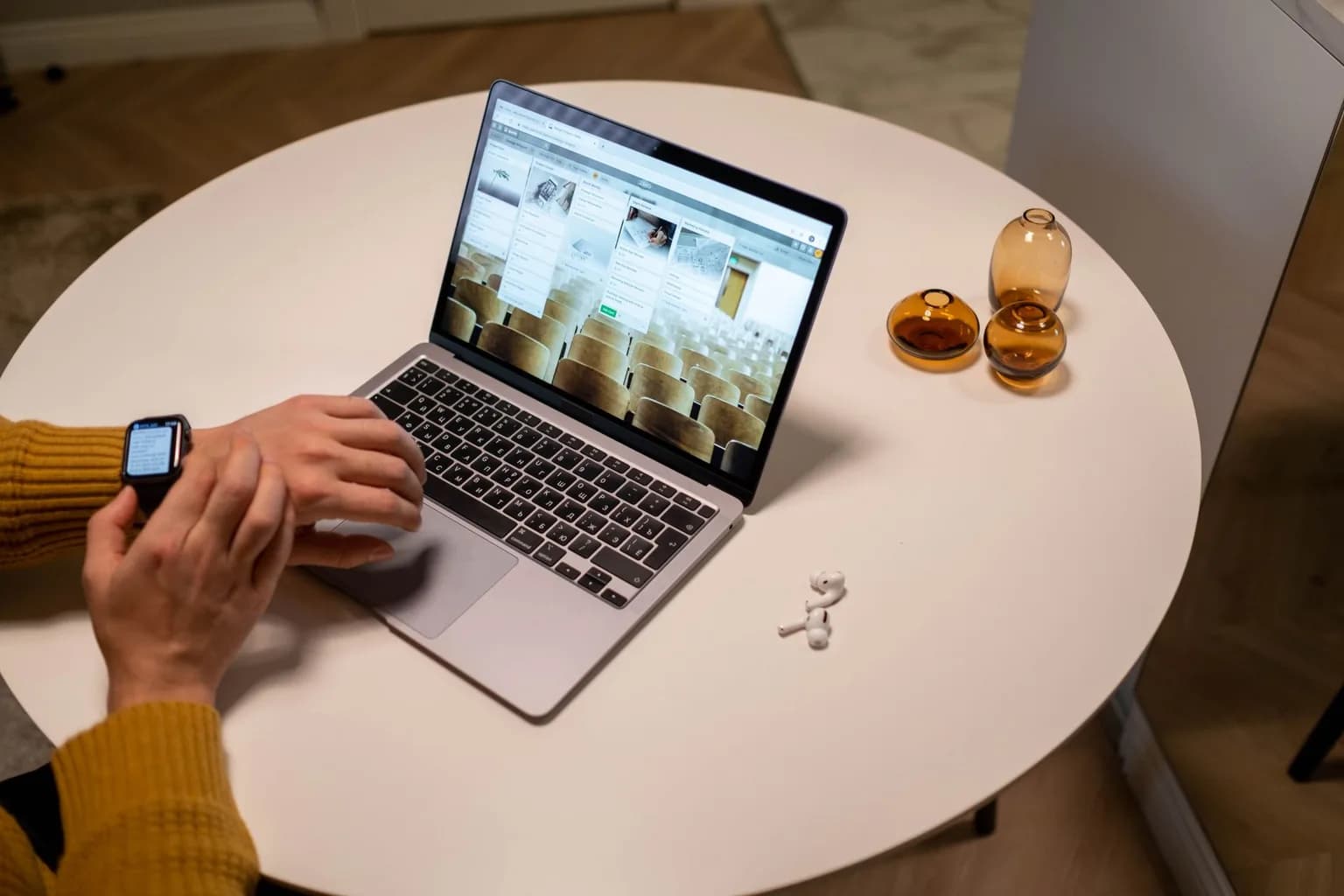
John Ternus stood before media and analysts in Los Angeles on Wednesday and announced a change Apple had resisted for years. “Yes, for the very first time, we are bringing touch to the Mac,” the company’s chief executive said at Apple’s “Pro and tell” event.
The new MacBook Pro is Apple’s first laptop with an OLED touchscreen. The 14-inch model starts at $2,899 and the 16-inch version at $3,399.
For buyers, the touch display comes in Apple’s premium laptop line and alongside the familiar hardware choices. The 14-inch model weighs 3 pounds, while the 16-inch model weighs 4 pounds. Apple says the laptops offer “up to” 24 hours of battery life.
Apple calls the screen PROLED XDR. It is a tandem OLED display with up to 2,000 nits of peak SDR brightness, a refresh rate of up to 120Hz and a 10,000,000:1 contrast ratio.
The touch sensor sits directly in the display panel. Apple says a redesigned hinge gives the screen greater stability during touch use.
The laptops use M5 Pro or M5 Max chips, rather than the M6 chip in the other MacBook Pros announced this week. They have a MagSafe 3 port, headphone jack, SD card reader, HDMI port and three Thunderbolt 5 ports. They can run three external displays at once, or four with an M5 Max version.
Pre-orders begin today, with release set for 6 November.
The announcement breaks with a long public record at Apple. Steve Jobs, the former chief executive, called touchscreen laptops “ergonomically terrible” in 2010.
Tim Cook, also a former Apple chief executive, was asked on a 2012 earnings call why he did not think tablets and laptops would converge. “You can converge a toaster and a refrigerator, but those things are probably not going to be pleasing to the user,” he said.
Phil Schiller, then Apple’s senior vice president of worldwide product marketing, argued in 2015 that reaching up to use a touch interface on a Mac display would be uncomfortable. Apple tested touchscreens on Macs, and Schiller said the result had reinforced the company’s view: “What the heck, we could be wrong. We've absolutely come away with the belief that it isn't the right thing to do. Our instincts were correct.”
Apple did experiment with a different kind of touch control. It replaced function keys with the Touch Bar, a strip of virtual keys, on MacBook Pros from 2016. Physical function keys returned with the 2021 redesign, and Apple removed the Touch Bar entirely in 2023.
Ternus himself expressed the earlier position in 2021. “The Mac is totally optimized for indirect input. We haven't really felt a reason to change that,” he told journalist Joanna Stern.
The Mac remains a smaller part of Apple’s business. The company reported $10.35 billion in Mac sales in its most recent quarter, just under 10% of its total revenue.
Touch remains uncommon across the wider notebook market. IDC data says 17% of notebook PCs shipped globally this year will have touchscreens.



Comments (0)