
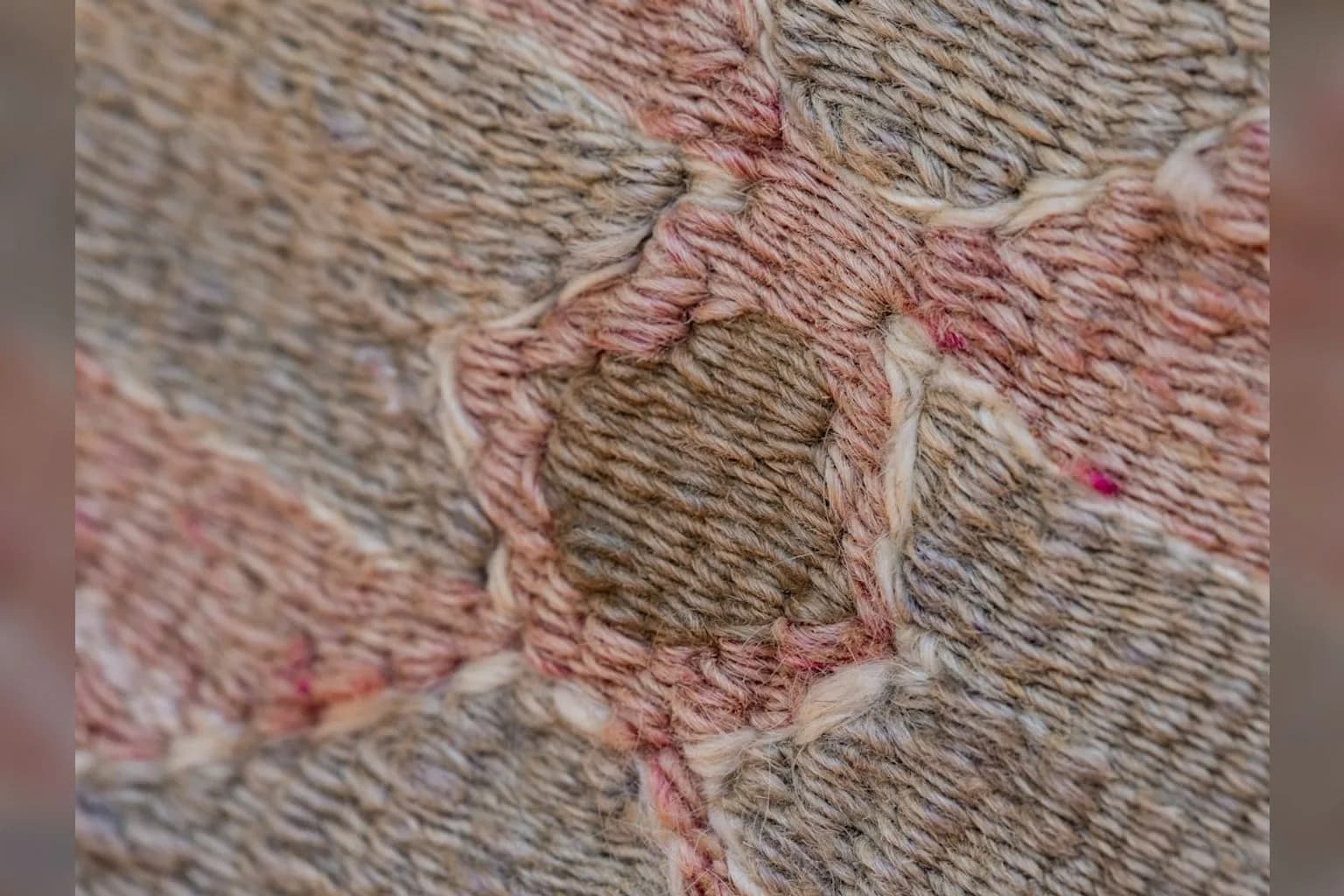
Alice Brown, a 27-year-old forest ranger from Lincolnshire, turns moth holes, stains and other imperfections on clothes into places for cute animals and insects, using needle-felting.
Her approach belongs to visible mending, a practice that treats repair as something to show rather than conceal. It took off about six years ago among hobby crafters and people attending community workshops, according to the workshop teacher Jayne Eagle.
Eagle teaches students in Brighton to attach fabric patches and stitch repairs using techniques inspired by the traditional Japanese methods Boro and Sashiko. She calls repair an 'act of rebellion' against fast fashion.
The movement has since entered a very different setting. This year, visible mending is spreading from workshops and hobby crafters to fast-fashion brands and designer catwalks.
Ralph Lauren and Shein currently sell stitched and patched garments, while Uniqlo and Primark offer repair services. Levi's is among the major retailers taking part in the trend.
The commercial appeal lies partly in making a damaged garment feel chosen again. Maria Ledous, Uniqlo's head of sustainability, said: 'We want to give customers practical ways to extend the life of the clothes they already love, rather than simply replacing them'.
Primark frames the question in terms of price and longevity. Its longevity lead, Vicki Swain, said: 'We don't think that affordability and durability should be opposites'.
Some retailers have built repair into their operations. Finisterre says around a fifth of the mends it provides for customers are designed to be eye-catching.
Toast, a premium artisan clothing store, has a team of 14 in-house 'repair artists' making creative repairs. Around a third of its customers choose eye-catching mends.
Toast provides repair services free of charge, while its off-the-peg 'renewed' pieces sell for higher prices than the original garments.
Levi's is rolling out a workshop programme this year. Paul Dillinger, its head of global design innovation, said: 'People crave agency. Mending is a demonstration of humanity: it's not a mustard stain, it's a memory of a great day in the ballpark.'
That language puts a personal value on an imperfect garment. It also marks the tension at the centre of the trend: a practice taught as resistance to fast fashion is becoming a product and service offered by the fashion industry itself.




Comments (0)