
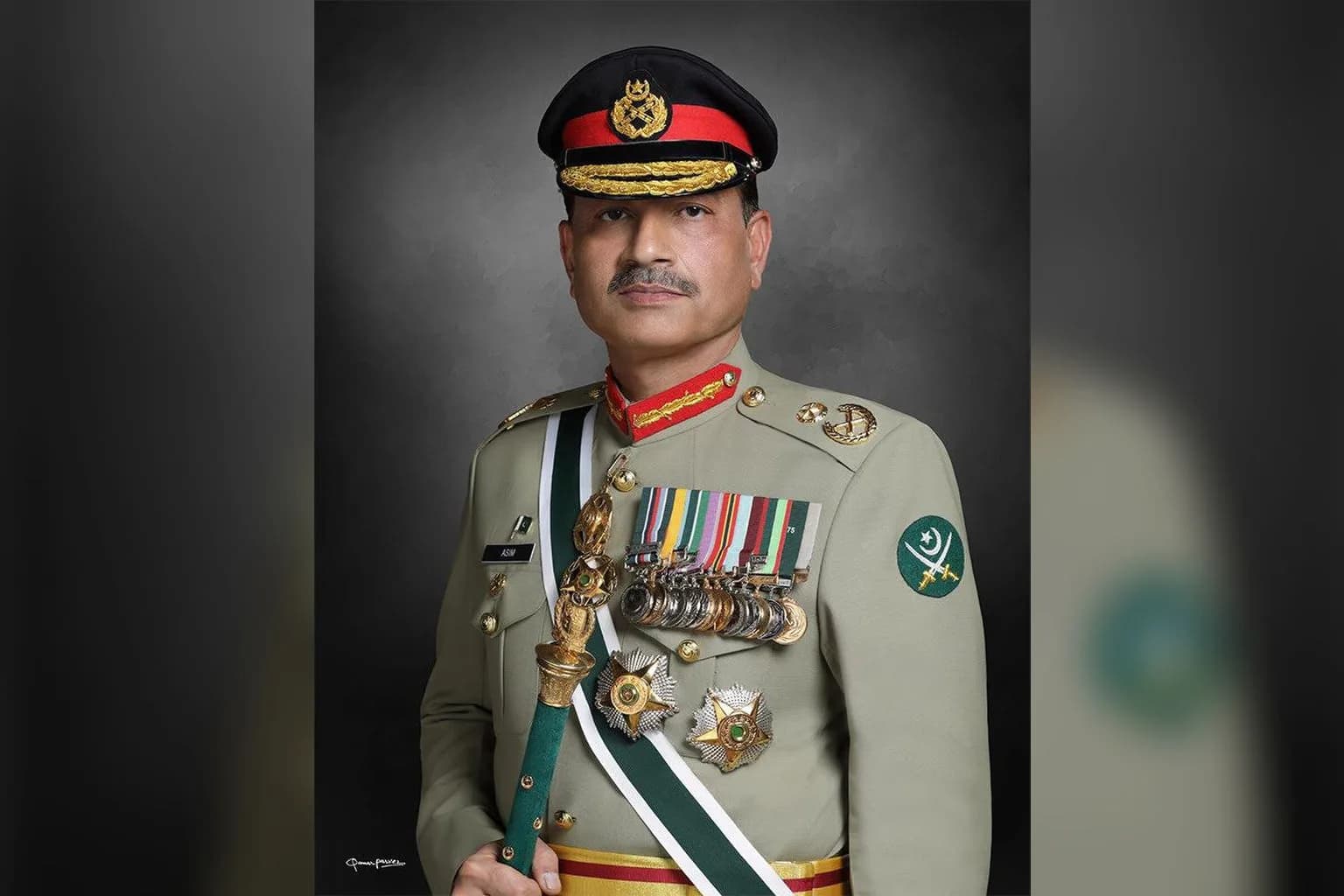
Field Marshal Asim Munir returned to Tehran on Monday, his second trip there this month, accompanied by Saudi Defence Minister Prince Khalid bin Salman and Turkish intelligence chief Ibrahim Kalin. The Pakistani army chief was meeting Iranian officials as Pakistan seeks to mediate between Iran and the United States.
The conflict has entered its eighth month. Pakistan’s military says it sees grounds for hope, while leaving unanswered the central questions of what was put to Iran and whether the US supported the initiative.
Munir made his first visit to Tehran this month to explore the prospects for mediation. On Monday, the Saudi and Turkish officials joined him for the second round of talks.
After the meeting, Mohsen Rezaei, secretary of Iran’s Supreme National Security Council, said security in the region should be provided by regional countries without foreign intervention.
Lieutenant General Ahmed Sharif Chaudhry, Pakistan’s military spokesman and director general of Inter-Services Public Relations, said the military was “cautiously optimistic” about the effort.
He defended Munir’s repeat visit by saying: “Why would the Field Marshal be going twice if it is not for some positivity? So yes, of course”.
Chaudhry also warned of “powerful spoilers and detractors” who see an interest in the conflict continuing.
Pakistan’s outreach is taking place alongside other diplomatic activity in Tehran. Qatari mediators arrived separately in an apparent attempt to negotiate the revival of the June ceasefire.
The talks follow a defence arrangement signed by Pakistan, Saudi Arabia and Turkey on 7 August. The Mecca Joint Defence Agreement says that an attack on one signatory will be treated as an attack on all.
Chaudhry said the agreement’s terms leave room for additional members.
Munir has been Pakistan’s chief of Army Staff since November 2022 and previously served as director general of the Inter-Services Intelligence, Pakistan’s top intelligence agency. In May 2025, he was promoted to Field Marshal, Pakistan’s highest military rank. He is the second person in the country’s history to hold it, after Mohammad Ayub Khan in 1959.
Pakistan’s military has declined to disclose the substance of the Tehran discussions or whether the US endorsed the visits.
Comments (0)