

For Kandinsky’s market, a guaranteed sale above the artist’s current auction record of $44.8 million will test the appetite for a major work at the highest level.
The Nahmad family is consigning Betonte Ecken (1922–23) to Christie’s New York, where it will be offered in the 20th Century Evening Sale on November 17.
The painting is estimated at $60 million to $80 million and is the highest-priced lot in Christie’s November sales. A third-party guarantee means it will exceed the $44.8 million achieved by Kandinsky’s Murnau mit Kirche II (Murnau with Church II, 1910) at Sotheby’s London in 2023.
The work comes from a family whose holdings are reputed to include as many as 5,000 artworks worth upwards of $4 billion. David Nahmad is the family patriarch, and the Nahmads are known as the largest private collectors of Pablo Picasso works outside the Picasso family. Most of the collection is stored in the Geneva Freeport in Switzerland.
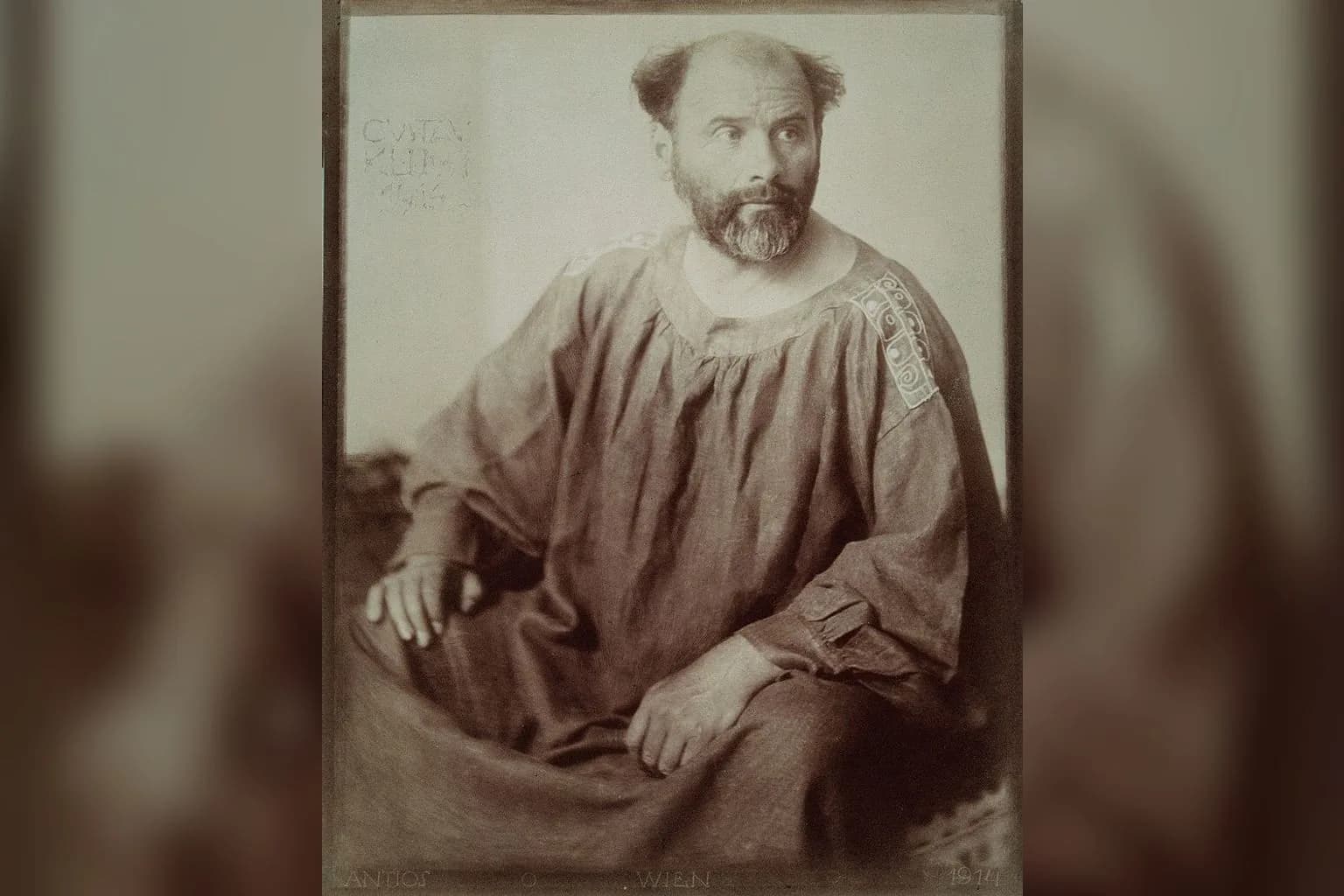
Kandinsky, the Russian-born painter born in Moscow in 1866, had attended a performance of Richard Wagner’s Lohengrin at Moscow’s Bolshoi Theatre in 1896, when he was 30. The experience inspired him to leave law and economics for art. He later described the force he found in painting: “In spirit I saw all my colors—they stood in front of my mind’s eye. Wild, almost mad lines appeared before me. It became quite clear to me that painting could develop the same powers that music possessed.”
After years in Russia, Kandinsky and his wife Nina arrived in Berlin on Christmas Eve in 1921. He joined the Bauhaus teaching faculty in Weimar, Germany, in 1922, when the school was a centre for modernist experimentation.
Between December 1922 and January 1923, Kandinsky created Betonte Ecken at the Bauhaus. The colourful abstraction measures just over four feet square.
The painting first appeared at auction in 1926, when the Jacob Hecht Auction House in Berlin sold it from the Schwarz collection. It then went to Berlin’s Galerie Nierendorf, which probably sold it in 1929 to Hilla Rebay, an adviser to museum founder Solomon R. Guggenheim.
Rebay became the first director of the Museum of Non-Objective Painting, now known as the Solomon R. Guggenheim. Guggenheim later acquired Betonte Ecken from her, and the work stayed in the museum’s collection until 1964. That year, the museum sold it at Sotheby’s London to the New York dealer Stephen Hahn.
Hahn later sold the painting to the Boston collectors Sandra and David Bakalar. They offered it at Sotheby’s in 1986, when the Nahmad family acquired it.
The work has remained publicly documented despite its private ownership. Exhibition catalogues over the past 25 years have listed the Nahmad Collection as owner, including Art of Tomorrow: Hilla Rebay and Solomon R. Guggenheim (2005) and Geometric Abstraction in the Twentieth Century: Kandinsky’s Universe (2025), produced by the Museum Barberini in Potsdam, Germany.



Comments (0)