
For people across the island of Ireland, any future change in sovereignty could shape public services, the economy, security, national symbols and constitutional arrangements. The proposed research body would examine each of those areas before any such decision is made.
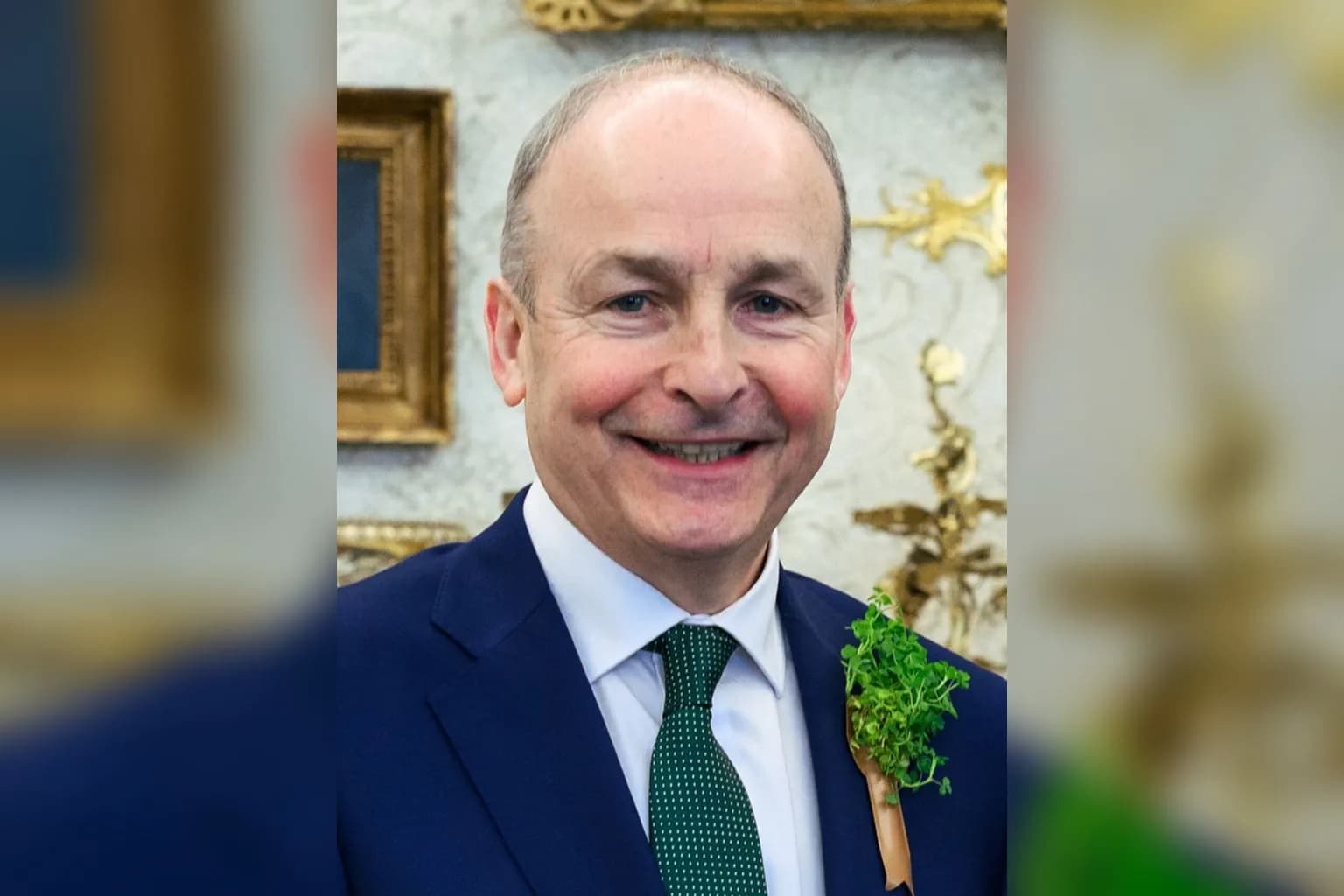
Micheál Martin, Ireland’s Taoiseach, has objected to what he sees as partisan and one-sided campaigning for Irish unity since Brexit, including claims that unity is inevitable. He told The Irish Times: “What has concerned me about this push for a border poll since Brexit is that it's partisan, it's a one-sided advocacy approach”.
In a speech in Dublin on Wednesday, Martin announced plans for a government body to research and prepare for the possibility of Irish unity, the first time Dublin has formally undertaken such work. In an interview with The Irish Times published on Friday, he said the government would for the first time research and prepare for a union with British-run Northern Ireland.
The body would sit within Martin’s department, supported by academic and other experts and a Civil Service secretariat. Martin said he would take the first steps of his proposal to Cabinet before the end of the year.
Its work would test three “baseline scenarios”: a 32-county unitary united Ireland; Northern Ireland retaining its link with Britain; and a united Ireland in which Northern Ireland has devolved status. It would consider the legal and constitutional demands of each, along with health, education, the economy and the possible cost of unification, security and defence, flags and symbols.
Martin said the purpose was to establish “an objective, independent, rigorous evidence base for the debate on the constitutional future of the island of Ireland, not one that is coloured by a partisan advocacy”. He said: “There's a lot of deep thought has to go into this. I actually think the vast majority of Irish people would be in accord with what I'm saying, [that unity should be] a process as opposed to an event”.
He pointed to the scale of the task in a short assessment of the island’s separate development: “We've had 100 years of divergence”. The proposed body’s remit reflects that divide, reaching beyond constitutional law into the practical systems that would have to work under each future arrangement.
The referendum itself remains a matter for the British government. Under the 1998 Good Friday peace agreement, it must call a vote on Irish unity if it appears likely that a majority of Northern Irish voters would support it. Martin said a border poll remains a decision for the British Government under the Belfast Agreement.
Nationalist parties including Sinn Féin have intensified their calls for such a referendum. Polling still points to a majority for remaining in the United Kingdom, although the gap has narrowed since the UK voted to leave the European Union a decade ago. The Irish Times reported that 48% of people in Northern Ireland want to remain in the UK, 35% want to join a united Ireland and 17% do not know.
Martin’s coalition partner Fine Gael is due to set out its own approach. Simon Harris, the party’s leader and Tánaiste, is preparing Fine Gael’s “Blueprint for a Unified Island”, which is intended to define what unity could mean in practical, political, economic and societal terms. The blueprint is to be launched at Fine Gael’s Ard Fheis on 7–8 November.
Mary Lou McDonald, the president of Sinn Féin, welcomed Martin’s announcement. She said the party would “engage positively and constructively with this initiative and will be seeking engagement with the Government at the earliest opportunity”. McDonald said the process should be inclusive and should respect British identity and traditions in Northern Ireland.
The proposed research would sit alongside the Shared Island initiative, established in 2020 to encourage discussion of a future in which every tradition on the island is respected. That initiative has a two-billion-euro budget for cross-border work ranging from community projects to major infrastructure.

Comments (0)