
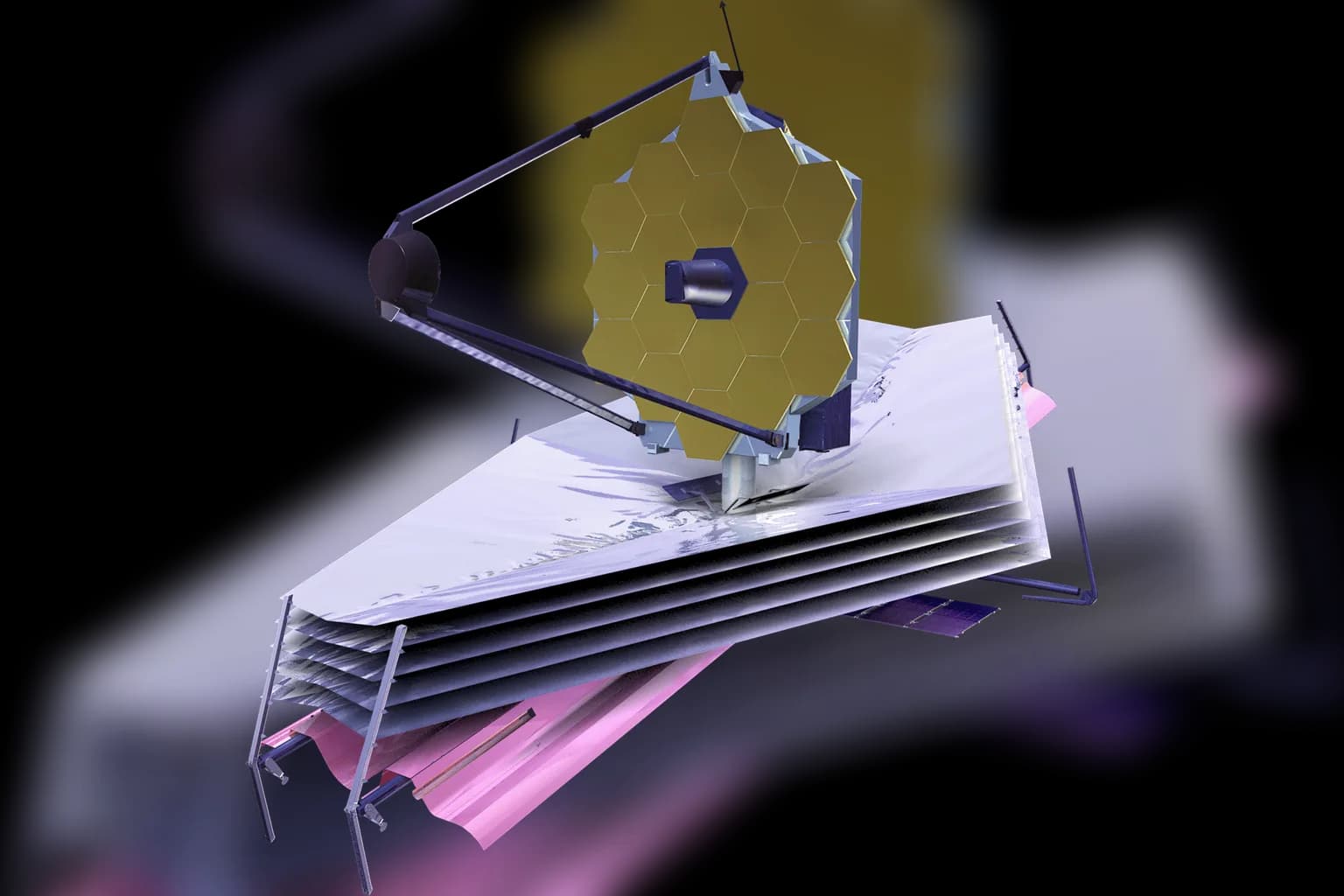
Capotauro, a faint red object seen by the James Webb Space Telescope, initially appeared to be a candidate for one of the universe’s oldest galaxies.
Its infrared signature matched that of extremely distant, bright objects: it was visible at longer wavelengths and invisible at shorter ones. The characteristics of its light suggested a galaxy that could have formed just 100 million years after the Big Bang.
That interpretation changed when telescope images taken over about 3½ years showed Capotauro moving. On a later observation, it had shifted by about 0.13 arcseconds, a result with statistical significance exceeding six sigma.
The motion ruled out the idea that Capotauro was among the universe’s first galaxies. It has instead been identified as a cold brown dwarf, a small object estimated to lie 2400 light-years away.
Capotauro has a temperature of approximately 350 kelvins, or 77°C.
Maruša Bradac of the University of Ljubljana, Faculty of Mathematics and Physics, is the lead author. The article was published on 7 October 2026 in The Astrophysical Journal Letters, Volume 1010, Number 1.
The result shows why follow-up observations matter in the search for the earliest galaxies. Faint, red infrared sources can carry the expected signature of distant early galaxies, while nearby cool objects can produce a similar appearance. Capotauro’s measurable movement provided the evidence that separated the two possibilities.


Comments (0)