
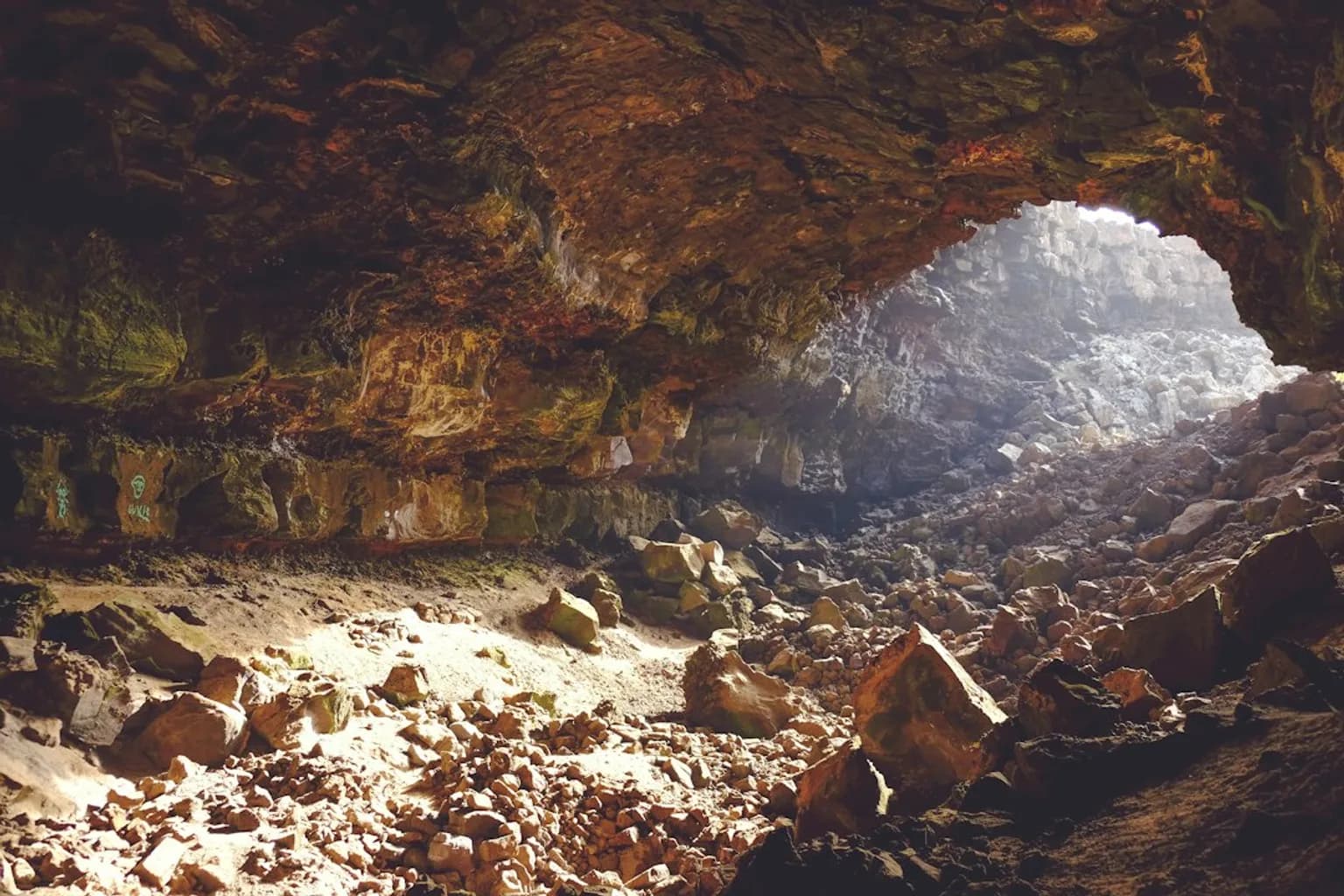
When Josep Maria Vergès saw a group of tourists in wetsuits emerge from an opening into an unfamiliar side gallery at Cova de la Font Major in 2019, he decided to investigate. “Since it was my first time working at the site and I was unfamiliar with this side gallery, I went to take a look,” said Vergès, an archaeologist at the Catalan Institute of Human Paleoecology.
Among modern inscriptions and graffiti, he found engravings with Paleolithic characteristics. The marks were in the Gatoneres de Cal Palletes sector, part of the cave’s Adventure Route, where visitors can enter side galleries.
Vergès and his colleague Míriam Salas-Altès went on to identify 280 Paleolithic motifs on the walls and ceilings, including 55 animal figures of horses, aurochs, goats, deer and a bear.
The engravings begin in marl layers about 250 meters into the cave. Dating analysis found that they are at least 19,000 years old, from the Upper Paleolithic during the last glacial period.
Cova de la Font Major lies west of Barcelona in Catalonia, in the town of L'Espluga de Francolí. Its main gallery opened to visitors in 1957 after a 1956 survey, and the cave became a museum in 1993, when the Adventure Route was initiated.
For more than six decades, thousands of visitors passed directly before the engraved surfaces without their Ice Age origins being recognised. Frontal lighting makes the engravings harder to see, which may help explain why they remained overlooked amid names and dates carved by later visitors.
Before this find, only two Paleolithic cave-art figures had been reported from Catalonia. The newly identified gallery is the largest known concentration of Paleolithic rock-art representations in Catalonia and the third largest set of Ice Age rock art found in the Mediterranean zone of the Iberian Peninsula.
Its scale is unusual beyond Catalonia. Around 75 percent of known rock-art sets from the Pyrenees to Gibraltar contain no more than five zoomorphic figures, compared with the 55 animal figures at Cova de la Font Major.
Paleolithic engravings in the northeast of the peninsula had previously been very scarce beside the richer record of the neighbouring Franco-Cantabrian region. The discovery challenges the belief that Mediterranean Iberia lacked Paleolithic cave art and suggests the northeast of the Iberian Peninsula may have been densely populated during the Ice Age.
The gallery containing the ancient engravings is closed to the public because its walls are too fragile. Vergès and Salas-Altès reported their findings in the journal Antiquity.


Comments (0)