
A Stolen Red Schwinn Set the Whole Story in Motion
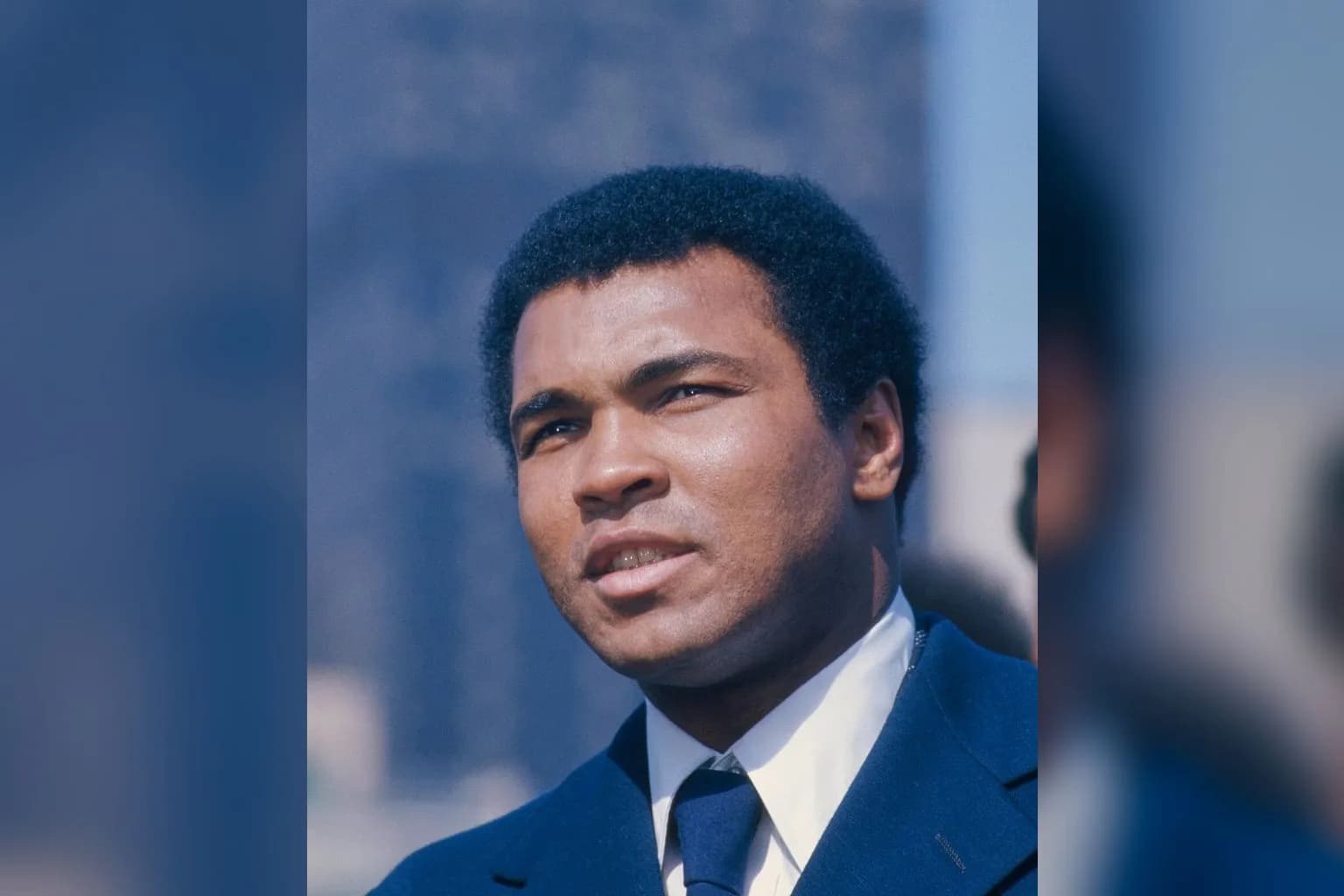
A sixty-dollar red Schwinn vanished outside the annual Louisville Home Show, and a twelve-year-old boy went looking for someone who could help him answer the insult. That boy was Cassius Marcellus Clay Jr., born on January 17, 1942, in Louisville, Kentucky, to a sign painter and a house cleaner. He was growing up in a Jim Crow city, in a modest house on Grand Avenue among other Black families, carrying a name drawn from a nineteenth-century Kentucky abolitionist and military commander. The New Yorker records the particular spark that changed his direction: the stolen bicycle was a red Schwinn, and it gave Clay a reason to seek a fight.
Clay reported the theft to Joe Martin, a police officer with a boxing gym, and Martin offered advice with a practical edge: learn how to fight first. The suggestion led Clay through the gym door and into the sport that would organize the rest of his life. The Muhammad Ali Center’s timeline places the encounter outside the Louisville Home Show, where Martin told the young Clay that boxing could prepare him for the confrontation he had in mind. A stolen bike had introduced him to a new kind of contest, one governed by training, rules and repetition. In Martin’s gym, anger had somewhere to go.
Clay quickly gave that energy a schedule. Even as a teenager, he woke at dawn and ran through Chickasaw Park, building the discipline that sat beneath the speed, confidence and showmanship people would later associate with him. The New Yorker describes a teenager already committed to that routine, and the results appeared early. In December 1954, Clay entered his first amateur bout at 89 pounds and beat Ronnie O’Keefe by split decision after three rounds, according to The Daily Star. The margin was narrow; the direction was clear. He kept competing, tore through Golden Gloves events, and won the 1956 novice tournament in the light heavyweight class, as Biography recounts.
That early sequence matters because it reveals the habit that powered everything to come. Clay met humiliation with action, then turned action into preparation. The boy who wanted to confront a bicycle thief found a place where every morning run and every amateur round could sharpen his sense of what he might become. Louisville gave him the first injury to his pride, Joe Martin gave him an entrance, and the gym gave him a way to make ambition visible.
Rome Gave Clay a Medal, Then He Made Himself the Headline
That entrance carried Clay farther than a Louisville gym could have suggested. In 1960, at 18, he traveled to Rome with the U.S. Olympic boxing team, bringing the habits that had formed in those early mornings into the light heavyweight division. The final placed him across from Poland’s Zbigniew Pietrzykowski, and Clay won the gold medal with a 5-0 victory, according to the BBC. The medal gave the young fighter a clear public credential, yet Clay already understood that a credential could become an opening rather than an ending.
He returned to Louisville and entered the professional game with the same forward motion. On October 29, 1960, Clay beat Tunney Hunsaker by six-round decision in his professional debut, a hometown beginning documented by The Daily Star. Every professional fighter needed wins; Clay treated each appearance as an opportunity to establish a larger presence. He spoke with the assurance of someone who expected the room to adjust around him, and that assurance gave his fights a charge before either boxer had thrown a punch.
That charge came from language as much as movement. Clay made predictions, supplied nicknames, and turned his own voice into part of the attraction, inviting reporters and fans to follow the performance around the fight as closely as the fight itself. His line, “float like a butterfly, sting like a bee,” captured the style people saw in the ring: quickness, rhythm, and a sting delivered at exactly the right moment. Biography.com records the phrase as one of the sayings for which Ali became known, and its staying power shows how fully he fused a boxing method with a public identity.
The effect was practical. Attention gave Clay room to define himself in front of an audience that would soon become enormous, and his voice made each coming contest feel like a chapter with stakes beyond a result. The Olympic champion from Louisville had become a professional prospect who could command the conversation around his own ascent. That command would matter even more when he reached the heavyweight champion waiting ahead.
The Liston Victory Let Him Claim His Own Name
That command would matter even more when he reached the heavyweight summit. On February 25, 1964, Clay defeated Sonny Liston to claim his first world heavyweight championship, fulfilling the rise he had spent years announcing in public. The result gave his voice a new weight, and he used it immediately. The following day, he declared his affiliation with the Nation of Islam, called himself Cassius X, and soon received the name Muhammad Ali from the movement’s leader, Elijah Muhammad, as the Muhammad Ali Center’s timeline records.
The name carried a claim to authorship. Clay had already learned how to make a fight’s buildup part of the event; Muhammad Ali now made his identity part of the same public arena. In 1964, the heavyweight champion was asking the country to meet him on his own terms, with a faith he had openly declared and a name he had chosen to live under. The announcement sharpened the hostility around him. Columnist Jimmy Cannon wrote, “I pity Clay and abhor what he represents,” a response preserved in The New Yorker’s account of Ali’s life.
That reaction helps explain why the change mattered so deeply. Ali’s title belt had made him famous; his new name made clear what he intended to do with the attention. His relationship with Malcolm X stood close to that moment. The two had met at a rally in Detroit in June 1962, when Clay was still building toward the heavyweight title, according to Biography. Malcolm X offered a model of public certainty at a time when Clay’s own voice was becoming impossible to ignore, and Ali’s declaration in 1964 placed that friendship inside a widening national argument.
The relationship later became one of the enduring wounds in Ali’s story. Malcolm X was murdered on February 21, 1965, and Ali eventually reflected on their break in his 2005 memoir Soul of a Butterfly. “Turning my back on Malcolm was one of the mistakes that I regret most in my life,” he wrote, in words quoted by Biography. The admission gave the earlier victory over Liston a more complicated afterlife: the night that opened Ali’s reign also began a public transformation whose personal costs would remain with him.
Ali Put His Title Behind His Convictions
That admission gave the earlier victory over Liston a more complicated afterlife, and the demands Ali placed on his public identity soon carried consequences far larger than a break with a friend. In April 1967, after three years as reigning world heavyweight champion, Ali refused induction into the American military during the Vietnam War, citing his position as a practicing Muslim minister. The National Archives records the refusal as a public act, one that put the most visible boxer in the country into direct conflict with the government at the height of his career.
The conflict moved quickly from principle to punishment. In June, Ali was found guilty of violating Selective Service laws and received a five-year prison sentence; boxing officials stripped him of his titles and suspended his licenses. Biography places the conviction alongside the title loss, while the Muhammad Ali Center records that he also surrendered his boxing licenses after the draft-evasion conviction. The champion who had built his power in packed arenas suddenly had no sanctioned path back into them. His suspension ran from 1967 to 1970, removing years that would normally have defined the center of a heavyweight’s career.
Those years gave Ali a different kind of stage. During the suspension, he became an activist and traveled around the world, speaking to civil-rights organizations and anti-war groups, according to the National Archives. The work carried the argument beyond a courtroom or a boxing commission: Ali’s name now traveled with a position he had accepted a steep price to hold. Every appearance made the lost title part of the message, because the cost remained visible in the years he spent outside professional boxing.
The legal case continued alongside that public life until June 1971, when the U.S. Supreme Court overturned his conviction. Biography dates the reversal to that month, and the Muhammad Ali Center says the Appeals Court had failed to properly establish its grounds against Ali’s conscientious-objector status. That ruling closed the legal fight, yet it could never return the years already taken from him. When Ali finally stepped back toward the ring, he carried the absence with him.
Three Years Away Turned Every Return Into a Test of the Myth
Nothing could return the years already taken from him, and Ali began reclaiming the part of his life that the suspension had placed beyond reach. On October 26, 1970, he returned to the ring in Atlanta and beat Jerry Quarry, a win that made the comeback real after years spent outside boxing. Biography records the date and opponent; the result carried its own pressure, since every performance now had to answer for the time he had lost.
That pressure intensified on March 8, 1971, when Ali met Joe Frazier in Madison Square Garden in the bout billed as the “Fight of the Century.” The two entered as undefeated fighters, and Frazier won a unanimous decision after 15 rounds, handing Ali his first professional defeat. The BBC describes the match as a 15-round decision, while the Muhammad Ali Center places Ali’s three years away from the ring at the center of the grueling contest. The loss gave the comeback a harder shape. Ali had returned, yet return alone could never settle the question of whether he could again command the division.
Frazier became the measure of that work because their rivalry required Ali to face the same challenge more than once. He beat Frazier in their rematch on January 28, 1974, turning the first defeat into the middle chapter of a longer contest. Biography dates that reversal to January, and their third meeting carried the story further still. On October 1, 1975, they fought in Quezon City in the Philippines in the “Thrilla in Manila,” where Frazier’s corner halted the fight after 14 rounds. The BBC records Ali as the winner when Frazier’s corner stopped the match before the 15th round.
Those three fights traced the real labor of a return: a first victory, a first professional loss, then two victories over the man who had beaten him. The sequence also made Ali’s years away part of his fame, since the arena now held both the champion people remembered and the fighter who had to rebuild in public. By the time he had finished with Frazier, Ali had restored his standing through rounds that demanded as much endurance as assertion, and the heavyweight stage was ready to expand around him.
Kinshasa Made the Heavyweight Title a World Stage
Ali had restored his standing through round after round, and its most dramatic turn had already come in Kinshasa, Zaire, where Ali met the undefeated heavyweight champion George Foreman on October 30, 1974. The fight became the “Rumble in the Jungle,” a title that captured the scale of the occasion as clearly as the two men in the ring. Ali had spent years rebuilding his standing through public tests of endurance and will; against Foreman, he faced a champion whose unbeaten record made the title seem securely his. Kinshasa gave that contest a setting far from the familiar centers of American boxing, and the heavyweight championship now carried its spectacle to Zaire.
Ali answered Foreman with the tactic later inseparable from the fight: rope-a-dope. He leaned against the ropes and absorbed body blows, allowing Foreman to spend energy until the champion wore himself down. Then, in the eighth round, Ali knocked Foreman out. The Muhammad Ali Center’s timeline describes the sequence with unusual precision: the body blows, the exhaustion, and the knockout in Kinshasa. Strategy gave the fight its shape, yet the strategy also expressed a quality Ali had spent the previous years proving. He could absorb pressure in full public view, wait for the opening, and turn the moment when an opponent expected him to weaken into the moment he took control.
The victory returned the heavyweight title to Ali. The National Archives records that his defeat of Foreman restored him as heavyweight champion, while the result also gave his career a new geographic scale. A contest for boxing’s most visible prize had unfolded in Kinshasa, with Ali’s name already carrying the force of an identity formed in public, defended in public, and tested under the brightest possible pressure. Foreman brought an unbeaten record into the ring; Ali left it with the championship and one of the defining victories of his career.
That expanded stage continued beyond boxing. Ali later appeared at the United Nations for a press conference with the chairman of the UN Special Committee against Apartheid, according to the Ali Center. The appearance belonged to the same larger public life that had made Kinshasa matter so much. By then, an Ali fight could draw attention to a city and a country, while Ali himself could carry attention into rooms where the subject was power, justice, and the world beyond the ring.
The Record Settled the Argument That the Persona Started
Attention followed Ali wherever he went, and late in his career that attention returned to the work inside the ropes. In New Orleans, at the Superdome, he met Leon Spinks in a rematch and won a unanimous decision over 15 rounds, a victory that brought him his third world heavyweight championship. The achievement made Ali the first boxer to win the world heavyweight title three times, according to the Ali Center, giving formal weight to a claim he had made with such confidence for so long: “The Greatest.”
That third championship mattered because it gathered the whole career into one result. Ali had built his fame through speech, speed, showmanship and public conviction, yet the record could meet every demand made of it. By the time he retired in 1981 at age 39, he had compiled 56 wins, five losses and 37 knockouts, as Biography records. The numbers describe a fighter who endured long absences, fierce rivals and the pressure of carrying a sport that often seemed to revolve around his next appearance.
His public life kept moving alongside those final years in the ring. During the 1970s, Ali converted to orthodox Islam, according to Biography, following the teachings that emerged when Wallace D. Muhammad led the Nation of Islam toward Sunni Islam. He also became a prominent advocate for the release and exoneration of Rubin “Hurricane” Carter, the former boxer arrested with John Artis in connection with a 1966 triple homicide, the Ali Center notes. These commitments gave his celebrity somewhere to go. The title wins brought a vast audience; Ali repeatedly treated that audience as a responsibility.
That responsibility helps explain why the record has never stood alone. Fifty-six wins, three heavyweight championships and 37 knockouts established the sporting achievement in plain terms. His choices supplied the meaning that people carried beyond the scorecards, from his faith to the causes that claimed his voice. By the time competition ended, Ali had made a career whose numbers settled the boxing argument while his public life kept expanding the larger one.
America Eventually Honored the Man It Once Suspended
Those numbers closed the bookkeeping of a remarkable career and opened the way for a different kind of reckoning. Ali had finished fighting in 1981, yet the public figure remained present, carrying the history of a man whose athletic stature and convictions had become inseparable in the national imagination. That presence took on a new physical reality in 1984, when Ali was diagnosed with Parkinson’s disease, according to the BBC. The diagnosis changed the image people saw, while keeping the force of his public role intact.
That force was visible at the opening of the 1996 Atlanta Olympics, when Ali lit the Olympic cauldron to international acclaim, as a contemporary timeline records. The moment joined the young Olympic champion of Rome to the older man before a worldwide audience, and it gave people a shared picture of endurance. Ali’s body showed the effects of Parkinson’s; his place in public life still drew the gaze of the occasion.
Recognition gathered around him in 2005. That year, Ali received the Presidential Medal of Freedom, Biography reports, and Louisville opened the Muhammad Ali Center, according to the BBC. The medal placed him among people honored by the American presidency. The center gave his home city a permanent institution bearing the name he had fought to claim and define. The BBC’s accolade of Sports Personality of the Century added another measure of how far his reach extended, recognizing a boxer whose life had made sport part of the wider public conversation.
Ali died in Phoenix on June 3, 2016, at age seventy-four, the New Yorker reported. By then, the country that had suspended him had also celebrated him at the Olympics, honored him with its highest civilian award, and watched his name become the work of a center in Louisville. Those gestures marked a change in public memory, yet they also confirmed the terms Ali had set decades earlier. Athletic excellence gave him a platform; public identity and conviction gave that platform its lasting charge. Modern celebrity politics still follows the path he made visible, where the athlete’s performance, beliefs and public voice arrive together, each sharpening the meaning of the others.
Comments (0)