
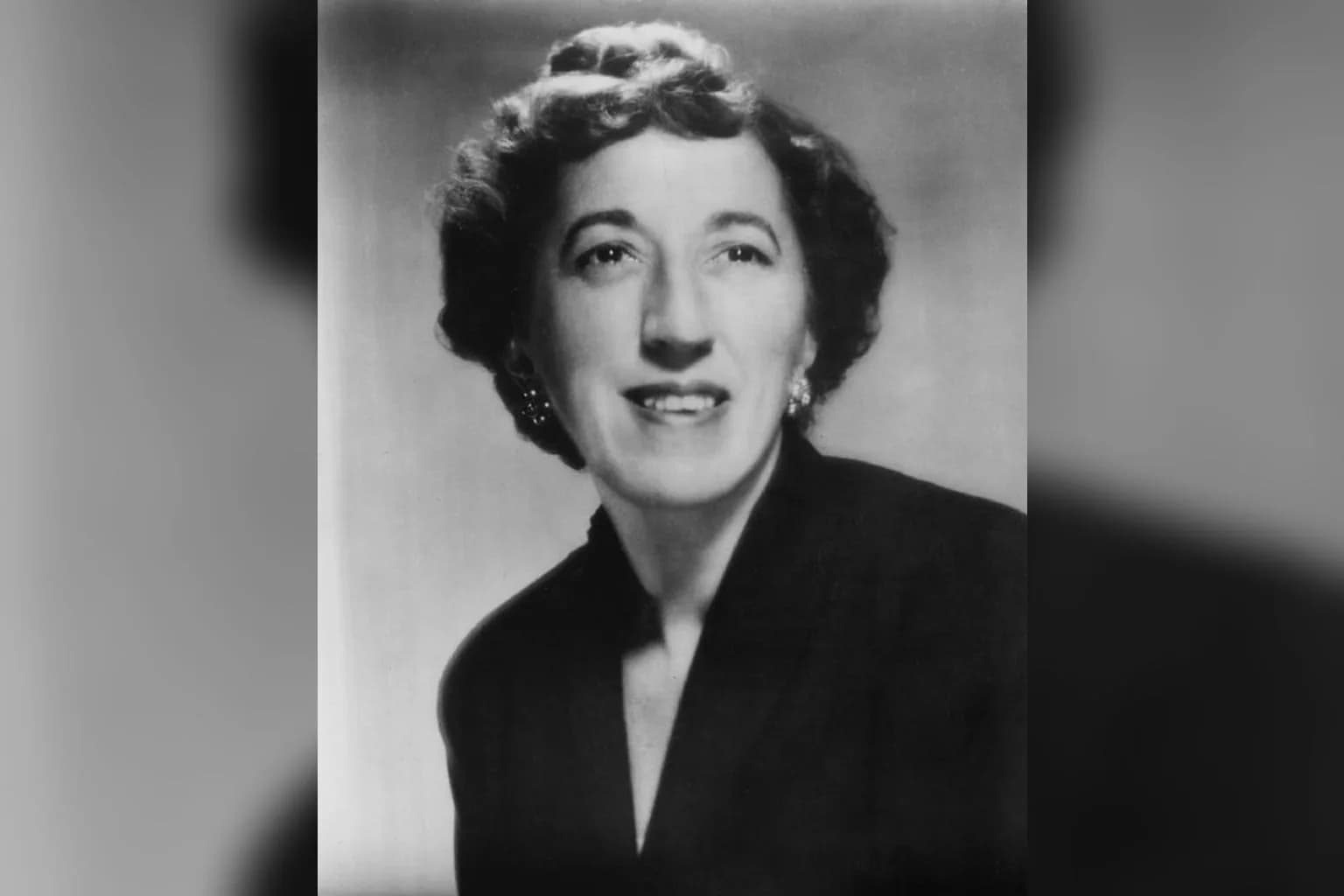
A Mathematics Student Finds Her Medium
Margaret Hamilton was born in Paoli, Indiana, on August 17, 1936, long before the work that would carry her name into the history of spaceflight. Her route toward that work began with mathematics, the subject she studied alongside philosophy at Earlham College in Richmond, Indiana. She graduated in 1958, according to Britannica, with the habits those fields demand: follow a problem closely, test the logic, and keep going until the pieces hold together.
After college, Hamilton taught high-school mathematics for a short time. Teaching put those habits into immediate use, asking her to make abstract ideas clear enough for students to work with them themselves. At the same time, her own plans pointed toward further study. She intended to pursue graduate work at Brandeis University, as the Computer History Museum records, and the next job was meant to serve that larger direction.
That job brought her to the Massachusetts Institute of Technology while her husband attended Harvard Law School. Hamilton took the MIT position as a temporary one, a practical stop on the way to graduate school. Yet MIT placed her near a young field that had room for people who could think rigorously, learn quickly, and give instructions the precision a machine required. Programming entered her life through that opening, turning a temporary professional decision into the medium for the kind of problem-solving she had already been building through mathematics and philosophy.
The shift matters because Hamilton arrived at programming with a mathematician’s attention to structure and a philosopher’s interest in how ideas fit together. Those instincts would soon meet work that demanded both: systems full of information, instructions, and consequences. For the moment, though, the story begins with a graduate-school plan, a teaching job already behind her, and a temporary position at MIT that opened onto an entirely new kind of work.
The Weather Program That Led to Air Defense
A temporary position at MIT placed Margaret Hamilton in front of machines whose work depended on turning information into a useful answer. She began by programming weather-prediction software and pursuing postgraduate work in meteorology, an assignment that gave her a practical arena for the mathematical habits she had carried into the job. Her programs supported professor Edward N. Lorenz’s work on the Librascope LGP-30 and PDP-1 computers, according to the Computer History Museum, so the question before her was immediate and exacting: what could a computer make of changing conditions when its instructions had to produce a meaningful forecast?
That question followed her into a far more urgent system. From 1961 to 1963, Hamilton worked at MIT’s Lincoln Laboratory on SAGE, the Semi-Automatic Ground Environment and the first U.S. air-defense system, where she wrote software for identifying enemy aircraft. Britannica recounts the move from weather work to air defense as part of her early MIT career, while the Computer History Museum dates her SAGE work to those three years. The subject had changed, yet the essential demand had sharpened: a system had to take in incoming information, distinguish what mattered, and return an answer people could use.
Weather forecasting had trained that instinct in one form, with software built to process conditions into prediction. SAGE applied it to aircraft identification, where the flow of information carried a different kind of consequence. In both settings, Hamilton worked where computation met a person’s need to act, and where a program’s value rested on the quality of its response rather than the mere fact that it ran.
Those early assignments gave her a pattern that would keep expanding. Computers could serve as active partners in decisions, provided their software could interpret signals clearly and respond under pressure. MIT soon offered Hamilton a project that would place that idea inside a mission headed far beyond the atmosphere.
Apollo Needed Software Engineering
That project arrived in the mid-1960s, when Hamilton heard that MIT was looking for programmers for its effort to send people to the Moon. She became the first programmer hired for the Apollo project at MIT, according to Smithsonian Magazine, bringing her experience with systems that had to absorb signals and make useful decisions into an assignment where guidance software would travel with the crew.
MIT’s Instrumentation Laboratory provided aeronautical technology for NASA, and Apollo gave Hamilton a role that matched the scale of its ambitions. In 1965, she became head of her own team at the laboratory, dedicated to writing and testing software for Apollo 11’s two 70-pound computers: one aboard the command module Columbia, the other aboard the lunar module Eagle, as Smithsonian Magazine recounts. The work tied a team of programmers and testers directly to the computers that would guide the mission’s command and lunar modules in flight.
Hamilton gave that work a name equal to its responsibility. She created the term “software engineering” to distinguish her field from other kinds of engineering, as the Computer History Museum notes. The phrase established software as a discipline with its own demanding standards, rather than an informal addition to the hardware around it. For a lunar mission, the distinction carried practical force: the machine’s physical components and its instructions had to belong to the same serious conversation.
Her title reflected the scope of that conversation. Hamilton served as Director of the Software Engineering Division at MIT’s Instrumentation Laboratory and led the team creating the onboard flight software for NASA’s Apollo command and lunar modules, according to the Computer History Museum. Her team’s assignment covered the guidance and control systems of those in-flight modules, as Britannica reports, placing software at the center of a mission whose course depended on what the computers could recognize, sort, and carry forward.
Her Code Expected Trouble
That responsibility placed Hamilton’s attention on a question inside every guidance and control system: what should the software do when the machine encounters trouble? She concentrated on programs that could detect system errors and recover information during a computer crash, according to Britannica. The focus gave her team a practical standard for work that carried enormous consequence. A computer running a mission needed to recognize a problem, preserve the work that still mattered, and provide useful information while the problem unfolded.
Hamilton built that thinking into Priority Displays, the error-detection and recovery programs associated with her work. The programs gave the onboard flight software a way to communicate asynchronously, in real time, with the astronaut, while also providing warnings for emergencies during an Apollo mission, as the Computer History Museum describes. That combination mattered because a warning has value only when it reaches the people who need it in time to act. Error detection therefore became part of the relationship between astronaut and computer: the system could watch its own condition, identify an urgent signal, and bring it forward.
Hamilton’s debugging work also produced a revealing detail about the way she examined software behavior. She discovered that sound could function as an error detector, according to Smithsonian Magazine. A sound gave a programmer another way to notice the system’s response, turning a machine’s behavior into something she could track closely as the code ran. The discovery fits the larger discipline of her work: attention stayed fixed on the moment when a program behaved unexpectedly and on the information that could reveal why.
That discipline shaped an expansive view of engineering. The task involved designing for the mission’s intended path, then giving the software ways to recognize failure conditions, recover information, and protect the work with the highest priority. Priority Displays supplied warnings during emergencies, while Hamilton’s broader error-detection and recovery work made those warnings part of a system prepared to respond under pressure, according to the Computer History Museum. By the time a computer had to sort urgent signals from lesser demands, that preparation would determine whether the guidance system could keep doing its job.
When Eagle’s Computer Began Flashing Warnings
That system met its defining test on July 20, 1969, as the lunar module Eagle approached the Moon’s surface and its computers began flashing warning messages. The descent had brought the work of years into a few urgent minutes: a guidance computer was receiving more than it could comfortably handle while Neil Armstrong and Buzz Aldrin continued toward the landing site. In that narrow window, the priorities built into the software determined what the computer would do next. Smithsonian Magazine reports that the software Hamilton developed recognized the error messages and ignored low-priority tasks, preserving the computer’s ability to guide the astronauts through the descent.
That response turned an alarm into a decision about what mattered most. The computer could shed work of lesser urgency and remain focused on the operations that carried Eagle toward the lunar surface. Hamilton’s approach had given the machine a practical form of judgment under pressure: it could identify trouble, sort its demands, and keep the mission’s central task in motion. The same software ultimately guided Armstrong and Aldrin to their landing on the Moon, according to Smithsonian Magazine.
An investigation later traced the warnings to the astronauts’ checklist, which had instructed them to set the rendezvous-radar hardware switch incorrectly. That finding sharpened the significance of the software’s behavior. A checklist error had created a real operational problem during the final approach, and the computer’s priority system gave the crew a path through it. Software engineering, in this moment, meant building a system that could keep working when people and hardware placed unexpected demands upon it.
The descent continued with little margin left. Armstrong had fuel for 30 more seconds of flight when he reported, “The Eagle has landed,” as Smithsonian Magazine recounts. The words marked the end of the landing, while the warnings that preceded them revealed something equally lasting: Apollo’s computer had been designed to protect its most important job when the mission became hardest.
Taking Mission-Critical Thinking Into Business
The landing closed one chapter of Margaret Hamilton’s work and opened another, because the habits that shaped Apollo could travel far beyond MIT. In the mid-1970s, Hamilton left MIT for the private sector, carrying with her a career built around software that had to recognize trouble, preserve essential information, and keep a system focused on its central task. Her next move gave those habits a commercial home: in 1976, she cofounded Higher Order Software, according to Britannica. The name suited a programmer whose work had treated software as a system of priorities, decisions, and consequences rather than a set of isolated instructions.
That shift matters because Apollo had made the stakes of software unusually visible. A warning during descent had forced the computer to sort urgent work from lower-priority work in real time, and the landing showed what careful preparation could make possible. Hamilton’s private-sector work extended that way of thinking into a setting where the mission was broader: build systems with prevention at their center. The goal remained clear throughout the transition. Software should help people act before a failure has the chance to overwhelm the work that matters most.
In 1986, Hamilton established Hamilton Technologies, Inc., and she served as its CEO, as the Computer History Museum records. At the company, she developed the Universal Systems Language, together with an integrated systems-to-software approach called “Development Before the Fact” and the 001 Tool Suite. Each name points toward the same practical ambition. Universal Systems Language framed systems and software together; Development Before the Fact placed attention early in a project’s life; the tool suite gave that approach a working form.
The phrase “Development Before the Fact” captures the through line in Hamilton’s career especially well. During Apollo, her team prepared software to identify errors and support recovery when conditions changed quickly. At Hamilton Technologies, the emphasis became preventative across systems and software from the outset. That approach turned a lesson forged in high-consequence work into the basis for an organization: disciplined software development begins by anticipating how a system will behave, what it must protect, and how it can remain useful when pressure rises.
Hamilton’s entrepreneurial chapter therefore carries the article’s central idea forward without leaving it behind. Apollo had shown that software could shoulder responsibility at the center of a mission. Higher Order Software and Hamilton Technologies gave her a way to pursue that responsibility through companies of her own, applying an engineer’s attention to systems, prevention, and the choices made long before a critical moment arrives.
The Engineer Whose Work Became a Standard
Her attention stayed on systems, prevention, and the choices that are made before a system reaches the moment when every choice matters. That commitment eventually drew formal recognition from NASA, which honored Hamilton with its Exceptional Space Act Award in 2003 and granted her $37,200, according to Smithsonian Magazine. The award arrived decades after Apollo, yet its timing fits the scale of the work: some contributions become clearer as the fields they helped shape grow around them.
Software had become central to modern systems, and Hamilton had supplied a name for the discipline while its demands were still coming into focus. She created the term “software engineering” to distinguish her work from other kinds of engineering, as the Computer History Museum records. The phrase carried a practical argument. Code required the same seriousness as the machines, procedures, and people whose actions it directed, particularly when a system had to keep working through an emergency.
That argument gained a larger public stage in 2016, when President Barack Obama presented Hamilton with the Presidential Medal of Freedom, as Britannica reports. The medal recognized a career that had begun with programming and developed into a sustained case for disciplined systems work. Her achievement became easy to state: software could carry responsibility at the heart of a mission, provided its creators treated it as engineering from the start.
Apollo gave that principle its most vivid proof. The mission depended on software able to make sense of competing demands during a landing, and Hamilton’s work helped establish the habits required for that kind of responsibility. Her phrase, “software engineering,” therefore endures as more than a job title. It names a standard: build software with enough care to earn the trust placed in it when people and a mission depend on what it does next.

Comments (0)