
Every Click Lands Somewhere Physical
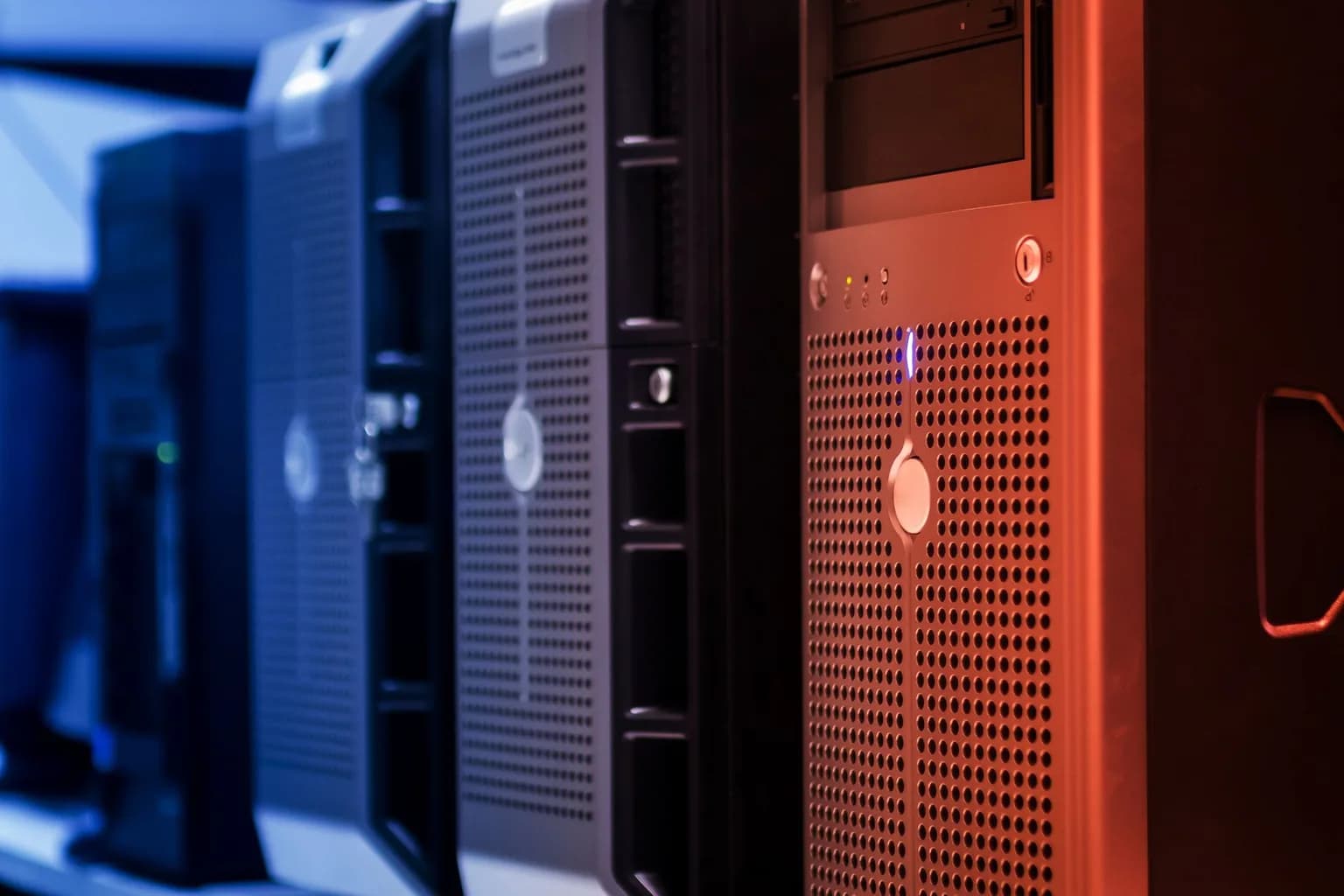
A data center is, in federal law, “any facility that primarily contains electronic equipment used to process, store, and transmit digital information.” Section 453(a)(1) of the Energy Independence and Security Act of 2007 gives the cloud a physical address in a single sentence: a facility, filled with equipment, doing work that digital life asks it to do. Every saved file, streamed image, search, model response, and business system reaches that equipment somewhere. Cloud computing and AI therefore belong in the same practical conversation as the buildings, wires, land, and power systems that keep the equipment running.
That shift in perspective matters because the language of “the cloud” can make computing feel weightless. The statutory definition pulls attention back to the place where information is processed, stored, and transmitted. A data center has walls and a footprint; it houses electronic equipment in concentrated form; it requires an electrical connection sized for the work inside. Once the service is understood as a facility, the questions around it become concrete. How large is the building? How much equipment does it contain? How large a power rating does the site carry? Those are the dimensions that turn an abstract digital service into a project that utilities, local officials, and neighboring communities can see and plan around.
The biggest category makes that physical scale especially clear. A facility qualifies as a hyperscale data center when it contains at least 5,000 computer servers, occupies at least 10,000 square feet, and has an electric-power rating exceeding 100 megawatts, according to the Congressional Research Service. Each threshold describes a different part of the same reality. The server count signals the density of computing equipment. The square footage establishes the facility as a substantial piece of real estate. The power rating places it directly in the world of large electricity customers.
That final measure gives the scale its clearest human reference point. Roughly 100 megawatts is sufficient to support the electricity needs of 80,000 U.S. households, the Congressional Research Service reports. A hyperscale facility carries a rating above that mark, which means a single site can enter a region’s power conversation at a scale familiar from major industrial development. The cloud still feels instant to the person tapping a screen, yet its instant response depends on a place large enough to command land, equipment, and electricity in concentrated form. That is where the modern data center begins: as digital infrastructure with a factory floor.
Data Centers Have Become a Major Electricity Customer
The cloud’s physical scale becomes still clearer when all of those facilities are counted together. U.S. data centers used approximately 176 terawatt-hours of electricity in 2023, excluding cryptocurrency, an amount equal to about 4.4% of the country’s annual electricity consumption, according to the Congressional Research Service. That share gives data centers a place among the country’s major electricity customers, with demand spread across the facilities that process, store, and transmit the information behind daily digital life.
The planning challenge lies in the direction of that demand as much as in its current size. Some projections cited by the Congressional Research Service show data-center electricity consumption doubling or tripling by 2028, potentially reaching as much as 12% of U.S. electricity use. A grid, utility, and community can absorb a large customer through years of coordinated planning; a customer whose needs rise this quickly changes the timetable. The question therefore reaches beyond how much electricity data centers use today and toward how rapidly power systems must prepare for the next wave of load.
That longer view is the purpose of United States Data Center Energy Usage Report: 2025 Update, published June 18, 2026, by the Energy Analysis Division at Lawrence Berkeley National Laboratory. The report, authored by Sarah J. Smith, Alex Hubbard, Alex Newkirk, Mohan Ganeshalingam, Billie Holecek, Dale Sartor, Michael Mills, and Arman Shehabi, tracks total U.S. data-center electricity use across 2017 through 2030 in its first figure. Its horizon matters because electricity systems are built around forecasts: generation, transmission, local connections, and the choices made by customers all depend on an informed view of demand ahead. The report supplies that view for a sector whose electricity use has moved from a specialized concern into a central planning question.
The Server Is Only the Beginning of the Power Bill
The report tracks total U.S. data-center electricity use across 2017 through 2030, and its value lies in the machinery beneath that national line. Roughly one-half or more of a data center’s electric-power demand comes directly from electronic IT equipment, according to the Congressional Research Service, so the first task is to understand what sits in the racks and how it runs. Each server converts electricity into computation, then into heat, drawing storage systems, network equipment, and the facility systems around them into the same power calculation.
That is the structure of the Berkeley Lab analysis. The report follows server and accelerator shipments, then carries those inputs through AI server configurations, equipment lifetime, and installed base; it also assesses storage, networking, and facility infrastructure energy use. Its equipment-level breakdown gives the forecast a physical basis: a changing mix of machines arrives, operates for a period, and requires supporting systems that consume electricity alongside the computing hardware.
AI makes that accounting especially important because an accelerator is part of a server population with its own configuration, age, and operating pattern. Berkeley Lab’s work analyzes AI accelerator shipments and measures AI server power through rated power, idle power, and server utilization, as described in the 2025 update. Rated power sets one boundary for demand, while idle power and utilization determine how much of that capacity becomes actual electricity use across an installed base.
The planning question therefore reaches far beyond a count of buildings or a single estimate of rack capacity. It turns on the composition of the computing fleet, the pace of accelerator deployment, the years those systems remain in service, and the electricity required to keep data moving and equipment operating. Berkeley Lab has built its national estimates from a bottom-up model grounded in computing-equipment shipments and thermodynamic modeling of cooling systems, an approach the laboratory describes as foundational to DOE’s energy-usage reports. That method puts the next question in focus: once machines draw power and shed heat, the infrastructure surrounding them becomes part of the bill.
Cooling Turns Computing Into a Local Resource Question
That computing equipment has a physical consequence that arrives immediately at the facility boundary: it produces heat, and the heat has to go somewhere. As servers and accelerators draw electricity, cooling systems carry away the resulting thermal load, tying the work inside a data center to water and other local infrastructure outside it. The power calculation therefore leads directly to a resource calculation, one that depends on the cooling approach chosen for a particular site.
The scale becomes clear in an estimate cited by Congressional Research Service: a 100-megawatt U.S. data center may consume roughly 2 million liters, or roughly 530,000 gallons, of water each day when averaged across various cooling strategies. That total includes water used beyond the site as well as water consumed at the facility itself, and the on-site portion reaches about 725,000 liters, or roughly 190,000 gallons, per day. Water thus enters the operating picture alongside the electricity feeding the machines, with the design of the cooling system shaping how much of that demand lands in the surrounding community.
For local residents and officials, household-scale terms make the on-site figure easier to place. The International Energy Agency estimate cited in a Congressional Research Service report finds that direct water consumption at a 100-megawatt facility is roughly equivalent to the water use of 2,600 households, averaged across cooling strategies. The comparison centers attention on a basic siting question: a data center may process information for distant users while drawing directly on resources managed close to home.
That proximity gives cooling design a public dimension. A proposal now carries questions about the facility’s computing load and its water needs, about the share consumed on site and the systems that make those demands possible. Lawrence Berkeley National Laboratory’s national model is built to estimate location-specific water use from on-site cooling and electricity generation under different cooling-system designs and power-supply scenarios, according to the laboratory. Those distinctions give communities a practical way to examine the consequences of a facility before its servers begin generating heat.
A Grid Built for Steadier Demand Meets Gigawatt-Scale Requests
Those systems also depend on a connection to the grid, and the scale of that connection sets the pace for everything that follows. Energy Department advisory recommendations put the lead time for connection requests from hyperscale facilities rated at 300 to 1,000 megawatts or more at one to three years. That timeline puts a hard physical boundary around an industry accustomed to rapid deployment: a computing campus can move only as quickly as electricity supply, grid infrastructure, cooling arrangements, and the plans around generation and storage can move together.
Each part of that chain has its own builders, timelines, and constraints, which makes the connection point a shared planning problem rather than a transaction between a developer and a utility. The advisory group that produced the recommendations brought that wider system into the room, consulting hyperscalers including Amazon, Google, Meta, Microsoft, and OpenAI; data-center developers including Blackstone/QTS Data Centers and Digital Realty; technology providers including General Electric, Intel, HPE, and Nvidia; electricity companies; and regional grid operators including CAISO, MISO, PJM, and SPP. Their July 30, 2024 recommendations treated regional expansion as a system challenge, where a new load has consequences for equipment, power supply, and the network that connects them.
That framing led to a direct recommendation: the Secretary of Energy should convene utilities, data-center developers, and operators to address electricity-supply bottlenecks with immediate impact. The same document urged the Department of Energy to conduct a rapid assessment of the cost, performance, reliability, availability, and supply-chain issues affecting generation, storage, and grid technologies that could support regional data-center expansion. The recommendations place the central question in practical terms: how can a large new computing load arrive at a pace that the surrounding power system can serve? Once that question reaches the grid, the next opportunity lies in the way computing itself is run, including whether some AI work can adapt to conditions across time and place.
AI Could Become a More Flexible Customer of the Grid
Those grid technologies matter partly because the advisory group saw a second route to easing the pressure: change the way computing itself uses power. Its work on powering AI and data-center infrastructure moved along three coordinated tracks, covering efficiency and power dynamics in large-language-model training and inference, an operational-flexibility framework, and generation and storage technologies. Together, those tracks treat AI workloads as part of the electricity-planning equation, rather than a fixed demand that the grid must simply absorb. The Energy Department advisory recommendations put those questions in the same frame, connecting the behavior of computing systems to the physical capacity that serves them.
That connection led to a practical recommendation: DOE should explore opportunities for temporal and spatial flexibility in AI training and inference for immediate impact. The advisory document points toward a different operating model, where some AI work can move across time or location as grid conditions change. Training and inference sit at the center of the proposal because they describe the two broad ways large-language-model systems consume computing resources: one creates and refines the model, while the other delivers its responses. Understanding where flexibility exists inside those activities could give operators another lever when power is scarce in a particular place or at a particular hour.
The recommendation carries a demanding implication. Flexibility depends on knowing how much power a workload needs, when it needs it, where it can run, and what happens when its schedule changes. It also depends on coordination between data-center operators and the systems that supply electricity, so that a shift in computing work produces a useful shift in grid demand. The advisory group built its recommendations after consulting hyperscalers including Amazon, Google, Meta, Microsoft, and OpenAI, alongside electricity companies, data-center developers, technology providers, and grid operators. That mix of participants reflects the scale of the coordination required to turn flexibility from an idea into an operating practice.
DOE was also urged to establish a data-center-scale AI testbed that would complement existing high-performance computing facilities. The proposed testbed would create a setting for examining these system-level questions at the scale where power dynamics, operational choices, and infrastructure constraints meet. Its value lies in making the tradeoffs visible: which workloads can shift, what that shift requires, and how much flexibility the grid can actually count on when it needs relief.
The Fastest-Growing Load Still Has Thin Public Visibility
The value lies in making visible which workloads can shift, what shapes the grid can accommodate, and where flexibility holds up under real operating conditions. Yet the ability to test those choices runs ahead of the public information available about the facilities making them. A 2021 Energy Information Administration pilot study surveyed 50 data centers and received nine responses, a narrow return for an industry whose electricity needs have become central to utility planning, according to the Congressional Research Service.
That limited view reflects the policy structure surrounding private-sector operations. Private data centers currently face no legally binding energy standards aimed explicitly at their operations, even as their equipment, cooling systems, and demand profiles carry consequences far beyond the building line. The federal government does have one established foothold: since 2012, the Department of Energy has regulated the energy efficiency of computer-room air conditioners, or CRACs, a type of cooling technology. That rule addresses a defined piece of the facility, while the broader picture of annual electricity use remains difficult to assemble at a national level.
Congress has begun to sketch a route toward a fuller accounting. S. 1475, the Clean Cloud Act of 2025, was introduced in the Senate and referred to the Committee on Public Works, the Congressional Research Service reports. The bill would amend the Clean Air Act to give the Environmental Protection Agency and the Energy Information Administration authority to collect information on the annual electricity consumption of data centers and cryptocurrency mining facilities.
That proposal matters because electricity planning depends on a shared view of the load: its scale, its location, and its pattern across the year. The nine responses in the EIA pilot offer a glimpse of the difficulty, while a collection authority could give agencies a more regular way to see the demand entering the system. For utilities, regulators, and communities facing new projects, the question is moving from whether these facilities need power to how clearly the country can measure the power they use.
Communities Are Learning to Negotiate With the Cloud
For communities facing new projects, the question becomes how to turn that clearer view of demand into terms that serve local priorities. The Energy to Communities program offers one route: its six-month peer-learning cohort, “Navigating Local Data Center Development,” brings together groups of 15 community entities around a common energy topic. Each month, participants meet virtually with experts and peers, trading practical approaches rather than trying to solve the same unfamiliar problem alone.
That shared work begins with the details a proposed facility brings into a place. The cohort helps participants understand and communicate data-center characteristics and tradeoffs, identify potential project impacts, and develop strategies that reduce risks while capturing benefits aligned with local goals, according to its program overview. Those goals can guide the questions communities bring to developers, utilities, and public agencies as a project moves from proposal to local decision.
Good questions need usable evidence, which is where Lawrence Berkeley National Laboratory’s planning tools enter the picture. LBNL researchers have built a detailed bottom-up model that starts with computing-equipment shipments and uses thermodynamic modeling of cooling systems to estimate data centers’ total on-site electricity and water demand across the United States. The laboratory’s research program also tracks historical trends, technological advances, and future resource needs through models, datasets, and analytical tools, giving local conversations a foundation stronger than broad claims about the cloud.
From there, planning can become more specific. LBNL’s location database sorts data centers by type and utility power needs, helping reveal current and emerging loads for individual electricity utilities and balancing authorities; its Shape Maker tool creates customizable electricity-load profiles for data-center, facility, and grid planning. Its model also estimates location-specific water use, accounting for onsite cooling, electricity generation, cooling-system design, and power-supply scenarios.
These tools give communities a way to match digital ambition with the systems that must support it. A data-center proposal now calls for the kind of choices long associated with industrial development: evaluating local capacity, weighing tradeoffs, and setting terms around shared resources. The cloud arrives through a planning process, and communities need the information to shape that process well.



Comments (0)