
A Database Built on a Simple Question
What is in this picture? For a person, the answer often arrives before the question has fully formed: a dog, a street, a cup, a face. For a computer, that answer had to be taught, image by image, label by label, at a scale large enough to turn pattern recognition into something useful. Fei-Fei Li’s answer was ImageNet, a visual library built so machines could learn the contents of photographs from examples rather than from a small set of hand-picked rules.
The bet behind the project was direct: computer vision would move when computers had far richer material from which to learn. ImageNet eventually brought together 15 million images across 22,000 categories, giving the field an archive whose size matched the stubbornness of the task. A system could encounter vast numbers of pictures and connect recurring visual features to names, building toward the ability to determine what a new image contains.
That archive depended on a huge act of human attention. More than 48,000 contributors around the world helped label and categorize images through Amazon Mechanical Turk, turning an abstract research ambition into a working collection. Their judgments supplied the words that made the pictures legible to a machine: the categories, descriptions, and distinctions that converted pixels into training material.
The scale mattered because vision is crowded with variation. Images of the same thing can differ in angle, light, setting, color, and context, while entirely different things can share shapes and textures. A deep visual library gave researchers a way to confront that variety directly, placing the central challenge in clear view: build systems that could learn from enough labeled examples to recognize what appeared before them.
Li’s work therefore began with a deceptively ordinary human habit, looking at an image and naming what is there. ImageNet made that habit available to computers in an organized, shareable form, and its construction set the terms for the work that followed. Before a machine could see the world, someone had to assemble a world for it to study.
Chengdu, Beijing, and a Family Looking Outward
That world began for Fei-Fei Li far from the laboratories where computers would eventually learn to identify its contents. She was born in Beijing on July 3, 1976, then grew up in Chengdu, Sichuan, with parents whose working lives joined education and technology in an everyday form: her father, Kuang Ying, taught secondary school, while her mother, Li Sun, worked in the computer department of a chemical factory. Britannica places those early years in a family already oriented toward learning, work, and the possibilities that could open beyond their immediate circumstances.
Chengdu gave Li the first landscape of her life, including the small details that later appear in accounts of her childhood. Her father gave her a puppy at a time when pets held little cultural status around her, and her mother encouraged her to read Jane Eyre. Wired records those gestures as part of a home life that made room for attachment and books, two ways of paying close attention to other beings and other worlds. The reading list also reached outward: Mark Twain, Charles Dickens, and Ernest Hemingway were among the writers Li read in translation. The Los Angeles Times describes a young reader encountering distant places through language before she would have to navigate a new language herself.
Her family’s gaze had already turned toward the United States. By 1989, as the Chinese government put down the Tiananmen Square protests, the family was making plans to emigrate, according to the Los Angeles Times. The plan soon became a separation: when Li was 12, her father left for the United States. Britannica identifies him as the first member of the family to make that crossing, leaving Li and her mother in China while he established a foothold in New Jersey.
That interval gave the family’s ambitions a practical shape. Li’s parents had built their lives through teaching, technical work, reading, and persistence; emigration extended that same commitment into a risk shared across continents. Chengdu remained the place of her childhood, while the United States became a destination defined first by her father’s departure and then by the family’s decision to follow. In 1992, Li and her mother would join him, carrying those early habits of curiosity into a far more demanding new life.
The One-Bedroom Apartment in Parsippany
That decision took Fei-Fei Li and her mother across the Pacific in 1992, joining her father in Parsippany, New Jersey, when Li was in her mid-teens. The move brought the family together under conditions that made every square foot matter: they lived in a one-bedroom apartment, with Li’s bed jammed into the space between the kitchen and dining area, as the Los Angeles Times reported. Chengdu had given her a childhood shaped by family routines and study. Parsippany gave those routines a new urgency, with a new language, a smaller home, and parents building a life through whatever work they could find.
Her father, who had gone ahead years earlier, repaired cameras. Her mother worked as a supermarket cashier, jobs that placed the family inside the daily economy of their new town while leaving Li to find her own footing in it. Britannica records the apartment and those jobs with the clean detail of a biography; for a teenager, they also describe the setting in which home, work, and adaptation occupied the same tight frame. The kitchen and dining area were part of the family’s living space, and the language of the surrounding world had to become usable quickly.
Li made it usable. Within two years of coming to the United States, she had learned enough English to serve as a translator, interpreter, and advocate for her parents, according to Wired. Those three roles trace a progression. Translation carried words between languages; interpreting required her to follow meaning as it moved through conversation; advocacy asked her to speak on behalf of the people whose move had made her own future possible.
That responsibility gave English an immediate purpose beyond the classroom. Each new phrase could help her family navigate the life they were assembling, and each successful exchange strengthened her ability to move between their private world and the institutions around them. The teenager in the one-bedroom apartment was therefore learning a form of practical attention: listen closely, understand what is being asked, and make an answer clear enough for someone else to act on. That habit would soon meet a teacher who recognized how much she was carrying.
A Math Classroom Becomes a Way Forward
The teenager had to listen closely and respond with enough confidence to keep the next conversation moving. At Parsippany High School, that attention led Fei-Fei Li to Bob Sabella, her math teacher, when she was a junior trying to find her footing in a new language and culture while working long hours at a restaurant to help her parents make ends meet. The Los Angeles Times describes Sabella as both a mentor and a surrogate family member, a role that began in the ordinary setting of a classroom and grew through the practical pressures surrounding her family.
Those pressures shaped the help that followed. Sabella and his wife, Jean, lent Li’s parents money to help them buy a dry-cleaning business, giving the family a chance to build steadier footing in the country they had entered only recently. The Los Angeles Times records the loan as an act of support for a struggling household, and its significance sits in the kind of trust it required: a teacher saw promise in one of his students, then extended that confidence to the people depending on her.
For Li, school could now serve as a route into a larger future as well as a place to master immediate demands. Her work in math had opened a relationship with a teacher who understood that adjustment involved far more than homework, and that relationship helped turn academic ability into an opportunity with real consequences. In 1995, Li received a scholarship to Princeton University, a milestone documented by Britannica and Wired.
The scholarship drew a clean line from a high-school classroom to a campus where her questions could widen and her abilities could take a more formal shape. Yet the line began with a teacher making time for a student who needed help translating a new world. Sabella’s guidance and the support he and Jean gave her family made room for the next step, and Princeton gave that step a destination.
Princeton Gives Curiosity a Discipline
At Princeton, that destination became a field of study broad enough to hold the questions Li had carried with her. She studied physics alongside computer science and engineering, disciplines that asked for different kinds of precision while steadily drawing her toward the relationship between the physical world, information, and perception. The scholarship had opened a door; the work on the other side demanded that she learn how to move through it with rigor. In 1999, she graduated with a physics degree with High Honors, a result that reflected the force and range she brought to her undergraduate years, according to her congressional biography.
That range mattered because Li’s path still had room to roam. After Princeton, she spent 1999 to 2000 in Tibet conducting research on Tibetan medicine, as her Stanford biography records. The year placed her in a setting far from the conventional track of a future computer-vision researcher, yet it suited an intellectual life shaped by observation and by an appetite for how people make sense of experience. Physics had given her a method. Her work in Tibet kept the world itself in view: its bodies, practices, environments, and forms of knowledge.
When she moved on to graduate study at Caltech in 2000, those interests began to gather around a more focused problem. Li entered a doctorate at the intersection of neuroscience and computer science, according to Wired, bringing the habits of a physicist into a field concerned with intelligence, perception, and learning. The shift carried a simple implication: understanding how a mind recognizes the world could help shape how a machine learns to recognize it, too.
That implication would soon become the center of her research. For the moment, Princeton’s gift was a discipline equal to her curiosity, and Tibet had shown her that inquiry could travel across fields and cultures without losing its thread. Caltech gave that thread a new direction, toward the question of vision itself.
At Caltech, Vision Became the Question
At Caltech, that question brought Li into a field where seeing could be studied from two directions at once: through the brain that interprets the world and through the machines designed to learn from it. She began her doctorate in Pasadena in 2000, working at the intersection of neuroscience and computer science, a course of study that gave her a way to connect perception with computation. Wired describes those years as the start of her work across disciplines, with vision emerging as the shared problem that each discipline approached in its own language.
Caltech also placed her with two advisers whose fields made that overlap tangible. Li studied with Pietro Perona and Christof Koch, according to her Stanford biography, while developing the habits of a researcher interested in both the patterns machines could detect and the processes through which minds make sense of what they see. Her Stanford biography records her Ph.D. completion in February 2005, the formal end of a five-year period that had given her an unusually wide scientific frame.
The degree carries different descriptions in the available accounts, and together they show the breadth of the training. Princeton identifies it as a Ph.D. in computer science and neuroscience, while congressional testimony describes a Caltech Ph.D. in electrical engineering. Princeton’s alumni profile and her congressional biography point to the same intellectual territory: the effort to understand intelligence through computation, perception, and the systems that connect them.
That territory would become the foundation for Li’s career. Her research areas came to include machine learning, deep learning, computer vision, and cognitive and computational neuroscience, fields that share a practical question: how can a system take in information and turn it into understanding? The congressional record lists those areas together, and the grouping matters. Machine learning offered methods for finding patterns. Deep learning expanded the capacity to learn them. Computer vision focused the work on images, while cognitive and computational neuroscience kept the original question close: what does it take to make sense of a visual world?
By 2005, Li had the training to pursue that question in a new setting. The next step would turn the study of vision into a practical argument about what computers needed before they could learn to see.
Why Better Images Became the Breakthrough
That argument began in Li’s first faculty appointments, where the question of vision had to meet the everyday limits of computer science. She taught at the University of Illinois Urbana-Champaign from 2005 to 2006, then moved to Princeton as an assistant professor in 2007, and it was there that she began the project that would become ImageNet, according to her congressional biography.
The idea gave computers a form of visual experience they could work with: images paired with text descriptions of what they contained. A picture could become training material once someone supplied the words that connected pixels to a recognizable subject. ImageNet organized that basic exchange at a scale designed for machine learning, creating a library in which a system could repeatedly encounter visual contents and begin to identify them. Time describes Li’s work beginning in 2006 as a database of images accompanied by text descriptions of their contents.
That design carried a practical challenge along with it. A database could offer material for learning, yet researchers also needed a common way to measure whether their systems were actually improving. Li created the ImageNet Challenge around that need, inviting researchers to design AI systems that could determine an image’s contents with the greatest accuracy. The competition turned visual recognition into a shared test, giving teams a defined task and a basis for comparing results. Time reports that Li hosted the competition to find the system that could most accurately identify what appeared in the images.
In that pairing, the database and the challenge reinforced each other. The images gave systems something to learn from, while the competition made performance visible. Li’s work shifted computer vision toward a discipline built around a common visual record and a clear test of recognition, an approach her congressional biography credits her with inventing as ImageNet and the ImageNet Challenge. The record also places her at Princeton from 2007 to 2009, as the project gathered the images and descriptions required to make that test meaningful.
Those descriptions, however, had to come from somewhere. Before a machine could learn the name for what it saw, people had to supply the names, image by image.
48,000 People Helped Make the Machine Learn
That requirement turned ImageNet into a vast act of human attention. More than 48,000 contributors around the world worked through Amazon Mechanical Turk, labeling and categorizing the project’s images one by one, according to the Los Angeles Times. Their work gave the collection its usable structure: a picture could become an example, and an example could become part of a system for teaching a machine what visual words meant.
The scale came from repetition. One person’s label joined thousands of others, and those thousands accumulated into a collection large enough to hold a remarkable range of visual material. By 2009, Li and her team had labeled 3.2 million images with the help of crowdsourced workers, Time reported. The same year, the team completed the ImageNet project, the Los Angeles Times wrote, bringing years of coordination into a dataset built from innumerable small decisions.
Those decisions carried real weight. A contributor had to look at an image, settle on what it contained, and place it under a name that other people could use in the same way. The dataset therefore captured a shared vocabulary before it ever became training material. Its categories depended on people agreeing, at scale, that a particular visual detail belonged with one word rather than another.
That is the human foundation beneath visual AI. The machine encountered images as labeled examples, yet the labels came from a worldwide workforce whose judgments transformed pixels into things with names. ImageNet’s construction made the process visible: before a system can recognize an image, people have already done the first, essential work of seeing it.
ImageNet Changes the Terms of Computer Vision
With those human judgments in place, ImageNet could do the work Fei-Fei Li had designed it to do: help computers recognize what appears in an image. The database gave researchers a vast collection of visual examples paired with names and categories, turning recognition into a task that systems could practice, measure, and improve. Li then created the ImageNet Challenge, inviting researchers to build systems that could identify image contents with the greatest accuracy. Time describes the competition as a test of which AI system could most accurately determine an image’s contents, and that simple contest gave computer vision a common target.
A common target changes the pace of a field. Researchers could bring different approaches to the same visual material, compare their results, and see with greater clarity where their systems succeeded. The challenge drew attention toward the central question at the heart of ImageNet: whether a machine could learn to identify the world from examples people had already labeled. Li’s role was unusually complete. A congressional biography identifies her as the inventor of both ImageNet and the ImageNet Challenge, placing the dataset and the test built around it in the hands of the same researcher. That record captures why ImageNet became inseparable from her name.
Its influence also helps explain the title that followed her through a much wider public conversation. Li is known as the “Godmother of AI” for groundbreaking work in computer vision, according to Britannica, and ImageNet supplies the concrete achievement beneath that shorthand. The phrase can sound sweeping; the database is specific. It assembled visual material at a scale that let computers learn from examples, then set a public challenge around the quality of that learning. In doing so, it made computer vision easier to rally around: here was the material, here was the question, and here was a way to judge an answer.
Li carried that work to Stanford in 2009, joining the faculty as an assistant professor after her years at Princeton. Her congressional biography records her promotion to associate professor with tenure in 2012, a progression that placed her at the center of a university deeply involved in the field she had helped accelerate. She now serves as the Sequoia Capital Professor in Computer Science at Stanford and co-director of the Stanford Institute for Human-Centered Artificial Intelligence. Princeton’s profile describes a career spanning breakthroughs in cognitively inspired AI, computer vision, deep learning, and AI systems for healthcare delivery. ImageNet gave that career a defining public landmark, while Stanford became a base for the work that followed.
AI4ALL Turns Access Into Infrastructure
At Stanford, Li turned her attention from the systems that learn to the people who would build the next generation of them. In 2017, she and Olga Russakovsky established AI4ALL, a nonprofit created to promote inclusivity in AI education, with an initial focus on gender equality in the field. The move gave her work a new practical shape: if artificial intelligence would influence more of daily life, then the field needed wider doors at its entrance.
Those doors opened first through a small, specific program. AI4ALL’s inaugural year consisted of a two-week day camp for 24 high school girls, according to Princeton. The scale was intimate enough to make the idea concrete. Twenty-four students could encounter AI as a field they had permission to enter, study, and eventually shape. A day camp also turned an abstract goal, gender equality in a technical profession, into time set aside for learning and participation.
From that first cohort, the organization carried a broader mission. AI4ALL is described as a nonprofit dedicated to expanding opportunities to study computing for underrepresented youth, the Los Angeles Times reported, while Time identifies it as a U.S.-based nonprofit aimed at increasing diversity and inclusion in AI. Each description points to the same durable work: creating routes into a field whose future depends on the people who gain the chance to participate.
Li had already helped establish the conditions under which machines could learn from labeled images. AI4ALL applied a related discipline to human opportunity, beginning with a defined audience, a structured program, and a reason to imagine a place in the work ahead. The organization’s first camp offered a compact model for that ambition, and its mission carried the model outward, toward a larger question about whose experience reaches the rooms where AI is designed.
The Case for Human-Centered AI
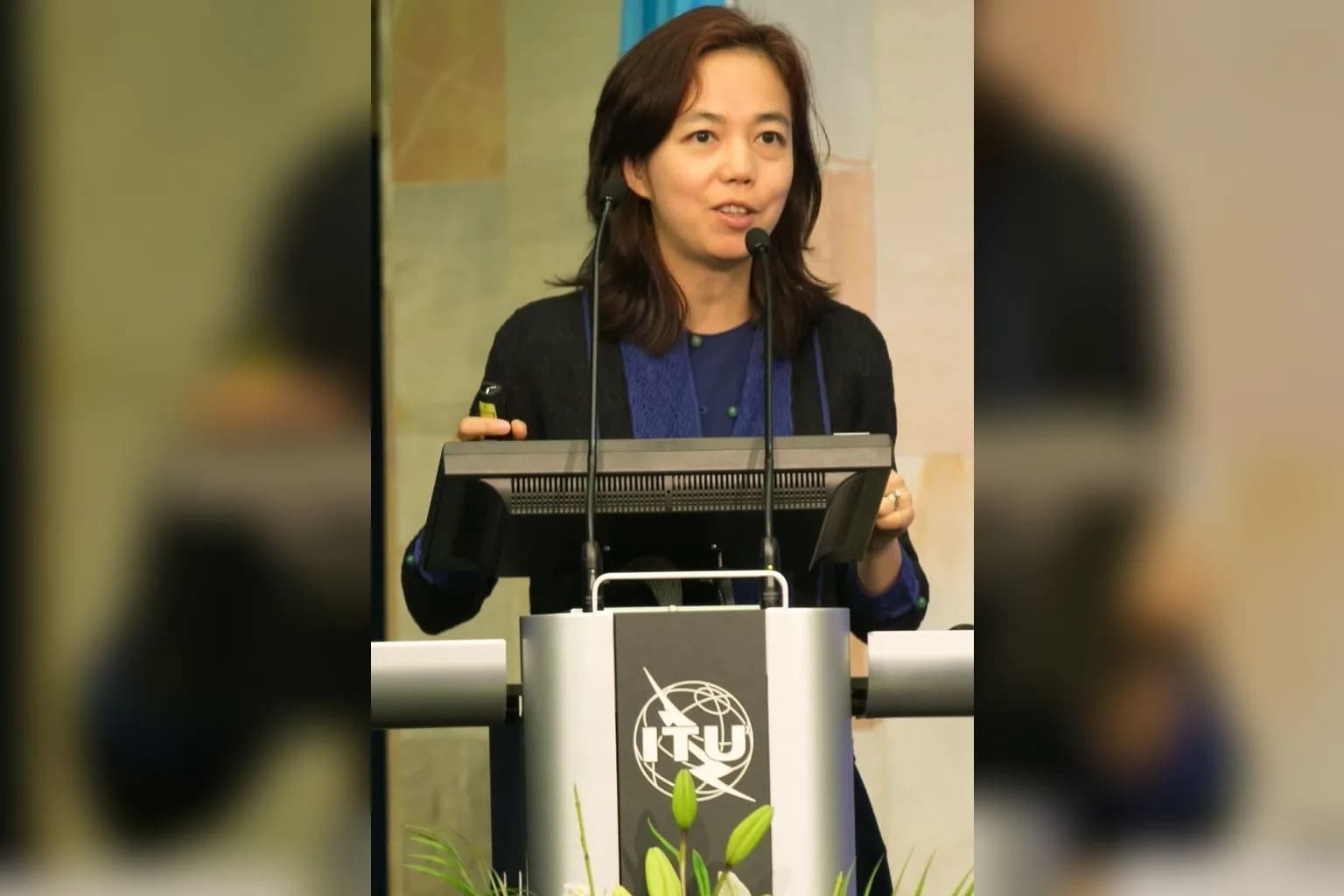
That larger question reached far beyond any one classroom: who gets to shape artificial intelligence, and what happens when the systems they shape enter ordinary life? Fei-Fei Li carried it to the U.S. House Committee on Science, Space, and Technology, where she testified at a hearing called “Artificial Intelligence, With Great Power Comes Great Responsibility”. She sat as the sole woman at the witness table, in the Rayburn House Office Building just south of the Capitol, bringing the perspective of a computer-vision researcher, an educator, and a leader working on the public stakes of AI.
Those stakes had already become visible in the behavior of systems released into the world. Amazon discarded recruiting software after it learned to penalize résumés containing the word “women,” while Google’s photo-identification software mislabeled Black people as gorillas in 2015. Microsoft, meanwhile, created an AI-powered social chatbot that began posting racial slurs. These documented failures came from different products and different companies, yet each exposed the same chain of decisions: people select data, define categories, set goals, and decide when a system is ready for use. The consequences reach people long before they reach an abstract debate about technology.
Li’s testimony placed that chain at the center of the conversation. Her work had shown what richly organized visual data could make possible for machines, and the failures surrounding AI showed why the organization of that data demands care. A recruiting tool can carry old patterns into a new process. A photo system can attach harm to an act of recognition. A chatbot can amplify the language it absorbs. The design question therefore includes the people affected by the answer, from the first training example through the moment a system meets the public.
That is the institutional ground of Li’s role as co-director of Stanford’s Institute for Human-Centered Artificial Intelligence. The title gathers her technical work and her public commitments in one place: AI research belongs alongside attention to human lives, human judgment, and human responsibility. Li has spent more than 25 years driving work across cognitively inspired AI, computer vision, deep learning, and AI systems for healthcare delivery, according to Princeton’s account of her career. At Stanford, the question that follows such work remains direct: once machines can see, learn, and act, what should the people building them be accountable for?
What Fei-Fei Li’s Career Says About the AI Boom
Li’s work runs across cognitively inspired AI, computer vision, deep learning, and AI systems for healthcare delivery, a record that Princeton describes as stretching across more than 25 years. That range gives Li a distinctive place in the AI boom: her career follows the field from the basic question of how a machine learns to see toward the harder question of how people live with what it sees. Computer vision supplied the foundation, while cognitively inspired research kept the human mind in view and healthcare systems brought the stakes into settings where recognition can shape care.
Those threads now carry institutional weight. Li is the Sequoia Capital Professor in Computer Science at Stanford and co-directs the Stanford Institute for Human-Centered Artificial Intelligence, roles that place research, teaching, and public purpose in the same frame, according to Princeton. Her election to the National Academy of Engineering, the National Academy of Medicine, and the American Academy of Arts and Sciences shows how widely that work reaches across technical and civic life. The 2023 Intel Innovation Lifetime Achievement Award adds another marker, recognizing a body of work whose influence extends through the institutions now shaping AI’s direction.
That influence also appears in the kind of public role Li has chosen to play. She called for a “moonshot mentality” for ambitious government investment in AI at a June 2023 meeting with President Biden, Time reported, and she serves on the National Artificial Intelligence Research Resource Task Force. The task force sits close to a practical question with large consequences: who has the resources to develop AI safely, and what priorities guide the work. Li’s career has repeatedly treated access, training data, research infrastructure, and human judgment as connected parts of the same project.
Her memoir, The Worlds I See: Curiosity, Exploration, and Discovery at the Dawn of AI, gives that project its own title, as Princeton notes. The plural matters. A machine’s visual world takes shape through the images people gather, the labels they assign, the systems researchers build, and the institutions that decide where those systems belong. ImageNet made that truth visible at a scale the field could use. Its legacy lives in a central lesson of the AI boom: modern systems rest on ambitious research, immense human effort, and enduring choices about what machines are taught to recognize.
Comments (0)