
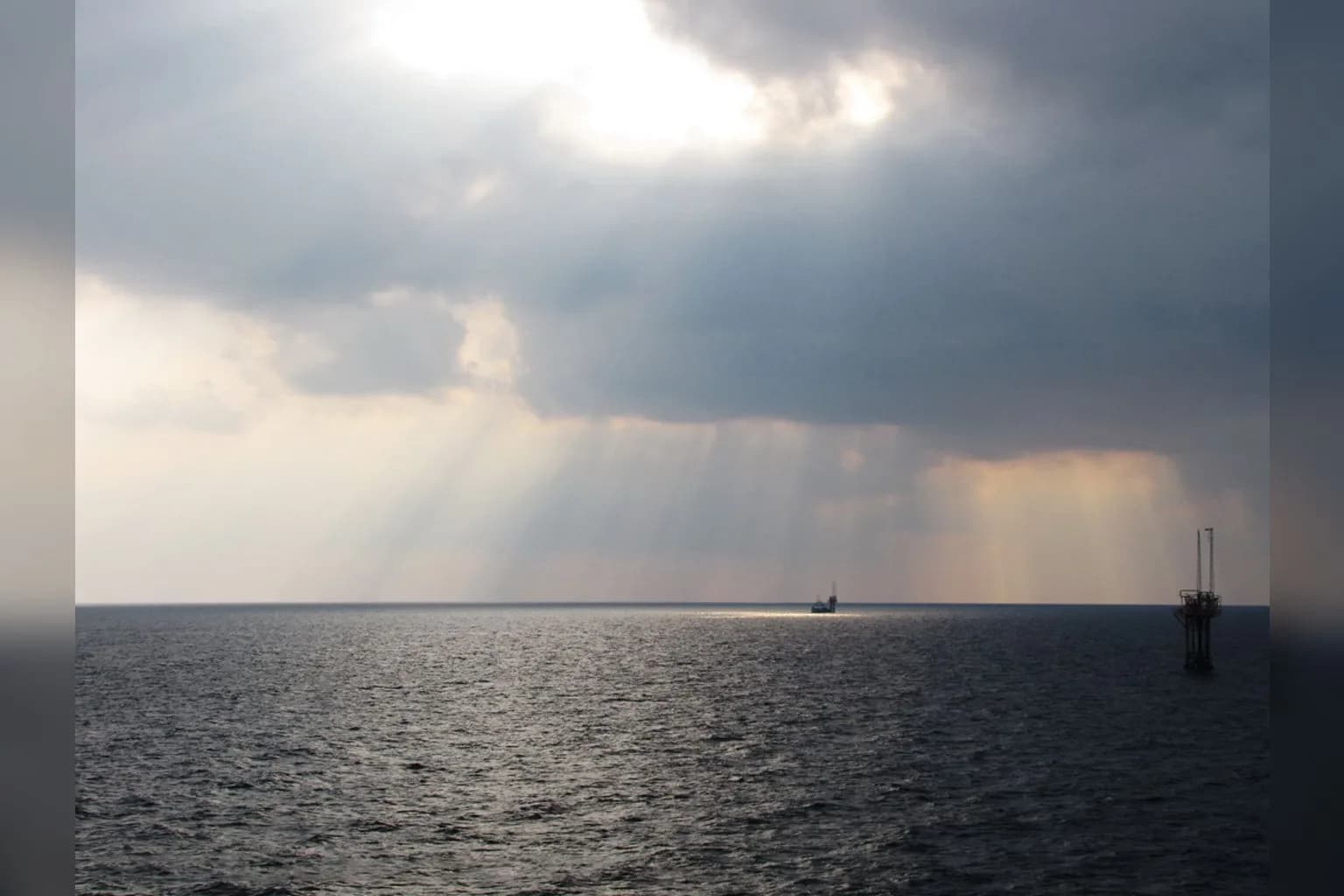
At Tehran’s Sacred Defense Museum on Monday, General Hossein Mohebbi, the spokesman for Iran’s Islamic Revolutionary Guard Corps, publicly placed the undersea cables of the Strait of Hormuz in the crosshairs of any future conflict. He described them as ‘legitimate new targets’.
The warning comes as the conflict between the United States and Iran has cooled without being fully resolved. Military action by the United States, Israel and others began in February, turning the region into a centre of conflict.
Mohebbi said seven large cables run beneath the strait, carrying all internet and commercial data. The Strait of Hormuz separates Iran and Oman and links the Gulf with the Gulf of Oman and the Arabian Sea.
His remarks set out a conditional threat. General Yadollah Javani, the IRGC’s political deputy, told Iran’s Arabic-language Al-Alam television on Wednesday that Iran could attack the cables in response to an attack on Iranian infrastructure.
An Iranian official stated: ‘If Iran is attacked, there will be no more red lines... from undersea cables to military bases, including covert ones’.
Mohebbi also referred to a possible ‘third phase’ of the war, saying it would reveal a ‘new geography’ with ‘new targets and new weapons’.
The public statements follow earlier attacks on digital infrastructure. Iranian strikes directly hit two Amazon Web Services facilities in the UAE in March and damaged infrastructure near one of its facilities in Bahrain.
At the height of the war in March, the IRGC named Microsoft, Google, Apple and Nvidia among US technology companies it considered legitimate targets. Mohsen Rezaei, a top Iranian security official, warned this month that US-linked digital infrastructure across the Gulf, including data centres and artificial intelligence facilities, could also be targeted in a renewed conflict.
Two senior Iranian security officials told Reuters that Tehran has prepared detailed plans to target undersea communications cables in the Gulf if the United States and Israel attack Iran again. One of the officials said Iran would seek to prevent repairs after an attack, extending disruption to communications including internet connections.
An Iranian official warned Washington not to ‘play with fire’, saying Iran had full access to the cables and could easily destroy them. Iran had considered cutting the cables several times since the war began, an unnamed Iranian spokesman said, yet had held back because it would mean ‘declaring war on the whole world and building new enemies’.
The same spokesman said cutting the cables would remain ‘an option if Trump escalates’.
One cable cited by the IRGC appears to be the Asia-Africa-Europe-1 cable. It stretches 15,050 miles from Asia to Europe and runs through Oman, the UAE and Qatar.
Undersea cables carry around 99% of global internet traffic, according to the International Telecommunication Union, a UN agency. Yet less than 1% of international bandwidth travels through the Strait of Hormuz, according to Alan Mauldin, research director at telecommunications research firm TeleGeography.
Professor Alesso Patalano, a war and strategy professor at King’s College London, said cutting the cables is ‘not only is it possible, but it’s been a rather clear possibility for a long time’. Analysts say multiple cable cuts could slow internet services and interrupt financial transactions, e-commerce and cloud computing.
The risk sits alongside continuing investment in the region’s connectivity. Microsoft plans to invest more than $400 million in subsea and terrestrial connectivity across the Middle East by 2030.

Comments (0)