
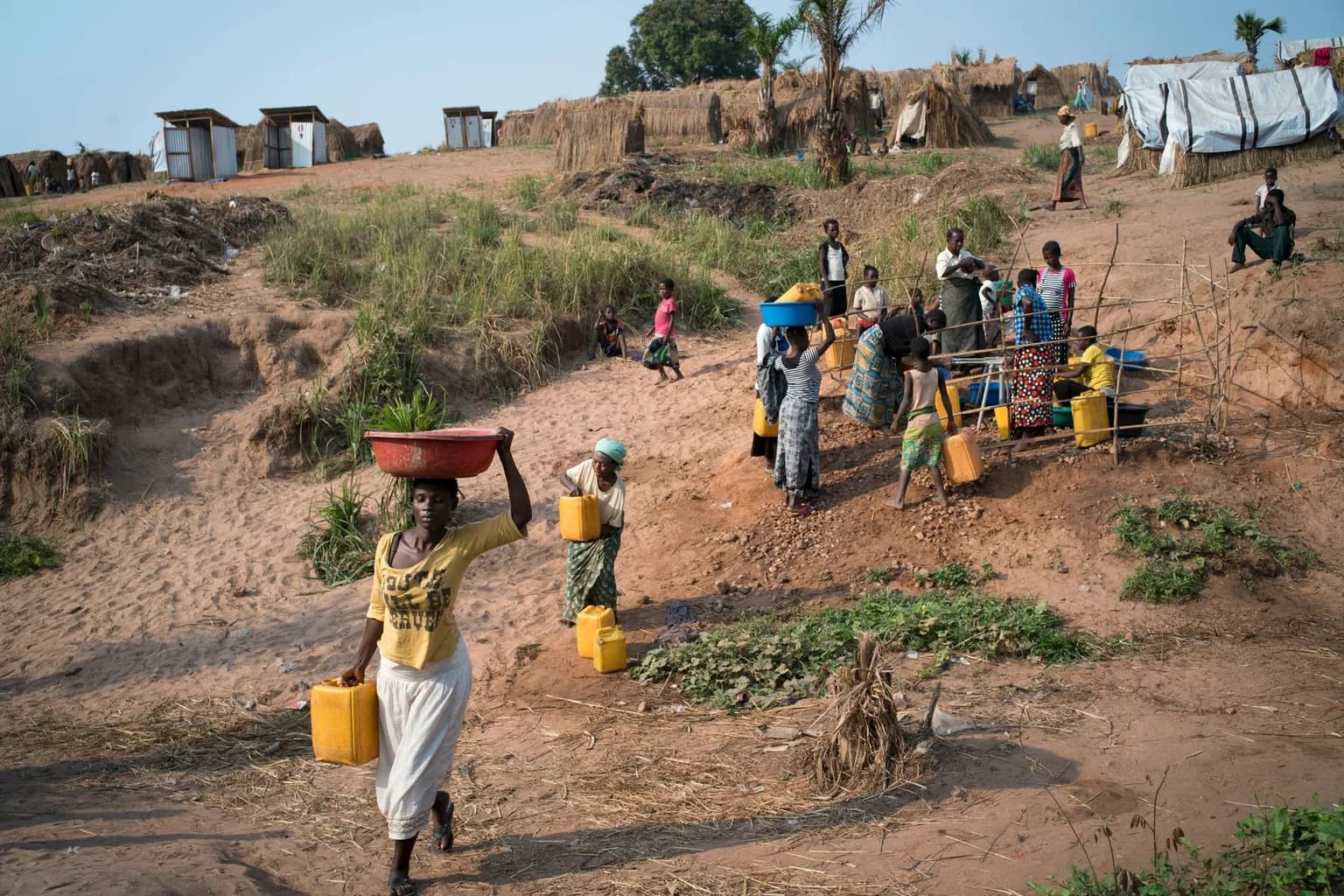
When Dr. Alain Mangolopa Kakule arrived in Lita health zone in Ituri Province on 5 July, deaths were already being recorded at the general hospital and in nearby communities. The World Health Organization epidemiologist had been sent to coordinate infection prevention, control and rapid-response teams.
A hygienist died in Lita while caring for patients. Doctors and nurses in the health zone were also becoming infected.
The outbreak had been detected in the Democratic Republic of the Congo on 14 May 2026 and was officially declared the following day. At that point, the Ministry of Health had identified 246 suspected cases, 76 suspected deaths, 8 laboratory-confirmed cases and 4 deaths.
In its first 100 days, from 14 May to 21 August 2026, Bundibugyo virus Ebola produced 5,458 confirmed cases and 2,606 deaths, a fatality rate of 48%, across 57 of the DRC’s 519 health zones.
The outbreak has produced 7 times as many cases in that period as the 2014 Ebola outbreak in West Africa did during its first 100 days. It appears to be expanding faster than any previously documented Ebola outbreak.
The DRC is facing its largest and deadliest Ebola disease outbreak. It is also the largest Ebola outbreak caused by Bundibugyo virus and the second largest Ebola outbreak worldwide.
Confirmed infections have been reported in Bas-Uele, Haut-Uele, Ituri, Nord-Kivu, Sud-Kivu, Sud-Ubangi and Tshopo provinces. The virus has also moved into Dungu Health Zone in Haut-Uélé Province, which borders South Sudan.
Dr. Patience Pacifique Lokengama, Lita’s chief medical officer, worked with Dr. Alain and WHO support to set up surveillance, case-management and safe-burial teams after the outbreak emerged.
The response is taking place amid a prolonged humanitarian emergency marked by conflict involving armed groups, limited health care and other basic infrastructure, attacks on health workers and mistrust in communities. More than 120 people from CDC have been deployed to affected countries, while about 500 CDC staff are involved in the response.
Children under five accounted for nearly one in three confirmed community deaths during the most recent 21-day period of the DRC outbreak. More than 60 per cent of confirmed cases among children under five have proved fatal, compared with fewer than 30 per cent among adults.
By 20 September 2026, the DRC had recorded 7,733 confirmed Bundibugyo virus cases and 3,732 confirmed deaths. Of the 222 confirmed deaths recorded nationally in the week of 14 to 20 September, 136 occurred in communities rather than treatment facilities, or 61.3 per cent.
Cases have crossed the border into Uganda, where 21 probable or confirmed cases linked to the outbreak were identified. Local transmission was limited and occurred mainly among health care workers. Uganda’s last confirmed patient recovered and was released from care on 16 July 2026, and it has no reported active cases.
France recorded one travel-related case from the DRC. The country’s last case recovered and left care on 4 July 2026. As of 10 September, there was no evidence of community transmission outside the DRC.
In August, the DRC received 70,000 Ervebo doses from the global Ebola vaccine stockpile. Of those, 20,000 doses were allocated to a Phase 3 clinical trial examining the vaccine’s potential effect against Bundibugyo virus.

Comments (0)