
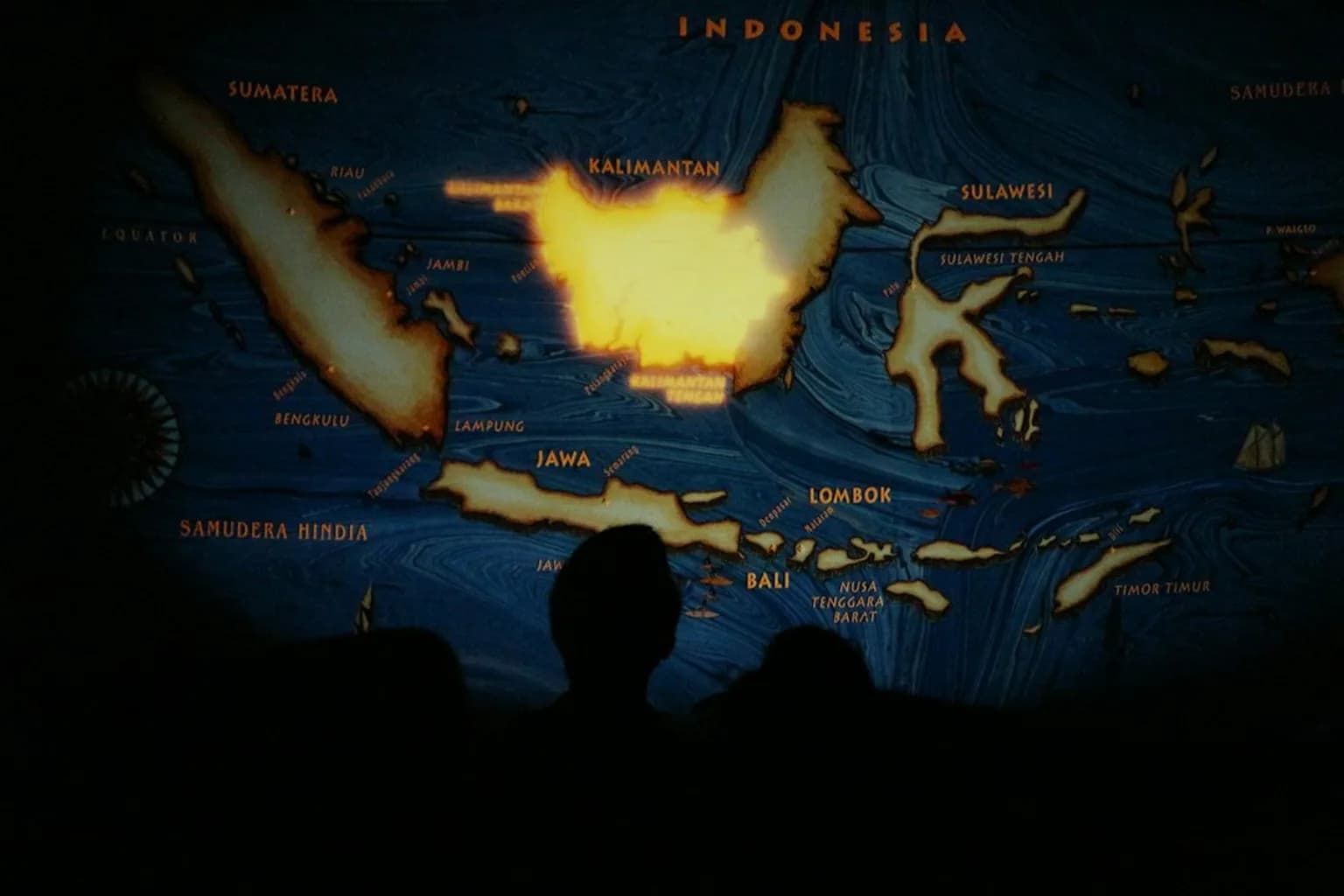
Indonesia’s 2026 fire season began in August, when an estimated 1,700 people died from fire-related pollution and 3,740 died from all air pollution sources. By September, an average of 34.5 million people were breathing polluted air each day, nearly 60 percent more than in August.
The Centre for Research on Energy and Clean Air (CREA), a Helsinki-based think tank, estimated that toxic smoke from wildfires killed 3,560 people in Indonesia during September. Chronic pollution from urban power generation, industry and transport caused a further 1,750 deaths, taking the month’s estimated air pollution death toll to 5,310.
That was a 42 percent rise from August. CREA said in a report released on Thursday that its estimates covered deaths linked to short-term PM2.5 exposure, within days of exposure.
About 57.8 million people were exposed to unhealthy or hazardous air in September, the highest recorded level. The national average PM2.5 concentration was 36 micrograms per cubic metre, more than seven times the WHO guideline of 5 micrograms per cubic metre. In Kalimantan, it reached 120 micrograms per cubic metre, or 24 times the WHO threshold in some areas.
Kalimantan bore a particularly heavy burden. During the worst days of September, the number of people inhaling hazardous air almost tripled from 2.8 million to 6.4 million. About 14 million people there, nearly 80 percent of the population, encountered poor air quality during the month, compared with 12.3 million in August.
The region’s PM2.5 level peaked at 196 micrograms per cubic metre on 21 September 2026. Sumatra recorded its highest PM2.5 concentration, 72 micrograms per cubic metre, on 16 September 2026. Around 31.4 million people in Sumatra faced unhealthy air or worse, while 23.8 million people in Java experienced unhealthy or hazardous conditions.
In August, West, South, Central and East Kalimantan had recorded an estimated 700 air pollution-related deaths. That figure rose to 1,470 in September, with fire-related pollution accounting for 99 percent of deaths in West, South and Central Kalimantan. Across Kalimantan, toxic fire smoke made up 94-99 percent of air pollution-related deaths, while it accounted for more than 80 percent on Sumatra.
Central Kalimantan recorded the highest per-capita toll, at 14.1 deaths per 100,000 people in September, more than twice its August level. CREA said most of the estimated deaths occurred in Indonesia’s part of Borneo, as well as on Java and Sumatra and in the country’s east.
As of October 21, 2026, affected provinces had reported 333,470 cases of acute respiratory infections. Children under five accounted for 75,172 cases, nearly a quarter of the total.
The fires have burned more than 1.9 million hectares in the nine months to September. Indonesia has faced severe drought linked to an El Niño weather pattern, while experts say slash-and-burn land clearing, often by timber, palm oil or mining companies, is a major cause of the fires. The resulting smog has crossed the Southeast Asian archipelago and raised pollution levels in Malaysia, Singapore, the Philippines and East Timor.
The government sent more than 72,000 people to cloud-seeding and firefighting operations. It also activated more than 2,100 doctors and health workers in hard-hit areas, and distributed 5.3 million masks.
Those efforts came after the National Disaster Mitigation Agency (BNPB) budget was cut by 75 percent, from IDR 2 trillion in 2025 to IDR 491 billion in 2026. Agus Sari, chief executive of Landscape Indonesia consultancy, said the cuts had hampered the agency’s work.
“Indonesia should be able to prepare for what is going to happen. The fact that we are not prepared at all is purely a matter of lacking the will,” Sari said.

Comments (0)