
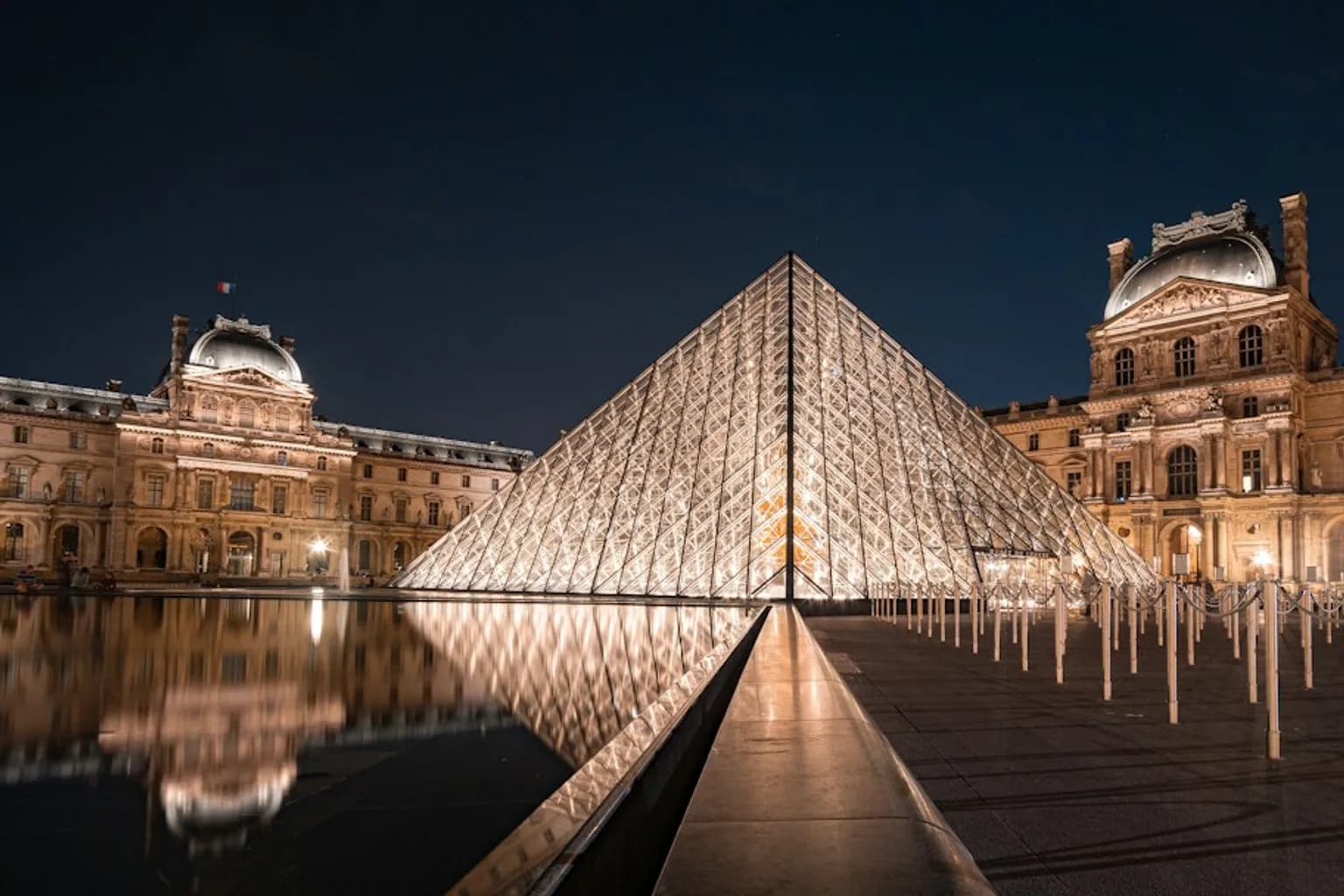
More than 14 museums have been hit by smash-and-grab criminals since early 2025, prompting authorities to invest in technology and surveillance for cultural institutions across Europe.
Reviews after the Louvre robbery exposed failures in surveillance and physical security at the museum. One of two cameras near the point of entry was operating, control-room staff had too few screens to watch images live, and an audit found that security systems used the weak password, 'Louvre'.
On October 19, thieves posing as workmen used industrial disc-cutters to force their way into the Apollo Gallery at the Louvre in Paris. The operation lasted around 10 minutes, and eight historic items worth an estimated $100 million were taken.
The stolen objects included a brooch and crown belonging to Empress Eugénie, wife of Napoleon III.
The thieves used a riverside balcony to gain access before leaving on powerful motorbikes. Experts at Van Cleef & Arpels had identified the balcony in a 2019 audit as vulnerable because an extendable ladder could reach it.
Laurence des Cars, the Louvre director, became the first woman appointed to the role when President Emmanuel Macron selected her in 2021. She had not been told of the earlier audit, which her predecessor had ordered.
When the alarm sounded, police were dispatched to the wrong location. The robbers had gone 30 seconds before police and private security guards reached the museum.
Macron described the robbery as an attack on France's history.
Guy Tubiana, a senior police officer and security adviser at the culture ministry, told senators he was 'stunned' by the failures found at the museum. 'There was a succession of malfunctions that led to catastrophe but I never would have thought the Louvre could have so many malfunctions,' he said.
Four suspects were detained within 10 days of the theft and remain in jail awaiting trial. The jewels have yet to be recovered a year later.
They were last recorded on closed-circuit television in an underground lock-up in the Aubervilliers suburb of northern Paris.
Two of the suspects have said a ringleader took part in the operation, though investigators view that account sceptically. Arthur Brand, a Dutch private art detective, said one of those accused could still disclose where the jewels are in return for a reduced sentence.
Brand cited the recovery of jewellery after the 2022 TEFAF art fair theft in the Netherlands and the 2019 Green Vault museum break-in in Dresden, Germany. Christopher Marinello, chief executive and founder of Art Recovery International, told AFP: 'There was a short period of time where they may have hidden them in a wall or buried them.'
The Louvre has hired veteran police officer Olivier Goupil as its new security coordinator. It says video surveillance will cover its entire perimeter within a year.
Elsewhere, the targets have included art centres and local archaeological collections. On October 5, thieves entered the C. Karoutzos Contemporary Art Centre in central France and stole a 150kg bronze book cover designed by Salvador Dalí, decorated with gold, gems and shells.
In July, thieves used sledgehammers against six display cases at the Lalique Museum in France and took 27 works, mainly jewellery. Also in July, a cyber attack disabled the alarm and surveillance systems at Paris' Museum of Natural History. Robbers took nearly 6kg of gold worth around US$2 million two months later.
On August 27, thieves broke into a bulletproof case at Villena's Municipal Archaeological Museum in Spain. They took dozens of Bronze-Age gold, silver and amber objects, including bracelets, bowls, bottles and three crowns, and the museum closed after the theft.
Also on August 27, thieves stole a 1939 Van Cleef & Arpels necklace containing 673 diamonds from the Museum of Applied Arts in Vienna.
The Magnani Rocca Foundation in Parma, Italy, lost paintings in a March heist, while the Renoir Museum in Cagnes-sur-Mer, France, reported paintings lost in a September heist. Police have since returned every canvas.
Research indicates that many cultural institutions lack adequate security and emergency plans. The Louvre theft and the robberies that followed have brought those gaps into focus for smaller institutions holding valuable collections.



Comments (0)