
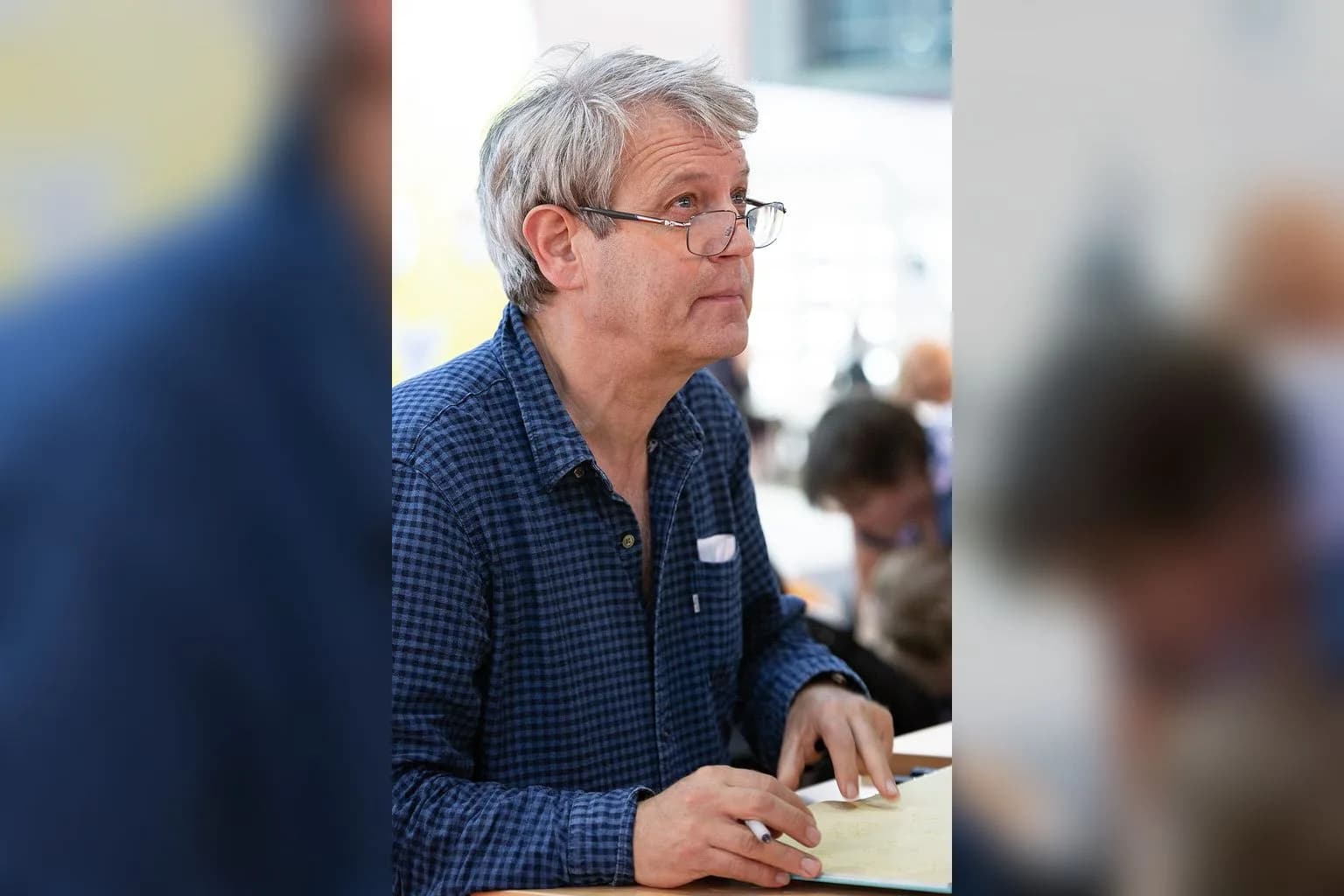
For illustrators whose work can be recreated by generative software, the dispute over The Gruffalo could test their ability to control how their characters are used.
Scheffler says artificial intelligence firms have reproduced his work in breach of copyright, and told BBC London that he is “seriously considering” legal action.
Axel Scheffler, the south London-based illustrator who works by traditional methods and does not own a smartphone, was shown AI-generated images of the mouse and Gruffalo he drew by hand. The characters had been placed in settings including Silicon Valley and Oktoberfest.
“I was quite shocked. It's clearly my mouse, my Gruffalo, as close as they can do it, but the rest of the image is completely created - it's a clear theft of copyright,” Scheffler told the BBC.
The Gruffalo has been a fixture on children’s bookshelves since 1999, and its books have sold more than 18 million copies worldwide. It was written by the London-born children’s author Julia Donaldson.
When users ask ChatGPT for an image of the Gruffalo, the software produces results in under a minute that bear unmistakable similarities to the original.
Scheffler said he has been in touch with a lawyer in Germany. He is considering bringing a case there because he believes the European Union is more creator-friendly.
“There have been illustrators taking legal action against AI companies and I'm seriously considering it. I just want them to stop,” he said.
He would prefer to bring a case with other artists, rather than act alone, and is said to be in talks with his publishers about institutional support.
Other creators are already pursuing OpenAI in Germany. German publishing group Penguin Random House and author-illustrator Ingo Siegner are suing the company over the unauthorised generation of images of the children’s character ‘the Little Dragon Coconut’.
The Munich Regional Court is due to decide in spring 2027 whether OpenAI breached copyright law in that case.
Carlsen publishing house has also taken OpenAI to court with author Marc-Uwe Kling and illustrator Astrid Henn over alleged copyright infringement involving ‘the NOhorn’.
AI firms have argued that using copyrighted material to train their models does not necessarily amount to copyright infringement.
An OpenAI spokesperson said: “We're having productive conversations with rightsholders around the world about supporting creativity, including fan art, while protecting intellectual property and taking appropriate action in response to copyright complaints.”
Comments (0)