
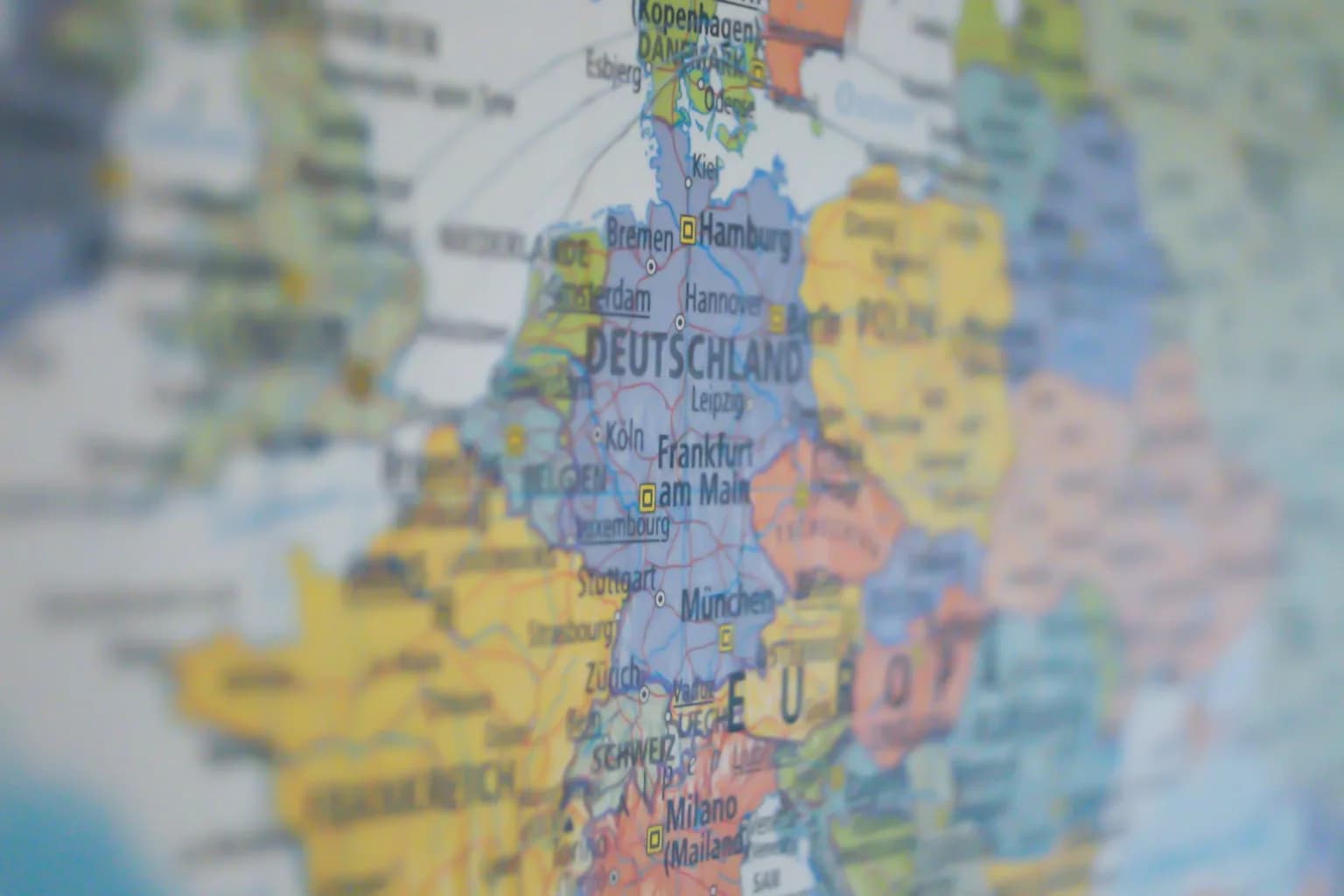
Young Germans pressing demands over living costs, education and military conscription encountered water cannons and pepper spray on Saturday after some protesters threw fireworks, bottles and stones at police in several cities.
The demonstrations were organised by Gen Z Regelt, a loose alliance whose name means “Gen Z sorts it”, around six issues that included the rising cost of living, education cuts and military conscription.
By Saturday morning, nearly 180,000 people had signed up online to take part in demonstrations planned across 34 German cities on 31 October 2026. The main host cities included Frankfurt, Cologne, Munich and the capital, Berlin.
German authorities had said they expected the demonstrations to be largely peaceful, while warning that extremist groups might seek to exploit them. The federal interior ministry said parts of Germany’s far-left extremist scene had joined efforts to mobilise support. Thousands of police were deployed across the country.
Veronika Dinter, a 23-year-old political science student and Gen Z Regelt spokeswoman, travelled from Hannover to Berlin on Friday night to join the protest. The main Berlin demonstration began at 2pm (13:00 GMT) on Saturday at Platz des 18 Maerz, on the western side of the Brandenburg Gate.
Some businesses along Berlin’s Kurfuerstendamm shopping boulevard boarded up their windows and planned early closures before the demonstrations. Police initially reported “isolated instances of throwing eggs and bottles” from a crowd of around 500 people in Berlin. They later reported “illegal burning of pyrotechnics” and said the crowd had grown to around 3,000 participants.
Police estimated some 5,000 people gathered at the Brandenburg Gate, while organisers put attendance at 10,000. Demonstrations across the 34 cities drew thousands of people peacefully, according to the account of the day’s events.
Phil Tziartzianis, a young man who travelled eight hours from his hometown of Kassel, said: “It feels important for me to be here among other young people who feel the same way.” Emma Heymann, a 24-year-old student living in Berlin, said: “Our generation feels very angry at the government because they are making these huge cuts that are affecting our quality of life here. And at the same time, they are spending billions on the military and spending money to fund the genocide in Gaza.”
Some protesters carried signs reading “Merz must go”, directed at Germany’s centre-right chancellor, Friedrich Merz. Kaja Schwab, a speaker for Gen Z Regelt, said young people were told “we will do well if we work hard enough” while “the life is getting unaffordable and the young are forced into military service”.
Tensions rose in Berlin, Hamburg and Cologne as some protesters used fireworks and threw other objects at police. In Hamburg, protesters at Steintor square pelted police with fireworks, prompting police to use a water cannon. Police estimated that 6,700 people took part in the Hamburg demonstration.
In Cologne, police halted the march and turned it into a stationary rally after some participants covered their faces and used pyrotechnics. Police then fired a water cannon to disperse protesters who were throwing fireworks.
Roman Poseck, the interior minister for the state of Hesse, said: “We assume there were about 100 attackers motivated by extreme leftist ideology” who “staged a massive attack against the police by throwing bottles, stones and fireworks”. The identity and affiliations of those described by Poseck were not established in the information available.
Gen Z Regelt said it rejected violence and intended to hold peaceful marches. Dinter told Deutschlandfunk that a “narrative of violence” was being used “to divert attention from our core demands”. She said those demands concerned unaffordable life, education and military conscription.
The protests came as Germany seeks to revive economic growth while facing pressure on pensions and public services as baby boomers retire and the working-age population shrinks. Other demonstrations have swept Europe in recent weeks, including in France, Belgium, Italy, Spain and Serbia.


Comments (0)