
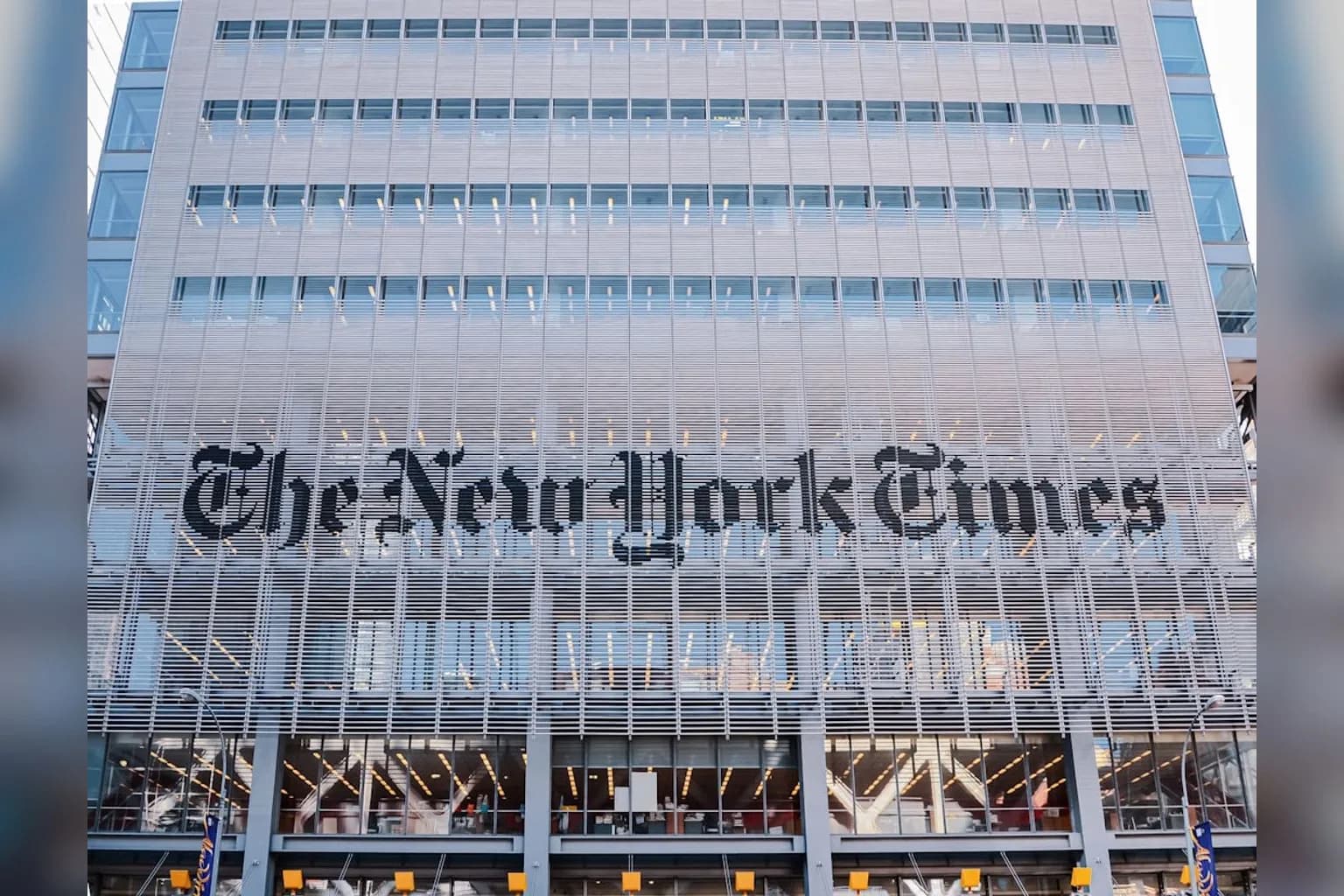
Readers who once reached news publishers through search may increasingly receive answers without visiting the original reporting. Internal Microsoft data included in newly unredacted court filings shows that Copilot’s answer engine produced up to 93% fewer referrals to The New York Times domain than traditional Bing search. The documents also record private concerns within Microsoft and OpenAI about the effects of using journalism to train artificial intelligence systems.
The filings were surfaced on September 17, 2026, in The New York Times’ copyright lawsuit against OpenAI and Microsoft. The Times brought the case in 2023 and was joined by the New York Daily News and the Center for Investigative Reporting. The publishers allege that the companies used their journalism without permission or payment to train large language models, which are AI systems that generate text.
Among the documents is a January 2023 internal memo by Brent Hecht, Microsoft’s Director of Applied Science. Hecht described the company’s AI training practices as ‘An astonishing theft of unprecedented proportions’. He also called the mass collection of journalism the ‘largest theft of labor in human history’.
The court documents allege that OpenAI bypassed paywalls to obtain material for training. They describe a coordinated effort by OpenAI researchers to develop ways around paywall detection. Nick Ryder, an OpenAI researcher, told Brockman about a ‘hack to get around nytimes paywall,’ according to the filings. Brockman replied: ‘ah nice’.
Satya Nadella, Microsoft’s chief executive, acknowledged under oath that paywalled material should be licensed for training, the filings say. Nadella also said he would have required OpenAI to retrain its models if he had known that paywalls were being circumvented.
The records also describe the removal of copyright notices from datasets before training. Researchers deliberately removed the notices because they ‘wouldn’t want model outputting’ ‘copyright notices’ to users, the filings say. The publishers contend that this handling of their work formed part of a wider system for building datasets without their consent.
The scale of the material identified in the case is substantial. OpenAI’s mid-training datasets contain more than 91,692 copies of works published by the NYT, Daily News, and Center for Investigative Reporting, according to the filings. A dataset derived from Common Crawl, a web archive, included more than 2 million documents from nytimes.com alone.
Microsoft provided training data to OpenAI through initiatives called Project Taxi and Project Mango, the documents say. Project Mango contains copies of at least 160,903 unique works from the news publishers. The filings do not establish how broadly the practices extended beyond the publishers involved in the case.
Microsoft’s own records recognised the potential consequences for people whose work supplied AI training material. One document warned of a ‘real risk’ that generative AI could significantly disrupt their employment. Another stated: ‘It is highly unusual that an end-product threatens the economic foundations of its essential suppliers, but that is the situation we have created for our LLM business with respect to its "content supply chain."’
Nick Turley, the head of ChatGPT, also described publishers internally as facing an ‘existential threat’ from products he called ‘largely substitutive’, according to the filings. The publishers’ case centres on the argument that systems trained on their reporting can compete with the original sources while reducing the traffic on which those sources depend.
The civil lawsuit remains unresolved. The filings leave open whether the companies will be required to retrain their models, whether injunctions could affect current products, and what damages the publishers may seek or receive. It is also unclear what further documents remain sealed, the full timeline of the alleged paywall workarounds, and whether other publishers will bring separate cases.




Comments (0)