
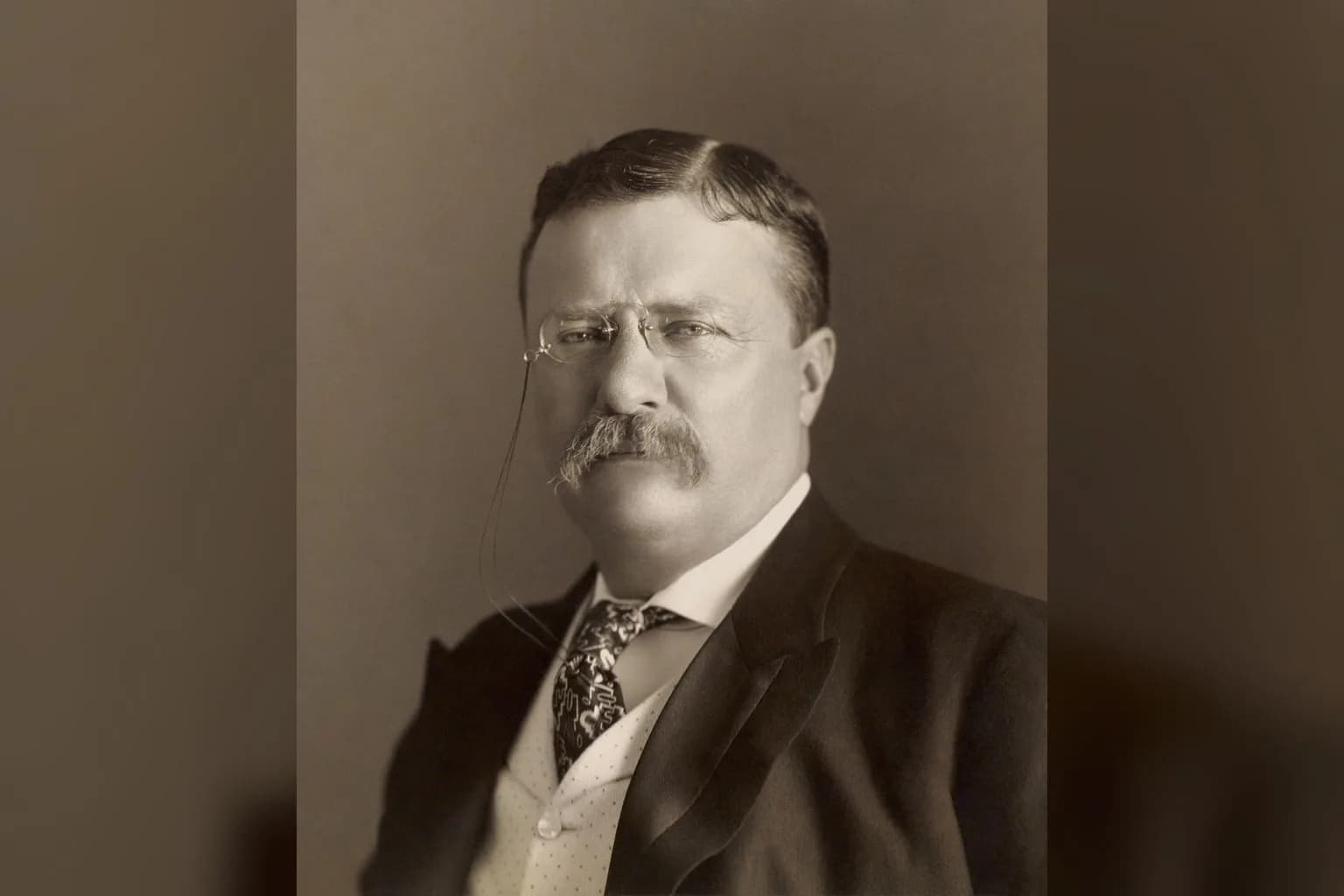
A Public Reception Turns Into a National Crisis
On September 6, 1901, President William McKinley was attending a public reception at the Pan-American Exposition in Buffalo when Leon F. Czolgosz shot him. The National Park Service history identifies Czolgosz as a 28-year-old anarchist and records that he fired twice. In the space of that encounter, Buffalo became the center of a crisis with consequences far beyond the exposition grounds. The president had been shot, and the country’s attention turned immediately to the condition of the man at its head.
The first facts of the medical response carried their own urgency. Doctors removed one bullet, according to the National Park Service history, yet they failed to find the second. That missing bullet left McKinley’s condition uncertain at the very moment the public needed certainty most. Each report from Buffalo therefore bore on two questions at once: whether the president would recover, and what would follow if he could not.
The shooting placed the machinery of succession close to the center of national life. A public reception had brought the president before a crowd; the attack made his physical condition a matter of national consequence. The wound itself shaped the uncertainty. One bullet had been removed, while the other remained beyond the doctors’ reach, and the response could offer the country only an incomplete account of what had happened inside McKinley’s body.
That incompleteness gave the days ahead their tension. McKinley remained the president, while the facts available from the first medical effort left his prospects unresolved. Buffalo now held a wounded president, a medical emergency, and an immediate question about the continuity of executive power. The answer would depend on what came next in McKinley’s care.
McKinley’s Decline Put the Vice President on Notice
That care soon became the center of the crisis, because McKinley’s condition worsened after surgery as a gangrenous infection developed. The National Park Service history records the infection as the force behind the president’s decline, giving the anxious uncertainty in Buffalo a stark direction. The question of recovery gave way to a question of time. Every further deterioration carried consequences far beyond the room where McKinley lay, since the presidency remained occupied by a gravely ill man and the office required a clear line of authority.
September 14 brought that line into focus. McKinley died that day, after the injuries sustained in Buffalo had led through surgery and infection to a final collapse. The U.S. Senate’s inauguration history places his death on September 14, 1901, the same date that would carry the transfer of presidential power forward. The date therefore held two events within its span: the end of McKinley’s presidency and the beginning of the process that would place its successor under oath.
That transition had its own urgency. A president’s death created an immediate need for continuity, and the vice president stood at the center of that need. The machinery of government now depended on bringing Theodore Roosevelt into the moment and completing the formal act that would make the succession unmistakable. Buffalo had begun the month with a public reception and had arrived, eight days later, at the threshold of a new administration. The next task was reaching the vice president, who was far from the city as the crisis reached its decisive hour.
Roosevelt Received the News Far From Buffalo
That need reached Theodore Roosevelt at a distance. While Buffalo faced the consequences of the crisis, the vice president was away on a speaking trip in Vermont when he learned that McKinley had been shot, according to the National Park Service history. The news tied him at once to events in a city far from his own immediate surroundings, where the question of succession had shifted from an abstract provision of government to an urgent practical matter.
Roosevelt soon headed into New York’s Adirondack Mountains, arriving there on September 11, the Park Service records. The setting placed him amid a landscape of travel, climbing, and retreat just as the national emergency sharpened. Each new report carried a larger weight because Roosevelt stood next in line to the presidency. His position had always defined the stakes of the vice presidency; the unfolding emergency now made those stakes immediate, personal, and impossible to hold at a distance.
On September 13, Roosevelt had been climbing Mount Marcy. As he returned, he received a telegram saying that McKinley appeared to be dying, according to the National Park Service history. The message brought the crisis into a single, clear instruction. Roosevelt had to leave the Adirondacks and move toward the place where the government’s next formal step would occur.
The timing gave the journey its force. Roosevelt had begun with a speaking trip in Vermont, reached the Adirondacks on September 11, and received the decisive telegram two days later while returning from Mount Marcy. Those movements now formed the opening stretch of a rapid passage from mountain country to Buffalo, with the presidency waiting at the other end. The office Roosevelt was approaching would soon take on a changed role in American public life, and the first step toward that transformation began with a telegram in the Adirondacks.
Fifteen Hours Later, Buffalo Had a New President
The office Roosevelt was approaching required him to reach Buffalo, and the distance between the Adirondacks and the city suddenly became part of the nation’s transfer of power. After learning that McKinley was not expected to survive, Roosevelt completed a 15-hour journey to Buffalo. The urgency lay in the journey’s purpose: Roosevelt was traveling toward a city already bound to the crisis and toward responsibilities that could no longer wait for a more formal setting or a more convenient hour.
Those 15 hours carried him from the mountain country described in the telegram to the place where the next decision would be made. Roosevelt reached Buffalo at about 1:30 p.m. on September 14, according to the National Park Service history, and went to the home of his friend Ansley Wilcox. Wilcox’s residence offered Roosevelt a place to arrive, gather with the officials around him, and confront the immediate question of how the succession would be marked. A private home now stood at the center of a national emergency.
The timing made the house’s role unusually direct. Roosevelt had arrived in Buffalo only hours before the ceremony that would place him in office, and the people around him moved quickly to make that ceremony happen. Secretary of War Elihu Root urged Roosevelt to take the oath at once, the Park Service history records. Root’s advice turned the Wilcox residence from a friend’s home into the chosen setting for a presidential inauguration, with the practical needs of the moment setting the terms.
That decision also fixed the pace for everything that followed. Roosevelt had come to Buffalo after a journey measured in hours, and the inauguration now had to be arranged with the same speed. The house would provide the setting, while Roosevelt prepared to take up an office whose transfer had begun far away in the Adirondacks and reached Buffalo by midafternoon.
A Borrowed Coat and an Oath in the Library
That pace showed in Roosevelt’s clothes. The rush to Buffalo had left him without formal attire, so, before the ceremony, he borrowed a long frock coat, trousers, a waistcoat, a four-in-hand tie, and patent leather shoes, details that gave the moment the practical urgency of a house adapting to an event of national consequence. The National Park Service records the borrowed outfit as part of the hurried preparation inside Ansley Wilcox’s home.
Once dressed, Roosevelt entered the library of Wilcox’s Greek Revival house, where the room had become the place for the presidential oath. He raised his right hand and recited the oath taken by every U.S. president. The National Park Service places that act in the library, a private room now carrying the formal weight of the United States government.
At about 3:30 p.m. on Saturday, September 14, Judge John R. Hazel of the U.S. District Court administered the oath. The National Park Service history identifies Hazel as the judge who conducted the ceremony, while the U.S. Senate’s inauguration history records that no Bible was used. The U.S. Senate’s inauguration history The borrowed formal clothes, the raised hand, and the spare library ceremony gave the transition its immediate form. From that room, the presidency moved into a new chapter.
September 14 Marked a Turning Point for the Presidency
The borrowed formal clothes, the raised hand, and the spare library ceremony had settled the immediate question of succession. On September 14, 1901, Theodore Roosevelt became the 26th President of the United States, a change formally completed in Buffalo on a day that had begun with the consequences of a national tragedy. The National Park Service places that date at the center of Roosevelt’s presidency, because the oath gave constitutional form to a transfer of power and opened a very different chapter in the office itself.
That larger change gives the afternoon its enduring weight. The National Park Service describes Roosevelt’s 1901 inauguration as a turning point in the role of the presidency, an assessment that connects the compact ceremony to a shift in how national government would act and where its attention would reach. The Park Service’s account of the inaugural site frames the moment as the beginning of a presidency with a newly consequential place in American public life.
The word “turning point” matters because it identifies an alteration in direction rather than a change in title alone. Roosevelt had inherited the office through the events of September 14, yet the inauguration also launched what the Park Service calls a dramatic change in national policy. According to the National Park Service, that change propelled the United States into the realm of world affairs, widening the stakes of a presidency assumed in a Buffalo home.
Every element of the day had moved quickly: the journey, the arrival, the borrowed attire, and the oath. Its consequence would move on a far broader scale. Roosevelt’s inauguration therefore stands as a hinge between the urgent mechanics of succession and a presidency whose role, national policies, and connection to world affairs would take a dramatic new course. The story of September 14 reaches its fullest meaning in that passage from a necessary oath to a changed understanding of presidential power.
Buffalo Preserved the Place Where the Modern Presidency Began
The story of September 14 reaches forward through the presidency Roosevelt made his own. In 1904, he was elected president in his own right, giving the office a mandate that followed the sudden transfer of power in Buffalo. That later election places the Wilcox house in a longer political arc: the home witnessed a moment of immediate necessity, then became associated with a president whose years in office carried the larger changes already set in motion.
Those changes soon reached across national borders. Roosevelt received the Nobel Peace Prize in 1906 for engineering the peace treaty that ended the Russo-Japanese War. The award supplies a clear measure of the international role that followed his accession. A presidency assumed during an urgent afternoon in Buffalo became a presidency identified with the settlement of a war between distant powers. The connection gives the day’s larger significance its human scale. The office passed in a borrowed coat, in a room within a friend’s home, and its occupant later stood at the center of diplomacy recognized by the Nobel Peace Prize.
Buffalo has kept that connection visible. The Wilcox house has been restored and opened to the public as the Theodore Roosevelt Inaugural National Historic Site, preserving the place where Roosevelt became president. The site stands in Buffalo as a commemoration of an event whose consequences traveled far from the city. Visitors encounter a house tied to a single afternoon, while the history attached to it extends through Roosevelt’s 1904 election, his 1906 peace prize, and the dramatic shift in national policy and world affairs that the National Park Service associates with his inauguration.
That scale is the lasting contrast. A private library provided the setting for a transfer of power, and the presidency that began there helped carry the United States into a wider role in the world.
Comments (0)