
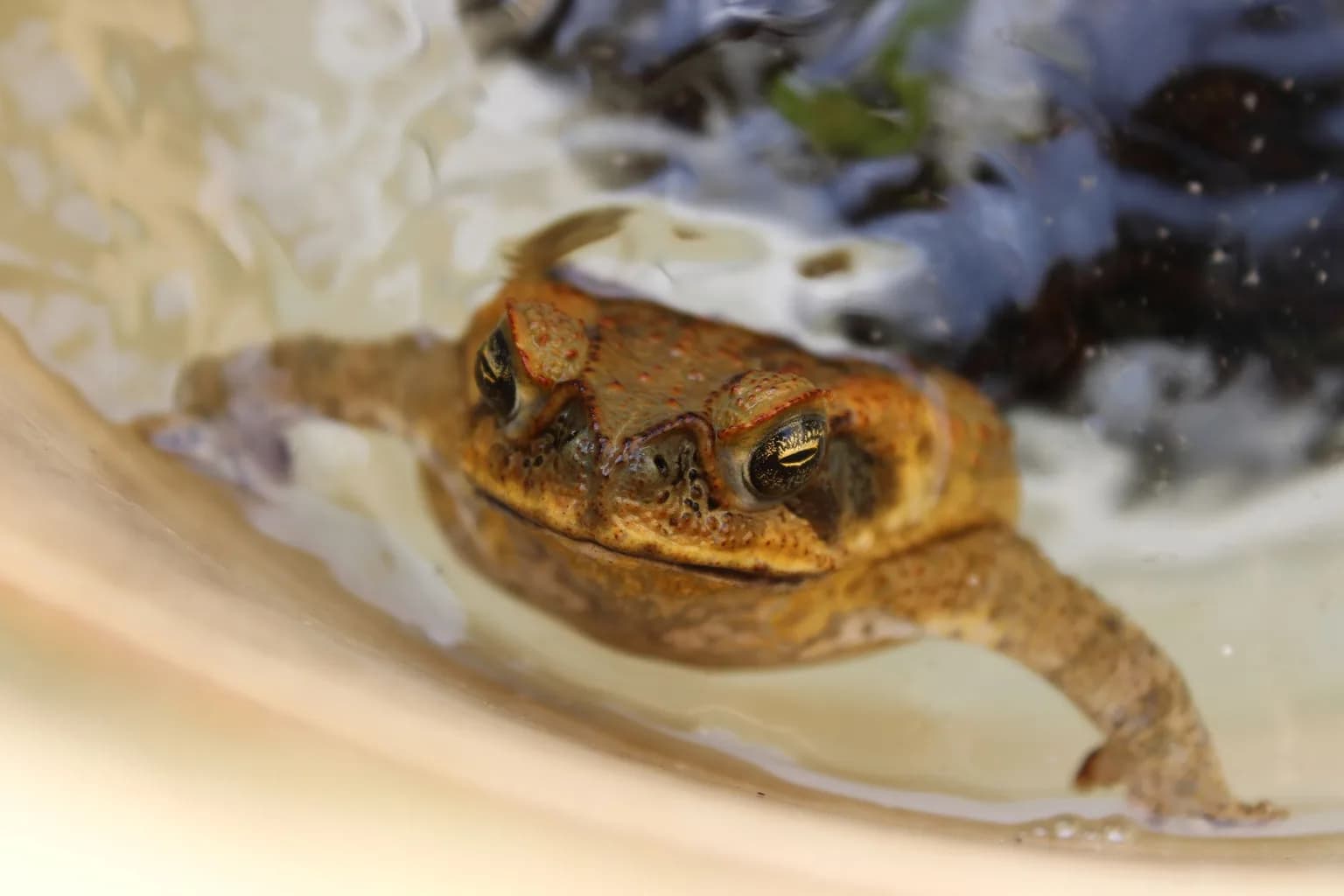
Early exploratory work on a containment zone has begun, with the aim of protecting about 27 million hectares of sensitive habitat and an estimated 25 native species from cane toads before they reach the Pilbara region of western Australia.
Rio Tinto, Curtin University and the mining group’s joint venture partners, Mitsui and AMB Holdings, have committed A$28m (£14.5m) after Professor Ben Phillips concluded that cane toads would reach the Pilbara within two decades without intervention.
For Roberta Hunter, a ranger in the Nyangumarta Warrarn Indigenous Protected Area, the advancing toads threaten the country she works to protect. The protected area lies within the landscape in the path of the spread.
“Cane toads destroy the water and animals. When toads come close to our country, we want to be there to stop them because we don't want the country to be destroyed,” Hunter said.
The proposed zone covers 7,500 sq km (2,895 sq m) between the Great Sandy Desert and the Indian Ocean, south of Broome. It is designed to deny the toads water in dry months, when they need it every few days to survive.
The project will modify or contain 685 water infrastructure items across six pastoral stations. In the Kimberley, it aims to develop and alter water infrastructure to create a 150-kilometre stretch with fewer artificial water points.
The intensive five-year construction phase is scheduled to start in 2027. Phillips called the containment zone “a once in a lifetime opportunity to stop one of the world's worst invasive species in its tracks and protect the region's unique wildlife.”
Cane toads were brought to Australia in 1935 to control beetles in the sugar cane industry. They have since travelled west across the country’s northern landscape at 40 km to 60 km a year, according to the Australian government. The animals have no predators or diseases that control them, because they defend themselves using poison.
Their toxins can kill native wildlife and pose a threat to the Pilbara ecosystem. Species at risk include the northern quoll, the goanna lizard and the ghost bat.
Matthew Swinbourn, Western Australia’s environment minister, said cane toads can have a disastrous effect on native species and their ecosystems. He welcomed measures that could slow or prevent their further spread through the state.
Rio Tinto operates a vast iron ore operation in the Pilbara. It holds a 50% stake in the Rhodes Ridge Joint Venture, while Mitsui has 40% and AMB Holdings has 10%.
The company’s role in the project follows international condemnation six years ago over its destruction of two 46,000-year-old rock shelters sacred to Aboriginal peoples at Juukan Gorge in Western Australia. The decision cost former chief executive Jean-Sébastien Jacques his job.
Jacques told Australian lawmakers that the destruction should not have occurred and apologised unreservedly to the Puutu Kunti Kurrama and Pinikura people.



Comments (0)