
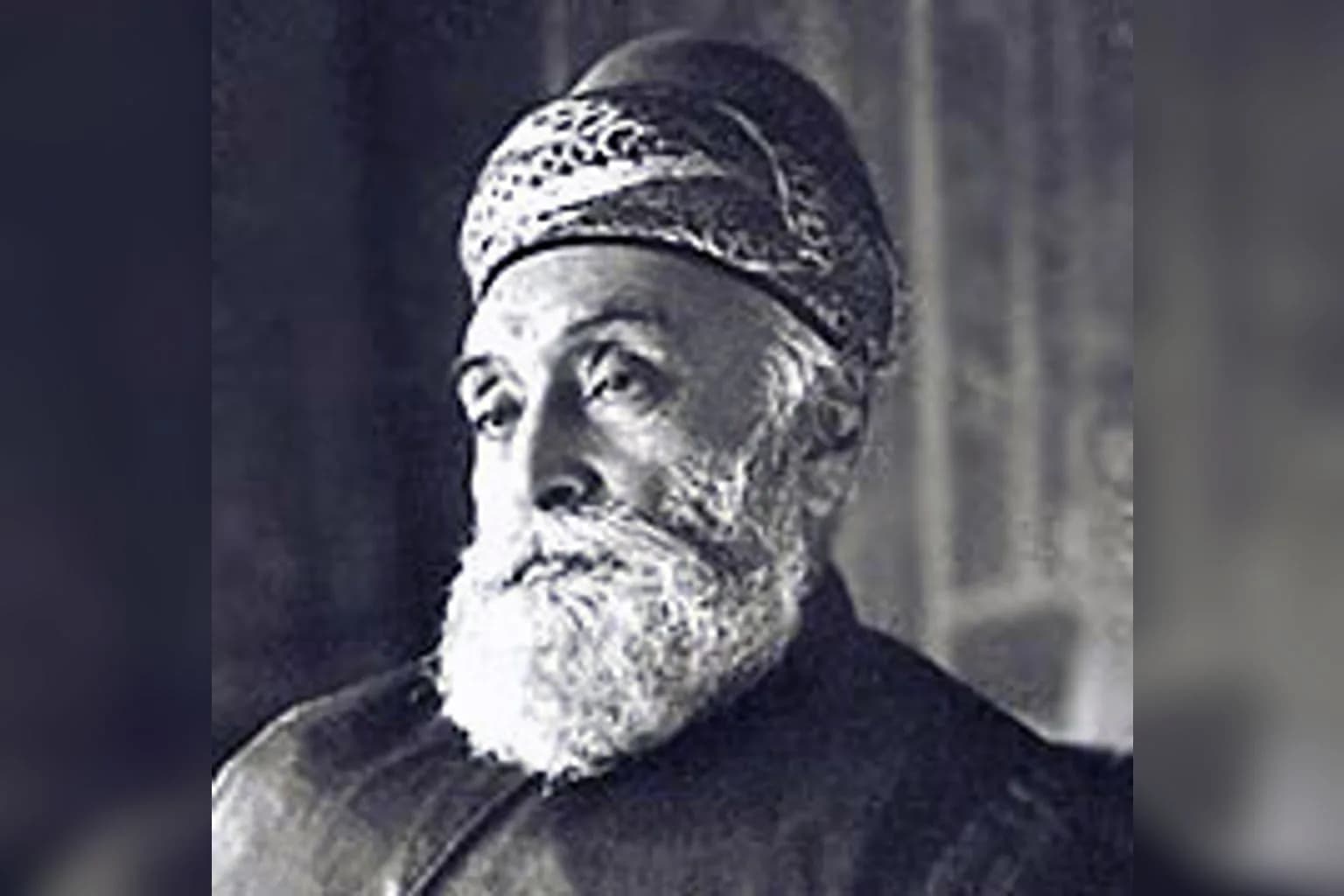
A 29-Year-Old, ₹21,000, and a Trading Firm
In 1868, Jamsetji Nusserwanji Tata was 29 years old when he started a trading company with ₹21,000. Tata’s timeline records the sum with the kind of precision that makes the beginning feel close enough to measure: a young entrepreneur, a modest pool of capital, and a business built in commerce.
Commerce gave Jamsetji a world to work with. His father ran a trading firm whose branches reached Japan, China, Europe and the United States, with a primary focus on trade with China, according to Britannica. That network placed goods, markets and distant customers within view. Jamsetji’s own firm entered the same commercial current at a moment when raw materials could connect Indian enterprise to markets far beyond the country’s shores.
The early Tata business drew wealth from that trade in raw materials, including opium and cotton, as Britannica notes. Each transaction carried a practical lesson: capital moves through relationships, information and the ability to see value across geography. For a small trading firm, those lessons mattered immediately. For the enterprise that would follow, they became a starting discipline.
The ₹21,000 therefore matters as more than an origin-story figure. It marks the point at which a commercial venture began gathering the means, confidence and range for a larger undertaking. Trade could create profits; those profits could then become choices. The central question of the Tata story begins there: what takes shape when the returns from commerce are put to work building manufacturing, institutions and the capacity of a country?
That question gives the firm’s first chapter its charge. Jamsetji began with the tools available to him, in the business his family understood, while the scale of the opportunity kept widening beyond the ledger. The next move would test whether trading success could become something more durable: a way of making things, employing people and putting industrial ambition on the ground.
The Mill That Turned Trade Into Industry
That ambition took physical form quickly. In 1869, Jamsetji bought an old, run-down oil mill in Bombay’s Chinchpokili and converted it into a cotton mill called Alexandra Mill, as Tata’s 150-year history records. The conversion mattered because it put the enterprise on the other side of commerce: instead of moving goods through a trading network, the company now had a place where value could be made. Alexandra Mill gave that idea a working shape, with machinery, a product and a workforce gathered in one industrial operation.
That first operation also opened a larger question of location. In 1874, Jamsetji established Empress Mills in Nagpur, placing a major textile undertaking beyond Bombay and giving the company’s industrial ambitions a new geography, according to Tata’s timeline. Nagpur became the setting for an enterprise designed around production itself, and the choice carried the Tata project from a converted mill toward a purpose-built industrial presence. The firm had begun to create assets that stayed rooted in a place: a mill could organise work, draw together skills and tie a business’s future to the community around it.
Empress Mills then showed how Jamsetji’s idea of industry reached into the conditions of that work. In 1886, the mill pioneered employee welfare initiatives, according to Tata. The timeline records the fact plainly, yet its place in the story is revealing. A manufacturing enterprise depended on people as much as it depended on cotton, capital and equipment, and Tata treated the workforce as part of the industrial undertaking rather than a detail outside it.
That approach gave the mills a significance beyond their output. Alexandra Mill established the practical transition from trade to manufacturing; Empress Mills expanded that transition into a durable operation in Nagpur; the welfare initiatives added a social dimension to the company’s industrial practice. Together, those moves formed an early Tata model: build an enterprise with a long life in a specific place, then recognise that its strength rests on the people whose work sustains it. The model would soon widen from the mill floor to the people India would need to educate.
Before Steel, a Fund for Indian Students
The early Tata model was to build an enterprise with a long life in a country, then build the people who could carry its work forward. Jamsetji Tata gave that second task a formal shape in 1892, when he established the JN Tata Endowment Fund to help Indian students pursue higher studies abroad, according to Tata’s timeline. The fund extended the logic already visible in the mills: lasting industrial capacity depended on human capability, and human capability required serious investment.
That investment carried the weight of a personal commitment. Jamsetji set aside almost ₹30 lakh from his own fortune for the scheme, as Tata’s 150-year history records, giving young Indian scholars a route to education beyond the country’s borders. The sum matters because it shows how firmly the idea sat within his larger project. A trading firm could finance a mill; a mill could sustain an industrial enterprise; and an endowment could help develop the people whose expertise would shape the future such enterprises required.
The first recipient made that purpose immediate. Doctor Freny Cama received the first JN Tata Endowment, according to Tata, placing a real professional life at the center of what might otherwise read as an abstract act of philanthropy. Her place in the story reveals the fund’s practical ambition: education abroad served as a path toward skilled Indian professionals, each equipped to bring knowledge into wider use.
The endowment therefore belongs beside the mills as part of the same early blueprint. Factories supplied productive capacity, while trained people supplied the knowledge and judgment that allowed capacity to grow, adapt and endure. By 1892, Tata’s industrial imagination already included both, and that pairing would make the next expression of the group’s ambition feel like a natural extension of the project.
The Hotel That Announced a Bigger Ambition
That same pairing of productive capacity and human capability now found a public face in a hotel. The Taj Mahal Hotel carried Tata’s ambitions from the mill and the endowment into the daily life of a city, giving the enterprise a place where its confidence could be seen, entered and experienced. Trade had created the starting point, and textiles had demonstrated a capacity to build; the hotel brought that expanding vision into services, an arena where the group met the public directly. Tata’s own history places the group’s entry into services in 1904, through hotels, a step that widened the enterprise’s field of action while keeping its larger pattern intact: build institutions with a lasting role in the life around them.
That role arrived in a very specific form on December 16, 1903, when the Taj Mahal Hotel opened for business. The date matters because an opening day turns a long project into a working institution. Guests could now cross its threshold; the venture had moved from intention to presence. Tata’s 150-year history records that the hotel cost over four crore, a figure that gives the scale of the commitment a clear shape. The investment belonged to the same broad outlook that had already produced a mill, employee welfare initiatives and an endowment for Indian scholars. Each undertaking addressed a different part of a growing society, and the hotel added a conspicuous new setting for that work.
Its significance also lay in the way it changed the texture of the Tata enterprise. A trading firm dealt in movement and exchange; a mill organized production; an endowment helped people travel outward for education. A hotel gathered people in one place. That public-facing presence made the group’s ambitions easier to read. Tata was creating businesses across different parts of economic life, and each new venture made the next expansion feel within reach.
Yet the hotel’s opening also stood close to a change in leadership. Jamsetji Tata died in Germany in 1904, and Sir Dorabji Tata became chairman that year. Dorabji inherited an enterprise whose ambitions already reached from industry and education to hospitality. The question ahead was how that inheritance would be carried into projects demanding even greater patience, capital and faith in the future.
Sakchi, Steel, and the Case for Building Ahead
That faith found its fullest early test in 1907, when Sir Dorabji Tata established Tata Iron and Steel Company in remote Sakchi, according to Tata’s timeline. Sakchi carried the weight of an industrial wager measured in years rather than quarters: the company set out to create India’s first integrated iron and steel plant, and the settlement around it would later become Jamshedpur, as Tata’s 150-year history records. Steel gave the earlier ambitions of trade, manufacturing and institutional investment a new physical scale. It required a site, a workforce, durable systems and confidence that the effort would eventually justify itself.
Dorabji’s decisions in Sakchi show how broadly he understood that requirement. In the same year as the steel company’s establishment, he built a hospital in the village, years before the first ingot was rolled out, according to Tata. The sequence matters. A hospital came first because an industrial settlement needed the foundations of daily life while the factory was still an undertaking in progress. The plant therefore belonged to a larger working environment from its earliest days, one where production and the needs of the surrounding community developed together.
That local commitment moved alongside an outward-facing one. Also in 1907, Tata Limited opened in London as the group’s first overseas office, according to Tata’s early-years timeline. The pairing captures the direction of the enterprise under Dorabji: Sakchi concentrated industrial capacity in one distant place, while London created a commercial foothold beyond India. Each move expanded the range of the other. Steel demanded relationships that could reach outward; an overseas office carried greater meaning when it represented a company building substantial capacity at home.
Sakchi eventually acquired a name that made the connection permanent. In 1919, the city of Jamshedpur was renamed in honour of Jamsetji, according to Tata’s corporate history. The renaming placed the founder’s name on a city shaped by a project completed after his death, while Dorabji’s steel venture gave that inheritance its most demanding expression. It also set up the next challenge: a factory could anchor a city, yet lasting industrial capacity depended on a wider system of knowledge, power, goods and services.
The System Around the Factory
A factory required a wider system around it: people trained to ask new questions, power to run new machines, everyday products to reach homes, and services able to support a growing commercial life. That system was already taking shape through the Indian Institute of Science, established in 1909 through Jamsetji’s vision, five years after his death. Its first batch of students arrived in 1911, according to Tata’s timeline, giving practical form to an idea that had outlived its originator. The timing matters. Steel had created an industrial centre in Sakchi; the institute created a place where future knowledge could be developed and carried outward.
That link between industry and capability also ran through electricity. In 1910, the Tata Hydro-Electric Power Supply Company became the first of three Tata electric companies, as Tata’s 150-year history records. Power belongs to the background of industrial growth, yet it changes every part of the foreground: how work is done, where enterprises can operate, and what kind of expansion becomes possible. The move therefore extended the Tata project from making materials to building one of the conditions that manufacturing depends on.
By 1919, that same project had begun to meet the routines of daily life. Tata Oil Mills Company entered the consumer-goods business to make soaps, detergents and cooking oils, while New India Assurance was established in the same year, according to Tata’s corporate history. These businesses brought the group into homes and into financial services, adding two very different forms of reach to an enterprise already associated with mills, steel and power.
Taken together, the institute, the electric company, the oil mills and the insurer reveal the larger shape of the ambition. Research could develop skill and knowledge. Electricity could support production. Household goods could connect industry to ordinary consumption, while insurance could serve the commercial activity that gathered around all of it. Each addition widened the field in which industry could operate, turning the factory from a standalone site into one part of an economic ecosystem. The question of who would sustain that ecosystem, and under what kind of stewardship, now moved to the centre of the Tata story.
How Family Stewardship Became a Public-Facing Ownership Model
Each addition widened the field in which industry could matter, and the ownership structure at the centre of Tata carried that same public-facing logic into the group’s architecture. The Tata Trusts own 66% of the equity share capital of Tata Sons, the apex company of the group, according to Tata’s 150-year history. That figure gives the organisation a distinctive frame: charitable trusts sit above the company that stands at the group’s centre.
The structure belongs alongside the pattern already visible in the institutions and facilities built across the earlier decades. The endowment opened a path for Indian scholars to study abroad. The Sakchi hospital served the village before steel production began. The Indian Institute of Science gave Jamsetji’s vision a lasting institutional form after his death. Together, those decisions show an enterprise repeatedly putting resources toward wider capability, and the trusts extend that idea into the question of who owns the apex company.
That framework also outlived individual chairmen. Nowroji Saklatwala led the group from 1932, and JRD Tata succeeded him as chairman in 1938, according to a Tata leadership case study. Under later leaders, the businesses continued to reach into new fields, carrying the old instinct for scale into a far broader commercial world.
Ratan Tata’s tenure made that expansion especially visible. Group revenues grew from $6 billion to $100 billion, while global markets accounted for more than 60% of group revenues, the same leadership study reports. It also records major cross-border acquisitions including Tetley, Corus Steel and Jaguar Land Rover, developments that placed Tata’s companies in an increasingly international set of markets and relationships.
That international reach now spans more than 100 countries across six continents, according to Britannica. Yet the story arrives in the present with a structure that still directs attention upward, to the charitable trusts holding the majority stake in Tata Sons. A firm that began with ₹21,000 ultimately grew into a global enterprise whose apex remains shaped by a public-facing form of stewardship, linking commercial scale to the wider institutional purpose that had appeared from the beginning.



Comments (0)