
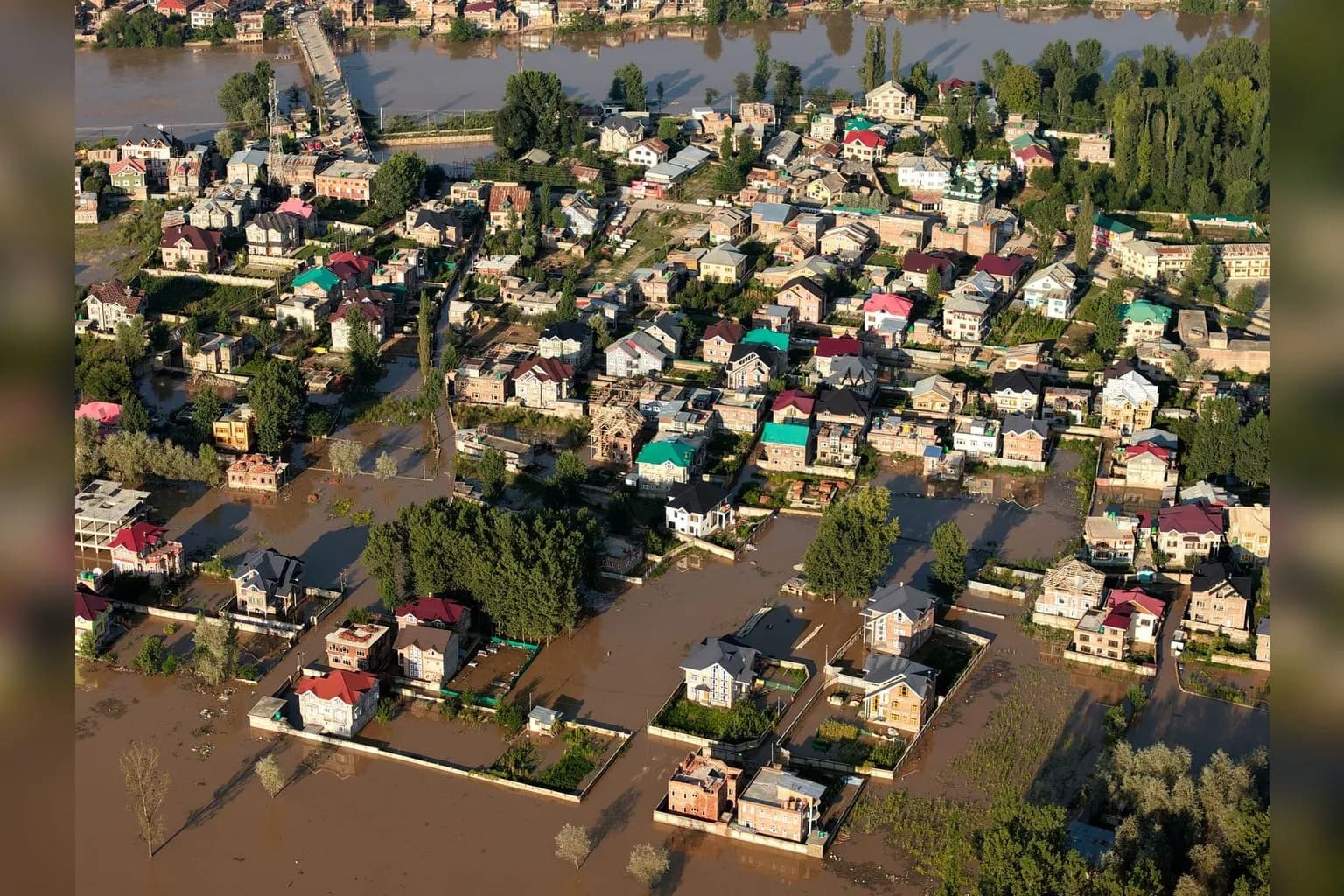
Thousands of people in downstream parts of India were moved to safer areas after water released from a glacial lake in Bhutan raised the risk of flooding along the Sankosh River.
The flood originated as a glacier lake outburst flood from Sintaphu Lake in the Mochu subbasin of Bhutan’s Gasa district.
Nearly 7.4 million cubic metres of water surged from the breached Shintaphu Lake into the Mo river, also known as the Mofu river, and flowed towards the Sankosh River and the border with India.
The flood struck late at night, when darkness covered the area around the Gasa Tshachu natural hot springs. The springs are a major tourist attraction in northern Bhutan, between India and China.
Infrastructure at the hot springs was washed away. Parts of the road to Laya village became impassable, and two bailey bridges may also have been swept away.
The area had been evacuated before the flood arrived. Bhutan’s state broadcaster BBS reported no injuries or loss of life, though it said the darkness and force of the water meant the full scale of the damage was still unclear.
Downstream, West Bengal state officials issued an alert late on Thursday (October 29, 2026) night over a possible rise in the Sankosh River. State Forest Minister Manoj Oraon said floodwaters were expected to surge downstream within the next 1 to 1.5 hours.
At least 4,000 people were moved from parts of the Darjeeling hills and the Dooars region, which were placed on high alert. The reported evacuations included over 4,000 people from 10 places in Kumargram and Tufanganj who were moved to a safe zone.
In riverbank settlements under the Rampur-I gram panchayat area, loudspeaker announcements told residents to leave their homes for designated shelters. Minister Nisith Pramanik urged people living in the Sankosh catchment and along its tributaries to move away immediately, while residents along the Mochhu and Punatsangchhu river valleys were advised to stay alert and avoid riverbanks and flood-prone areas.
Some lock gates on the Sankosh were damaged by rising water pressure, according to initial information. Flood warnings were issued in parts of West Bengal and Assam.
Suvendu Adhikari said 47 people who had been reported missing earlier in the morning were safe.



Comments (0)