
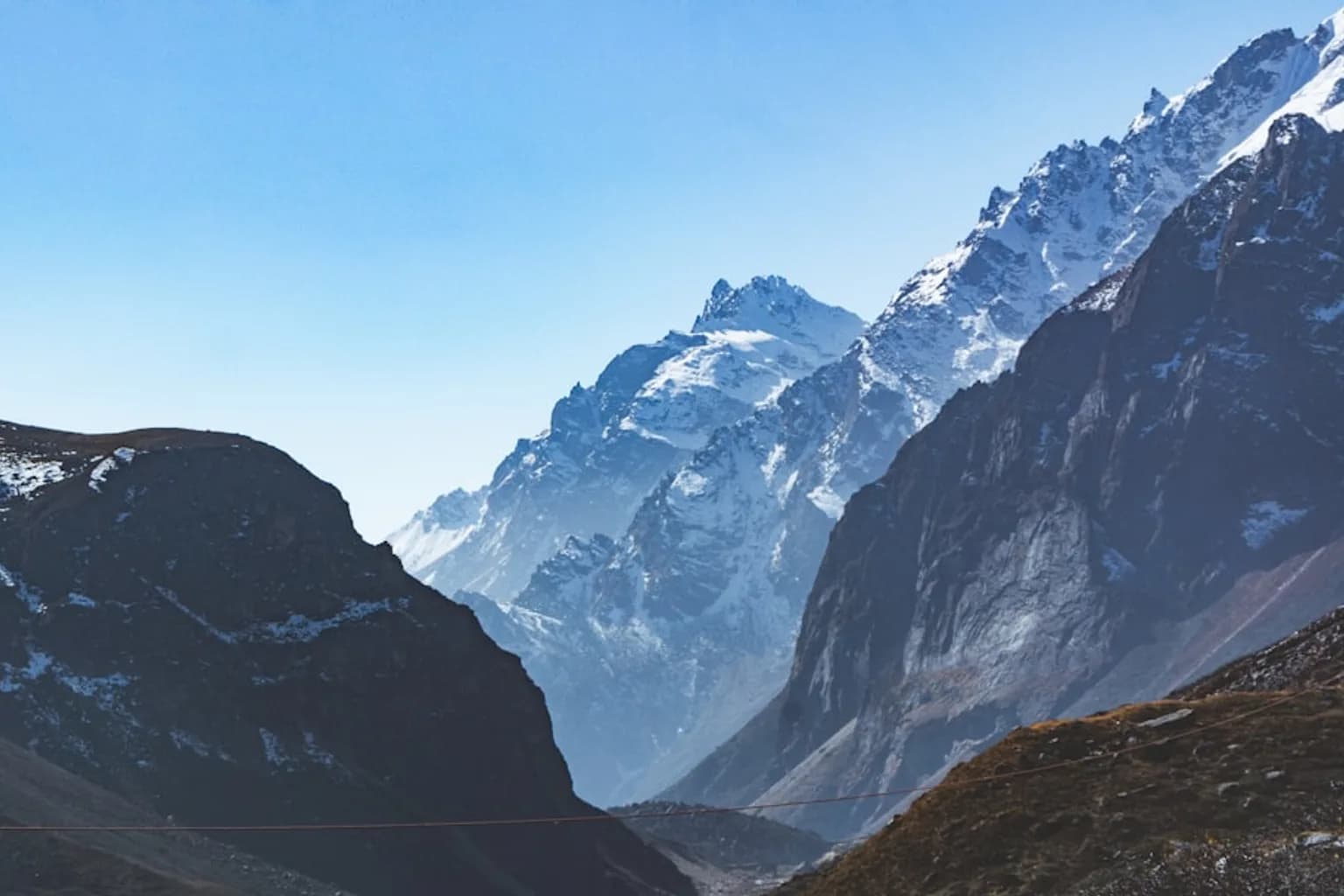
Himalayan glaciers are now losing mass 65% faster than they were a decade ago, according to a report by global consultancy Systemiq that warns of growing pressure on India’s water, economy and disaster planning. The report was produced with the Integrated Mountain Initiative and included technical contributions from the International Centre for Integrated Mountain Development (ICIMOD) and the GB Pant National Institute of Himalayan Environment.
The finding has consequences far beyond the high mountains. Himalayan water supports roughly 20% of India’s gross domestic product, sustaining wheat, rice, tea, hydropower and pilgrimage economies. Mountain states, however, capture only about 5% of the value linked to that water, despite facing a large share of the environmental exposure.
Some 18% of Indian land is Himalayan, yet the region accounts for about 35% of disasters. It also receives roughly 400 million visits a year. The growing instability of glaciers and glacial lakes therefore poses risks to settlements, transport links, power projects and tourism, alongside the longer-term challenge of water availability.
India’s government told parliament in July that 56 glacial lakes had been classified as 'very high risk' after a 2025 scientific assessment of 189 high-risk lakes in the Indian Himalayan region. The Central Water Commission is monitoring 2,485 glacial lakes larger than 10 hectares across India’s Himalayan river basins.
The scale of observation remains limited in relation to the ice cover at risk. Only about 21 of the estimated 40,000 glaciers across the Himalaya-Karakoram region are being monitored in detail and on a sustained basis.
Systemiq identified black carbon as a significant factor that can be addressed. Roughly a third of Himalayan glacier melt is driven by black carbon, much of it originating from brick kilns in the plains. The report does not identify which kilns or areas are the main sources affecting particular glaciers.
Separate research released by ICIMOD in March 2026 found that glacier melt in the Hindu Kush Himalaya had doubled since 2000. The two landmark reports said glaciers were now losing 0.62 meters of ice per year. In the central Himalayas, glaciers shrank from 5,749 square kilometers in the 1960s to 4,519 square kilometers by 2025, an overall loss of 1,229 square kilometers.
Warmer spring and summer temperatures, increased meltwater and thawing high-altitude permafrost have all contributed to glacier destabilisation. The effects can unfold rapidly when ice, water and debris are released from high mountain areas.
On August 26, 2026, at approximately 9:00 AM local time, a massive flash flood surged down the Bhote Koshi River from the Tibet Autonomous Region in China into Nepal’s Rasuwa district. It followed the rupture of a glacier on Mount Langtang Lirung at about 5,200 meters altitude.
A large section of glacier sheared away and fell roughly 7,000 feet into the river below. Within six to seven minutes, ice, rock and mud were moving through communities downstream. By early September, the death toll in Nepal had surpassed 1,270 and over 4,700 people were still missing. On the Chinese side, at least 21 people were killed and 541 remained missing.
The disaster followed another glacial outburst flood from the Purepu Glacier in Tibet in July 2025. That flood surged into Rasuwa district, claimed 11 lives, left 18 people missing and washed away the Nepal-China Friendship Bridge.
India has also experienced severe glacial lake disasters. A 2023 glacial lake outburst flood in Sikkim killed at least 70 people and caused widespread damage to roads, bridges and hydropower projects. In 2021, a disaster in Uttarakhand killed more than 200 people after a massive flood swept through the Rishiganga and Dhauliganga valleys. Devastating floods in Nepal and Tibet have killed more than 1,300 people and caused widespread destruction.
The Systemiq report places those events in the context of a changing water cycle. Peak water is expected around mid-century in most Hindu Kush Himalayan river basins, when glacier melt initially increases river flows before declining ice reserves reduce the contribution from glaciers. The precise timing is expected to vary between basins.
The report’s findings place a premium on measures that can reduce avoidable warming pressures and improve preparation for hazards already emerging. India’s assessment has identified lakes requiring particular attention, while the limited number of glaciers under detailed long-term monitoring leaves major gaps in understanding the speed and local pattern of change.




Comments (0)