
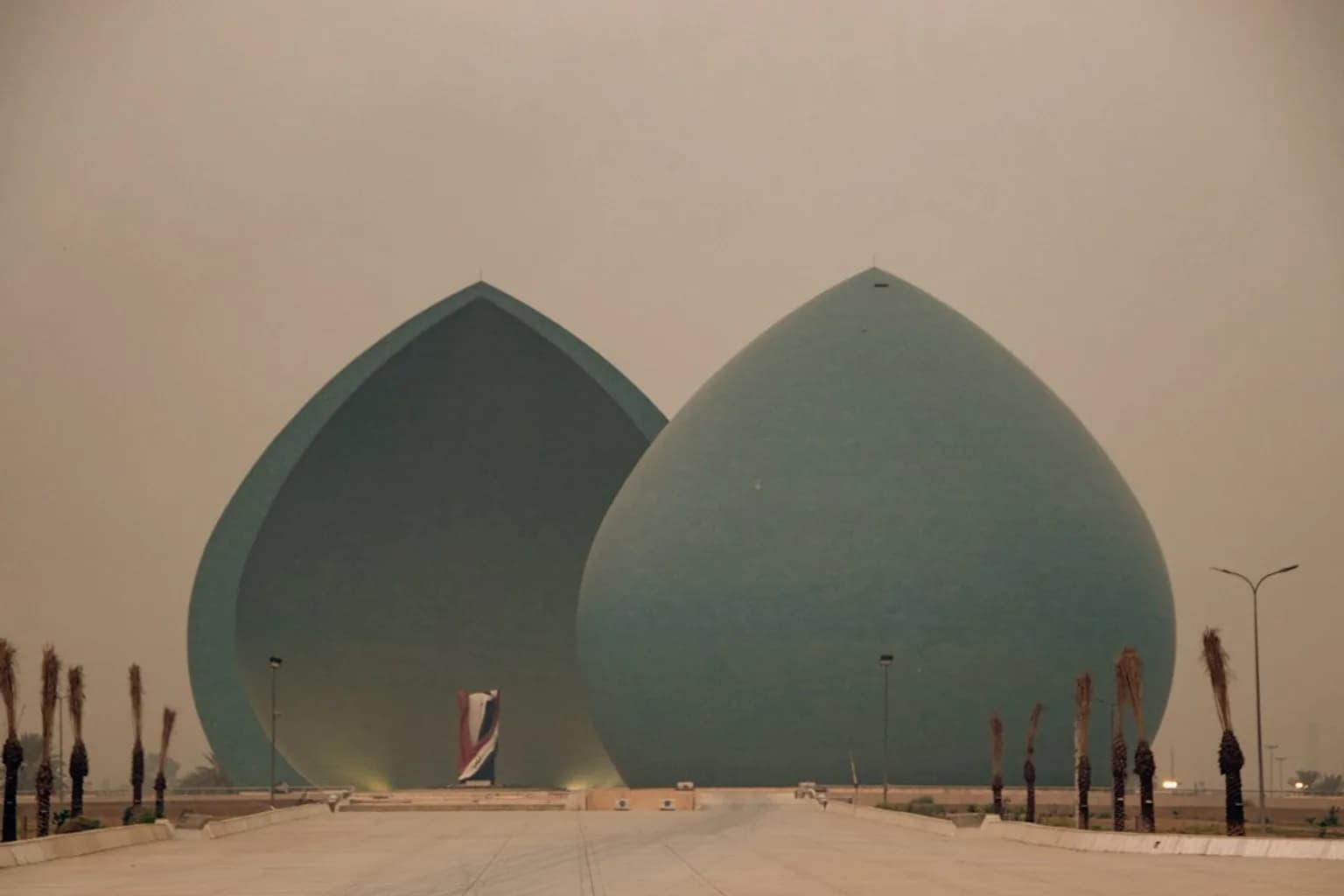
A Cut in Crude Set the Story in Motion
In August 1960, major oil companies cut the posted prices of Middle Eastern crude, and the reduction sent oil-producing governments toward Baghdad. A contemporaneous U.S. State Department memorandum identified that move as the trigger for the conference that followed. The price on paper had suddenly become the central political fact: companies could lower it, and the countries whose oil moved through those markets had to absorb the result.
That result had been building through successive reductions. Saudi Arabia, Iran, Iraq and Kuwait collectively lost approximately $232 million as prices fell, according to King Saud University’s history of OPEC’s founding. The figure gave the dispute a hard edge. A posted-price decision reached across borders, touched several governments at once, and turned a commercial adjustment into a shared problem that demanded a shared response. By August, the question had become immediate: how could producers protect their interests when the companies purchasing and marketing their crude retained the ability to reset the benchmark?
Pressure from outside the Middle East made that question sharper. A prior Soviet offer of cheap oil to India forced three Western firms operating there to cut their prices 12¼% below the Persian Gulf price, the State Department memorandum recorded. That episode showed how quickly competition in one market could travel through the oil trade and bear down on another. Cheap Soviet oil created an incentive for Western companies to respond, and their response placed further strain on the price level tied to Gulf crude.
The August reduction therefore arrived within a market already shaped by price competition and repeated cuts. For Saudi Arabia, Iran, Iraq and Kuwait, the accumulated losses supplied a measure of the stakes; for the region’s producers, the Indian episode showed the wider commercial forces pressing on those stakes. Baghdad would become the place where that pressure moved from separate national grievances toward a collective discussion.
Venezuela Had Already Shown Producers a Different Playbook
Venezuela had already supplied part of the answer: a producing country could press the companies for a larger share of the value flowing from its oil. During earlier disputes with major international petroleum companies, Venezuela secured a 50/50 profit-sharing arrangement, a result that gave other producers a working example of how government policy could reshape the terms of the business. That experience carried particular weight because Venezuela was then the world’s largest oil exporter, and its officials had learned that gains at home could set off consequences across the wider oil trade.
Those consequences arrived when Venezuela increased taxes on oil companies. The multinational companies responded by reducing imports of Venezuelan oil and lowering Gulf oil prices, as described by King Saud University’s history of OPEC’s founding. After Venezuela raised its taxes again in February and April 1959, international companies cut Gulf oil prices to $1.90 a barrel. The move tied producers separated by an ocean into the same commercial struggle: a decision in Caracas could reduce the price received in the Gulf.
That connection gave Saudi Arabia a reason to look west. In 1380 AH, the Saudi government began consultations with Venezuela, bringing together two exporters whose experience had made the limits of acting alone increasingly clear. Venezuela brought a record of confronting the companies through profit-sharing and taxation; Saudi Arabia brought the urgency of a Gulf market repeatedly exposed to company price decisions. Their consultations turned a shared exposure into a possible alliance.
Saudi Arabia then invited Iran, Iraq and Kuwait to meet with Venezuela and deliberate on oil-price issues, according to King Saud University. The invitation gathered countries that had felt the effects of the same pricing system in different ways, while Venezuela offered a precedent for organized producer action. With those five countries now moving toward a common discussion, the price problem had acquired the beginnings of a political answer.
Baghdad Turned a Shared Grievance Into an Organization
The price problem had brought the five countries toward a common discussion, and Baghdad gave that discussion a room, a date and a durable form. From September 10 to 14, 1960, six major oil-producing nations attended a conference in the Iraqi capital, where delegates established a permanent body called the Organization of Petroleum Exporting Countries, according to a contemporaneous U.S. State Department memorandum. The name captured the coalition’s starting point with unusual precision: these were exporting states meeting over a price system that reached directly into their public revenues.
Five countries emerged as OPEC’s charter members: Iraq, Iran, Kuwait, Saudi Arabia and Venezuela. Qatar attended with observer status, a smaller detail that showed how quickly the Baghdad meeting had drawn attention beyond the five states prepared to create the new body. The State Department record, dated November 21, 1960, treated the conference as the beginning of a continuing institution rather than a single round of talks; it described a permanent Secretariat in the process of being established, even though its location remained undecided at that point. The memorandum’s account preserves the practical significance of the gathering: countries that had approached the price question through their own national interests now had an organization through which to approach it together.
That outcome also reflected work already underway by two officials who had pressed for a more deliberate response to the oil market. Abdulla Tariki, Saudi Arabia’s Director of Petroleum and Mineral Affairs, and Juan Perez Alfonso, Venezuela’s Minister of Mines and Hydrocarbons, had advocated a system to pro-rate oil output, the State Department reported. Their proposal gave the Baghdad meeting a direction as well as a membership list. Production had become a subject for collective planning, and the new organization gave that idea a home. With the body in place, the delegates could move from the decision to gather toward the harder task of deciding what coordinated action would require.
OPEC’s Founding Idea Was Coordination
Their proposal gave the Baghdad meeting a practical direction: OPEC would give its members a place to act together when the market moved against them. The organization announced that it would serve as a forum for “the coordination and unification of the petroleum policies of the member countries” and for determining the best means of safeguarding their interests, individually and collectively, the State Department record shows. Those words established the central bargain of the new body. Each government brought its own national priorities, yet each gained a channel for addressing the common pressure created by changes in the oil trade.
The first decisions gave that purpose immediate force. Members agreed to demand that oil companies keep prices stable and restore the prices that had prevailed before the August 1960 reduction, according to the contemporaneous memorandum. The demand placed price at the center of OPEC’s work from its opening meeting. A posted-price cut could affect government revenue across several producing states at once, so a shared response gave those states a way to press their interests in concert.
Price stability also required a mechanism capable of shaping the supply behind the price. The members therefore agreed to study and formulate a system for stabilizing prices through several means, including the regulation of production, the State Department reported. That commitment carried Tariki and Perez Alfonso’s push for pro-rated output into the organization’s first agenda. Production became a subject for collective discussion because it connected the decisions made at home with the price received abroad.
Even so, OPEC’s structure left the final policy decision with each member. Members coordinated production and export policies in pursuit of greater influence over oil prices, while every country retained ultimate control over its own policy, according to Britannica. The arrangement gave the new organization its particular shape: a forum built for common leverage, held together by governments that remained sovereign over their own oil decisions. Its early work would depend on turning that shared intention into habits, procedures and meetings that could keep coordination alive.
A Cartel Needs Boundaries Before It Can Carry Weight
The governments holding it together had to decide who belonged inside that forum. The answer appeared in the membership rule set down in the 1960 memorandum: OPEC was open to countries with substantial net oil exports, while any exception required unanimous acceptance by the five charter members, according to the contemporaneous State Department record. That formula gave the young organization a clear center of gravity. Membership began with a country’s position in the oil trade, then placed the decision over every exception in the hands of the founding group.
The requirement mattered because the organization had been built around a shared interest in prices and production. A country that exported substantial volumes of oil faced that question from one side of the market: the value of its exports shaped the stakes it brought into the room. The five charter members therefore kept control over expansion together, with unanimity ensuring that each one could judge whether a prospective member belonged in a body organized around exporters’ interests. OPEC’s perimeter was part of its operating design, as important to its internal coherence as the coordination its members had already agreed to pursue.
That design produced immediate exclusions. The memorandum identified the UAR and Bahrain as countries kept outside by the membership restrictions, the State Department reported. The United States presented a different case. It was a major oil producer, yet it could not qualify because it was a net importer of oil, a distinction that placed it beyond the organization’s central test for membership, according to the same memorandum.
Those early lines defined OPEC as a body of states whose role in the market gave them closely connected reasons to care about the terms on which oil was sold. The rule also established a way to manage change: exporters could enter under the stated standard, while any unusual case would require the full consent of the founders. With its membership logic in place, the organization could turn from defining its circle to building the machinery that would keep that circle working.
Building a body that could outlast the meeting
With its membership logic in place, the organization could turn from definition toward continuity. The delegates in Baghdad had already set the next dates before they left: a subcommittee would return to Baghdad in November to prepare the agenda for a second meeting in Caracas the following January, the contemporaneous State Department record shows. That timetable gave the new body a working rhythm. The first conference had supplied its rules and purposes; the next meetings would give those rules a place to operate, questions to address and a calendar that members could share.
Administration was taking shape alongside that schedule. A permanent Secretariat was being established, although its location remained undecided at the time of the November 21, 1960 memorandum, according to the State Department. The detail carried real weight. A secretariat could hold together the work that moved between ministerial gatherings, while the planned Caracas meeting showed that Baghdad was the beginning of an ongoing arrangement. In January 1961, OPEC reached its next formal milestone when it was constituted, according to Britannica.
Membership began to give that arrangement a wider geographic reach almost immediately. Qatar joined in 1961, followed by Indonesia and Libya in 1962, as Britannica records. Each admission placed another exporting country inside the organization’s regular process of consultation and policy coordination. The institution itself found a durable administrative home in Vienna, Austria, where its headquarters has been located since 1965. Vienna arrived before the next wave of admissions: Abu Dhabi entered in 1967, Algeria in 1969, Nigeria in 1971 and Ecuador in 1973.
The sequence mattered because it turned a conference timetable into an expanding organization with a fixed headquarters, recurring meetings and a growing membership. Those practical elements created the setting in which producers could keep returning to the same central question: how to use their position in oil markets together.
Control of Supply Became a Source of Power
That question found its answer in the leverage that comes from acting together. OPEC members sought greater control over oil prices by coordinating their production and export policies, a strategy that turned ownership of a resource beneath separate national territories into a shared position at the negotiating table. Each government still held ultimate authority over its own policy, according to Britannica, yet the organization gave those separate decisions a common frame: supply could be managed with an eye on the price received for every barrel.
That frame altered the balance of an industry whose commanding heights had long belonged to large international companies. In the mid-twentieth century, the world’s oil resources were dominated by the Seven Sisters, a group of Anglo-American firms that included Standard Oil of New Jersey, Standard Oil Company of New York, Standard Oil of California, Gulf Oil, Texaco, Royal Dutch Shell and British Petroleum. Italian oil diplomat Enrico Mattei gave the group its enduring name, calling it the “Sette Sorrellle,” as GEO ExPro recounts. The companies had developed oil regions across the Middle East, North Africa, South East Asia and South America during an era when those regions were often governed under colonial powers or corrupt dictators.
OPEC offered producing states a durable way to bring their own priorities into that structure. Coordination gave exporters a means to connect decisions about output with the revenue those exports generated, and it made oil policy a matter for collective bargaining rather than a series of isolated national responses. The force of that idea rests on the scale gathered inside the organization. GEO ExPro describes OPEC today as comprising 12 countries that hold 77% of the world’s proven oil reserves and deliver 41% of production.
Those figures explain why the work begun in Baghdad carried far beyond the original price dispute. Five countries had created a place where exporters could meet, align interests and use supply as a source of influence; over time, that arrangement made the price of oil part of a much larger conversation about economic power and geopolitics.


Comments (0)