
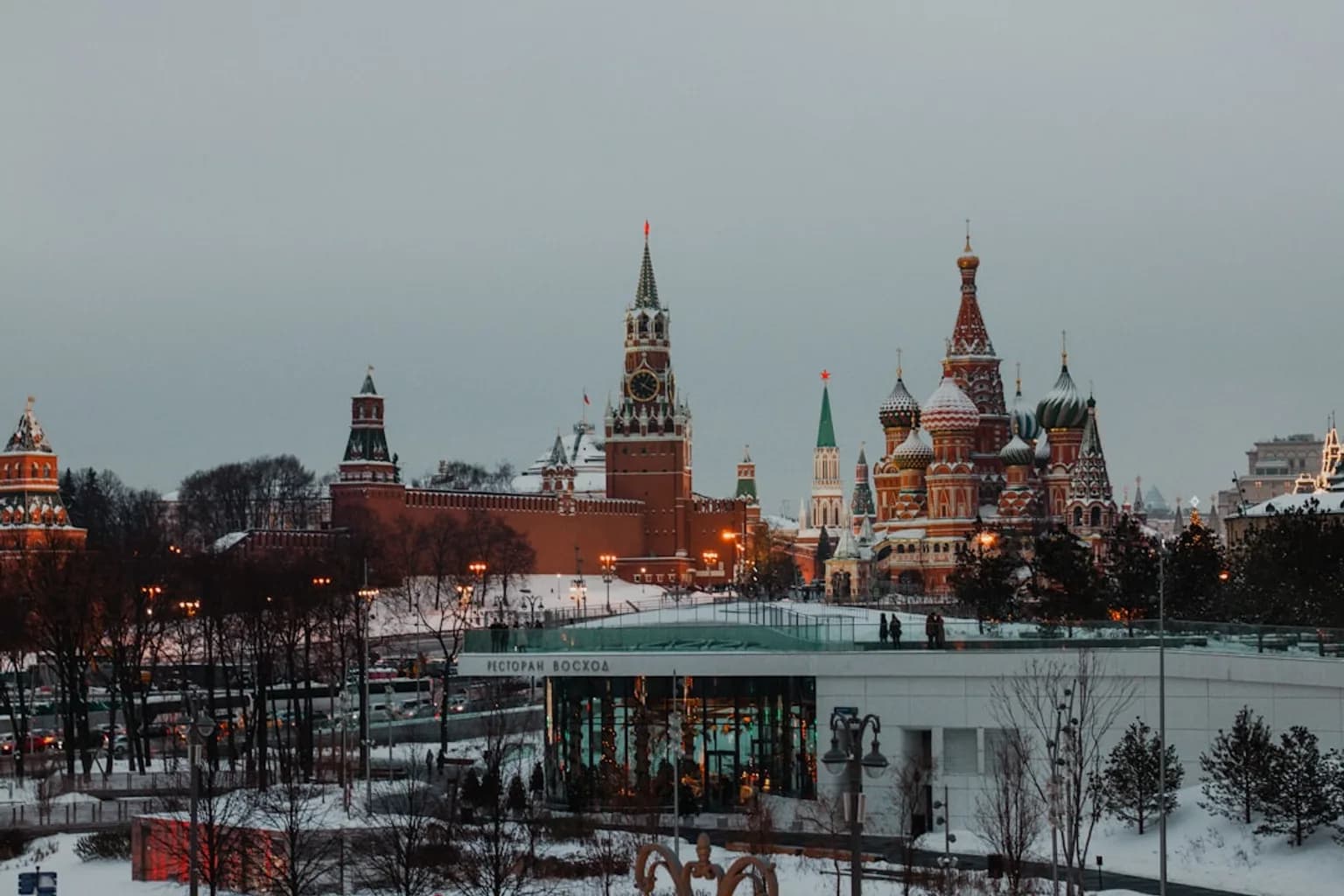
Russia Had Already Changed the Terms of the Campaign
On June 24, 1812, the main French army crossed the Neman into Russia, beginning a campaign whose scale made every mile matter. The force numbered approximately 453,000 at the start, and the movement across the frontier marked the opening of an invasion that would run until December 5. Over the course of that campaign, about 612,000 combatants would enter Russia, a figure that gives the advance its proper shape: this was an immense armed movement pressing into a country that had chosen the ground on which it would be met. Britannica’s account of the French invasion of Russia places the first crossing at the Neman and records both the opening strength and the larger total that entered during the campaign.
Russia answered that movement with a Fabian strategy, conducting a prolonged withdrawal rather than supplying the quick decision that an invading army could turn into a settlement. Each stage of the withdrawal carried Napoleon farther into Russia, while the campaign’s central pressure gathered behind him: men, provisions, equipment, and command all had to keep moving with an army built for enormous operations. The withdrawal therefore shaped the war before any later turning point could shape it. Russia had made distance an active part of its defense, and Napoleon’s advance gave that defense more room to work. Britannica describes the Russian approach as a prolonged withdrawal under a Fabian strategy.
The size of the force also obscures an important fact about who composed it. Little more than 200,000 of the soldiers who entered Russia were French. The rest came from the wider invading force, which meant that Napoleon was leading an army of extraordinary breadth as well as extraordinary size. That breadth made the campaign a test of cohesion and supply from its first days, because the army’s movement had to remain coordinated across a force extending far beyond the French soldiers at its center.
Those numbers sharpen the strategic choice Russia had made. A force of approximately 453,000 men at the opening could produce immense power at the frontier, yet it also created immense needs once the frontier lay behind it. By withdrawing, the Russians drew that force into a campaign defined by continuing movement, expanding distance, and the burden of sustaining an army that would eventually bring about 612,000 combatants into the country. The same campaign record preserves the contrast at the heart of the invasion: vast numbers entered Russia, while the Russians refused to let the opening advance settle the war on Napoleon’s preferred timetable.
Moscow Looked Like the Prize That Would End the War
That burden gave Moscow a powerful appeal. After a campaign of continuing movement and expanding distance, the city appeared to offer Napoleon a place where military progress could become a political decision. He had pushed far enough for the capture of Moscow to carry a meaning beyond possession of ground: it could bring the Russian government to the table and turn an advance into peace.
The moment arrived in the shadow of fighting. Napoleon entered Moscow a week after the bloody battle of Borodino, according to Napoleon.org, carrying with him an expectation shaped by victory. He anticipated an entrance with glory, a delegation of the city’s highest officials assembled to recognize that victory, and a readiness to negotiate peace. Moscow therefore stood before him as the political payoff he had been seeking throughout the advance.
That expectation rested on a simple chain of events. A victorious army would arrive. Senior officials would meet its commander. Their presence would acknowledge the new reality created by the campaign, and the Russian government would be ready to negotiate. History records that Napoleon expected to find the Russian government prepared for talks when he entered Moscow. For Napoleon, the city promised a setting where the campaign’s movement could finally resolve into terms.
The promise also explains why Moscow mattered so much at this particular point. The city offered a destination that could make the losses and exertion of the advance feel purposeful, because its capture seemed likely to produce the settlement that an army in motion had yet to secure. Napoleon approached its streets expecting the visible ceremonies of victory to carry directly into diplomacy.
Everything in that expectation depended on what waited inside the city. A delegation would give the entrance its intended meaning, and negotiations would give possession of Moscow its intended result. Napoleon had reached the place where he expected Russia’s resistance to take a new form, with the campaign turning from conquest toward peace.
The Conqueror Entered a City That Had Left
Instead, when Napoleon entered Moscow on September 14, the city offered him no one to receive him. One contemporary campaign timeline places his arrival on September 15, a difference in dating that leaves the central fact unchanged: no delegation of Moscow’s highest officials stood ready to acknowledge victory or discuss peace. The ceremony Napoleon had anticipated had vanished before he reached the gates, taking with it the public sign that the city had accepted his rule.
The absence ran deeper than the missing officials. Moscow had evacuated before Napoleon arrived, and the city had made no formal surrender. Its people had carried the life of the capital away with them, leaving the conqueror in possession of streets and buildings while the population that gave those places their political weight had largely gone.
The scale of that departure becomes clearest in the numbers. Moscow had held 200,000 inhabitants before the war; by the time Napoleon entered, only 2 percent remained. Those still there were predominantly wounded soldiers, alongside people who had stayed to plunder the homes abandoned by their fleeing owners. The crowd that could have filled squares, supplied officials, or made a show of submission had dissolved into a tiny and damaged remnant.
That emptiness changed the meaning of occupation at once. Napoleon had come expecting a city to answer his arrival with recognition and an opening for peace; Moscow answered with vacant homes, wounded men, and a leadership that had gone with its people. He held the physical capital, yet every human signal of a settled victory was missing, and by nightfall the city’s silence would give way to a far more destructive message.
That Night, Moscow Began to Burn
The silence found a far more destructive answer: fire began to consume Moscow. The city was fired on the night of Napoleon’s arrival, partly at least by Russians themselves, according to Britannica, and the flames altered the meaning of possession almost as soon as he had taken it. Napoleon had entered a capital whose people and civic authority had already vanished from the scene. By night, the buildings and streets that remained had become the setting for a catastrophe that placed the occupation under a new kind of pressure.
The fires that broke out after Napoleon’s entry spread through Moscow, and much of the city was destroyed by fire. That destruction turned the city from the prize Napoleon had expected into a damaged place with fewer usable resources, fewer people, and a growing burden for the army inside it. A capital could carry political weight when its capture produced recognition, order, and a path toward a settlement. Moscow offered an entirely different reality: an empty city, then a burning one, with the campaign still unresolved.
The reversal mattered because a military occupation depends on the place it occupies. Moscow’s fire consumed a large part of the very city Napoleon had entered seeking the visible rewards of victory. Britannica records both his arrival with 95,000 men on September 14 and the firing of the city that night, linking the apparent high point of the advance directly to the crisis that followed. He still held Moscow, yet he held it amid destruction, with an army that still required the means to continue the campaign. The next question was therefore immediate: what could this captured, depleted capital actually provide?
Taking Moscow Gave Napoleon No Settlement and No Supply Line
He still needed Moscow to perform the work that taking it was supposed to accomplish. The city had to turn military possession into a political decision, and Napoleon had arrived expecting the Russian government to be ready to negotiate. Instead, Russia’s leaders offered no terms, leaving him in control of a place whose capture had brought no settlement with the power he had come to defeat.
That refusal changed the meaning of every day spent in Moscow. An army can occupy streets, buildings, and a damaged city, yet the campaign continues whenever the opposing government declines to make peace. Napoleon had expected a formal resolution to follow his arrival, a result that would have given the occupation a clear purpose. Russia’s refusal kept the central question open: what could the army now do with the city it held?
The answer depended on supplies, and Moscow could not provide the foundation Napoleon needed. He was unable to establish the supply lines required in Moscow, a failure made more pressing by the condition of the city after the fires. The occupation therefore became a problem of sustaining an army inside a devastated destination, rather than a base from which Napoleon could secure the outcome he had expected.
Those two failures belonged together. The Russian government’s refusal to negotiate denied Napoleon the political reward of taking Moscow, while the missing supply lines denied his army the practical support that could have made a prolonged stay viable. Control of the city delivered possession alone, and possession had limited value when it could produce neither peace nor dependable provisioning.
Russia had turned the capture of Moscow into an unresolved position. Napoleon remained in a city that offered no agreement with his opponent and no secure system for feeding and supporting the force he had brought there. The next decision would have to account for both pressures at once.
Five Weeks Later, Moscow Became a Departure Point
That decision came on October 19, when Napoleon began the retreat from Moscow with an army 110,000 strong. The date gave the occupation a stark shape: five weeks after entering the city, he was leading his force away from the position that had been meant to settle the campaign.
The numbers carried their own warning. Napoleon had entered Moscow on September 14 with 95,000 men, and the retreat began with 110,000 under his command. That larger figure did little to change the basic condition of the army. Moscow had supplied no political resolution and no secure supply system, so the men leaving the city faced the same campaign without the result their arrival had promised.
They faced it as the Russian winter closed in. Napoleon's army encountered a harsh winter in Russia, turning the journey from Moscow into a test of endurance as well as command. The retreat had begun, and the campaign's cost would now become impossible to separate from the conditions through which the army had to pass.
The Campaign’s Numbers Explain Why Moscow Became a Ruinous Victory
Those conditions shaped the campaign’s final arithmetic, because the retreat added its own suffering to losses already accumulated across the invasion. Between the advance into Russia and the subsequent withdrawal, French forces suffered 500,000 casualties, a figure that turns the story of Moscow from a seized capital into a measure of a shattered army.
Within that total, 300,000 French soldiers were killed. Disease and weather accounted for the overwhelming majority of French losses, according to Britannica, so the cold through which the army now moved formed part of the central fact of the campaign rather than a final hardship at its edge. The force that had carried Napoleon to Moscow had to survive the route away from it while its numbers continued to tell the cost.
The widest measure makes that cost plain. Of the 612,000 combatants who entered Russia, only 112,000 returned to the frontier. Moscow remained a city Napoleon had taken, yet the campaign attached a far heavier meaning to that achievement: possession had led into a retreat whose losses remade the scale of the invasion itself.
Comments (0)