
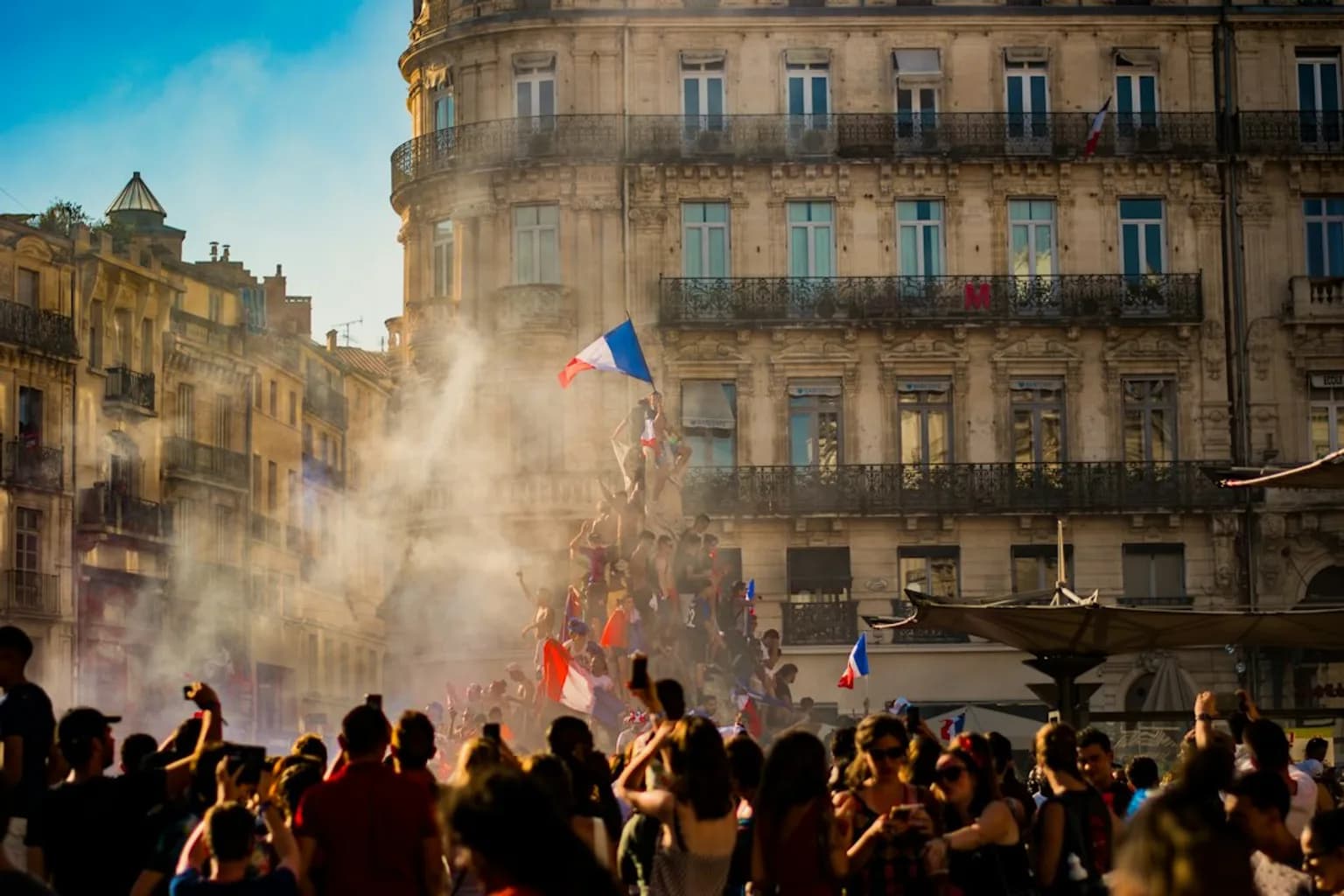
“It's easy to see things burning, but people too have been burning on the inside,” said Manon, a student protester, as demonstrations spread across France on Saturday.
The movement began in the capital’s high schools last month, when students called for more education funding, more teachers and better facilities. A coalition of the Yellow Vests movement, trade unions and students later broadened the campaign to include purchasing power, public services and rising fuel prices.
The previous Saturday, 550,000 people had taken to the streets. That day ended in rioting, with public buildings vandalised, hundreds of shops looted and 2,700 people arrested. The retail sector put the value of damage and stolen stock at hundreds of millions of euros.
Police tightened the rules for the following weekend. They had initially approved a march from Bastille to Nation in the east of Paris, then changed the route on Friday to one running from Porte d'Italie to Porte de Vincennes along the city’s southeastern edge. Demonstrations were also banned in Lyon city centre and Nice.
Murielle Guilbert, a union representative, called it scandalous that President Emmanuel Macron had forbidden protesters from demonstrating where they wished. She said wages still had not risen to the level they should have.
Saturday’s marches drew 410,000 people across 249 locations, according to the Interior Ministry. Union organisers put the nationwide number at 800,000.
In Paris, the ministry counted 110,000 marchers and the union claimed 250,000. Police fired tear gas and water cannon at groups of masked protesters dressed in black near Porte de Vincennes.
In Lyon, riot police used tear gas against about 150 demonstrators blocking a road in an area where protests had been banned. Riot squads also fired tear gas in Marseille, Bordeaux, Lille, Toulouse, Montpellier and Nantes. In Marseille, riot squad vehicles, armoured trucks and a water cannon were stationed in the city centre.
Authorities deployed 70,000 security forces across the country in response to what the Interior Ministry described as a “high” threat of violence. The Louvre, Musée d'Orsay, Picasso museums and Grand Palais in Paris were closed because of the security situation.
Police arrested nearly 1,000 people on Saturday. Two people were “seriously” injured, including a man in Toulouse who reportedly had fingers blown off, and another person in Clermont-Ferrand.
Laurent Nunez, France’s interior minister, said black-clad “ultra-left” extremists had been responsible for “an extremely elevated level of violence”. He later described the day as more “positive” than the previous week, saying that more officers had acted faster and had better protected businesses.
Macron attributed the worst violence to “ultra-left” groups which, he said, wanted to bring down the republic.
Marine Le Pen, leader of the hard-right National Rally party, attended her party’s congress in Orléans during the weekend. Thousands marched against her and Macron, chanting: “Macron resign. Le Pen in prison”.
The Yellow Vests have said they will hold another round of protests on October 31, including rallies and sit-ins outside parliament and city halls nationwide. France goes to the polls in six months to choose a successor to Macron after 10 years.
Comments (0)