
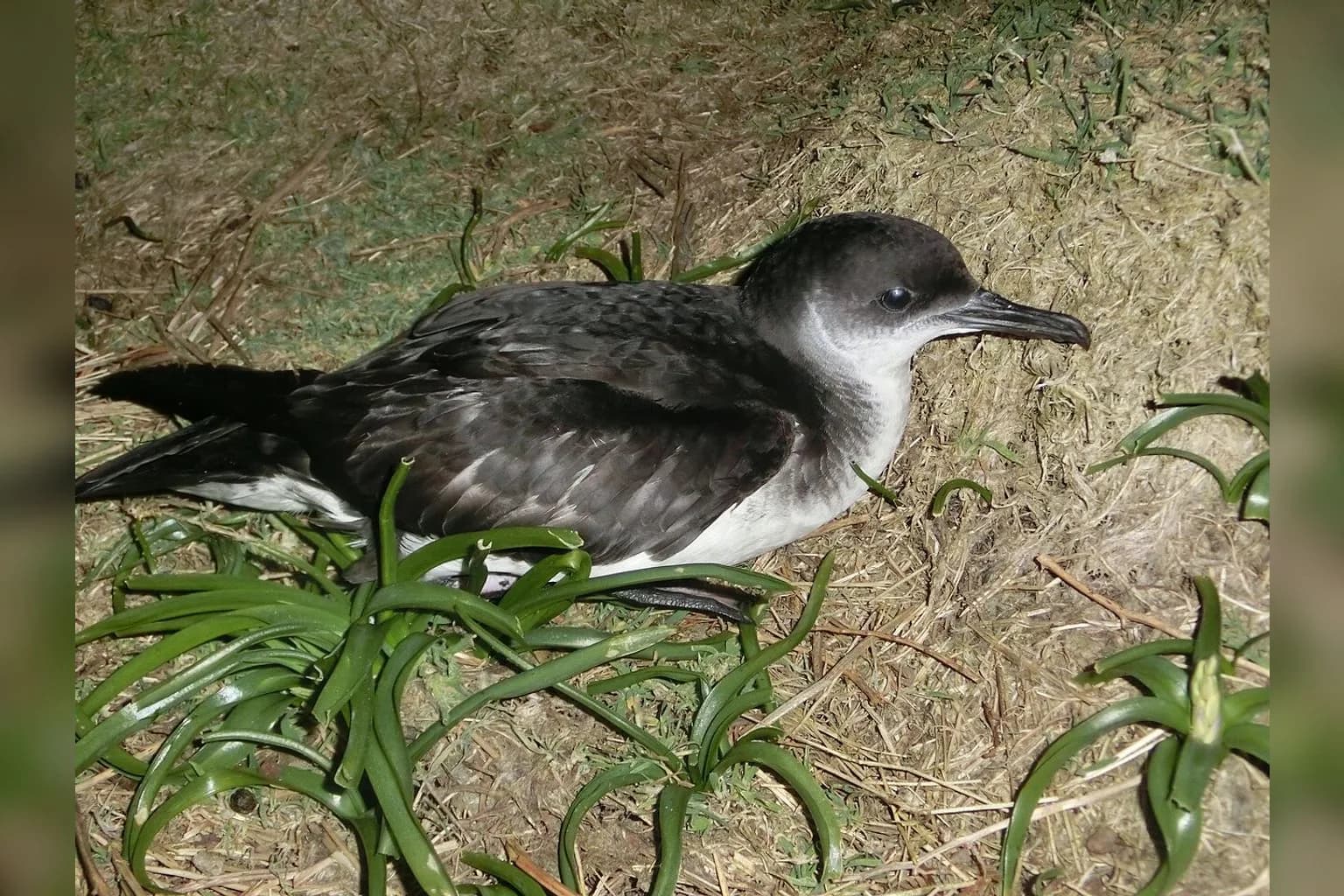
While one Manx shearwater remains on its single egg, its partner can spend up to two weeks hunting fish and squid across the North Atlantic, often hundreds of miles from the nest. The birds breed in burrows on islands off the western coasts of the UK and Ireland, returning there each year from lives largely spent at sea.
After reaching feeding grounds around 1,000 km west of their colonies, the foraging bird heads back east in a fairly straight line, completing the return in a day or so. It crosses lines of longitude into places where the sun rose earlier.
That rapid journey can leave the bird jet-lagged, according to an Oxford-led study published in Science. Researchers examined 20 years of GPS data from 1,045 Manx shearwaters, covering 3,688 foraging trips.
The birds use the sun as a compass, judging their heading from its position while relying on an internal clock to establish the time of day. During rapid eastward flights, that clock can lag behind local solar time by up to around one hour.
As a result, the sun appears farther around the sky than the bird expects when it checks its route. The tracked shearwaters tended to drift clockwise from their expected direction, the pattern predicted when their clocks are running behind local time.
The navigation errors reached approximately 15 degrees. Adult birds were able to correct their course in flight, and the study estimated that a 1,000 km journey with an average compass error of 7 degrees would add around 5 km before the bird came within 5 km of its colony.
The risk is greater for inexperienced birds. First-time foragers can fly off course by hundreds of miles because of sun-compass errors.
The GPS records also found that the birds kept using their sun compass even along visible coastlines, where landmarks could have helped guide them. Sunset and sunrise keep their body clocks in sync and help them adjust to changes in local time.
Patrick Lewin, a behavioural and sensory ecologist at the University of Oxford and the study’s lead author, said the process was the same one that produces jet lag in people. In the shearwaters, it has physiological and behavioural effects through the mistiming of behaviour.
Lewin said other long-distance fliers, potentially including some insects and bats as well as birds, were likely to experience jet lag in this clock-shift sense.
Manx shearwaters use dynamic soaring, exploiting wind gradients near the sea surface. They mate for life, and a breeding pair lays just one egg, leaving one partner to incubate while the other searches for food.
Tim Guilford of Oxford University’s Department of Biology was a co-author of the study. The paper is titled ‘Rapid longitudinal flights cause time-shifts and sun compass error’ and has the DOI 10.1126/science.adz2542.



Comments (0)