
Matthew Holman was checking whether his search code had made a mistake when he first spotted an object now known as 2026 ED138 in October. Holman, an astronomer at the Center for Astrophysics | Harvard & Smithsonian, said: "My first reaction was one of excited disbelief. Objects like this are very rare, so I immediately started checking whether I or the code had done something wrong."
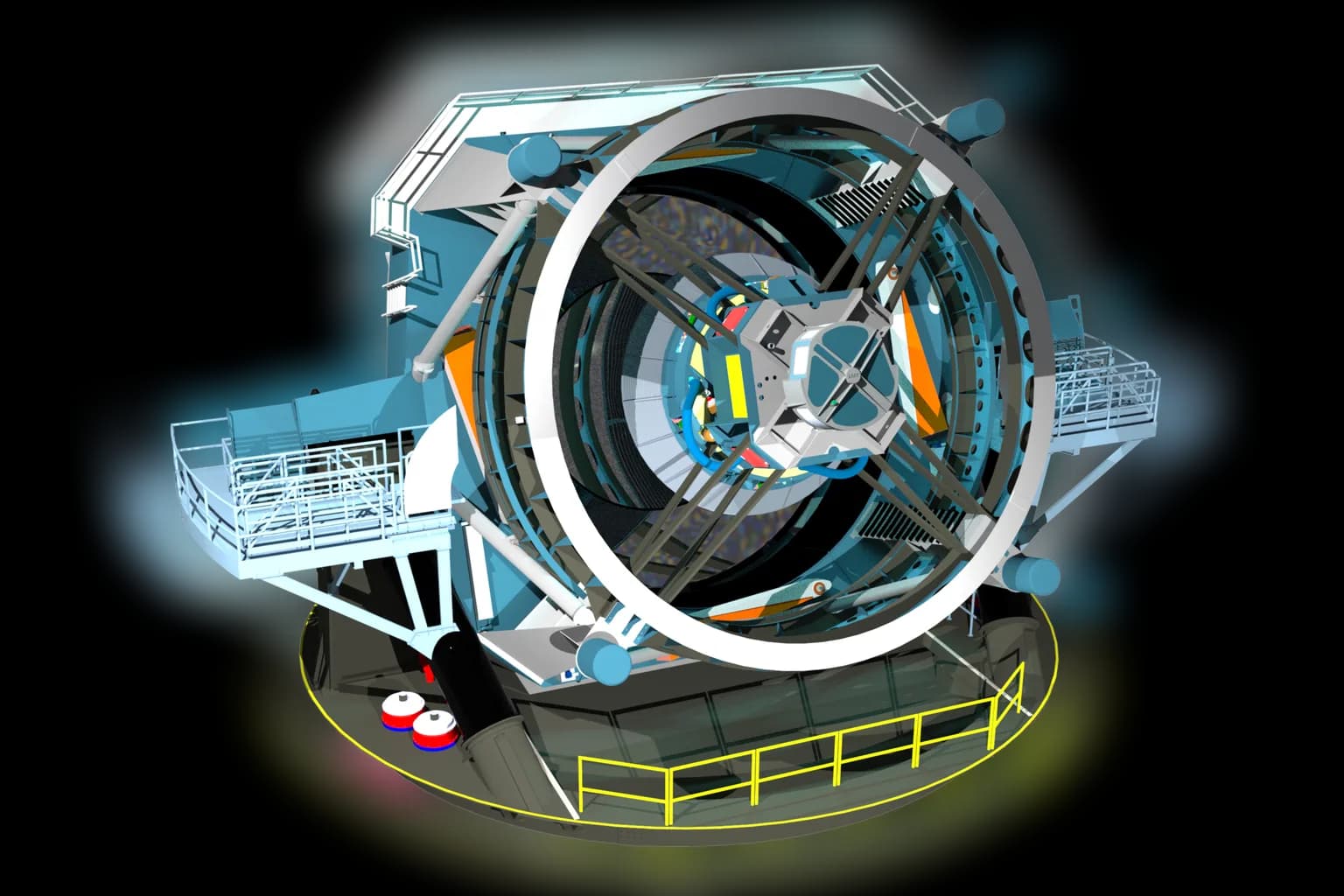
On Tuesday, astronomers at the Vera C. Rubin Observatory announced the object as a new dwarf planet candidate. The observatory in Chile had searched its outer-solar-system observations by processing billions of pieces of data through code developed by Holman and his colleague Kevin Napier.
The observatory identified 30 observations of 2026 ED138 made between March and July 2026. Other tools have since found sightings dating back to 2016.
2026 ED138 lies beyond Neptune's orbit, in the outer reaches of the solar system. It is about 46 times as far from the sun as Earth, compared with Pluto's distance of 40 times as far from the sun as Earth, and its orbit is tilted by around 25 degrees from the solar system's plane.
The object was hard to detect because it sits close to the plane of the Milky Way, where a crowded field of stars drowned out its light.
Its estimated diameter is between 600 and 1,500 kilometers (373 and 932 miles). Astronomers generally accept that asteroids wider than about 600 kilometres should be massive enough to qualify as dwarf planets.
That remains an estimate rather than a classification. A dwarf planet must have enough mass for its own gravity to pull it into a roughly spherical shape, and further observations are needed to establish whether 2026 ED138 meets that requirement.
The International Astronomical Union recognises five official dwarf planets: Ceres, Pluto, Haumea, Makemake and Eris. Sedna and Quaoar are regarded as unofficial members of the group.
If 2026 ED138 is confirmed, it would become the sixth dwarf planet, alongside Pluto, Ceres, Eris, Haumea and Makemake.





Comments (0)