
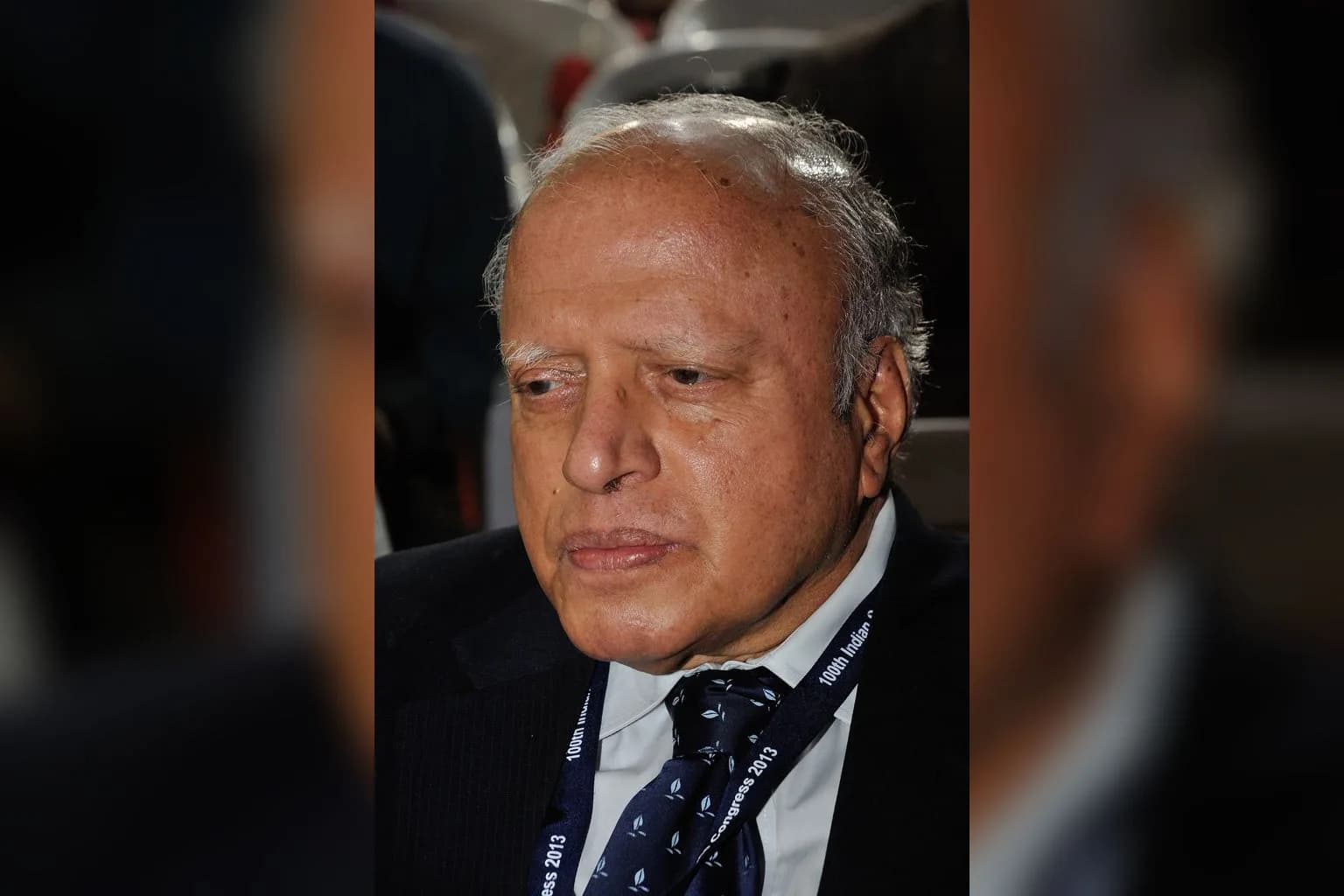
A famine gave his science a purpose
More than three million people died in the Bengal famine of 1943, a catastrophe that gave M. S. Swaminathan a lasting urgency about India’s food crisis. The BBC records the scale of the famine; for Swaminathan, it made food a matter of life, public responsibility, and national capacity.
That urgency would shape a career whose eventual results reached far beyond the laboratory. Swaminathan, whose full name was Mankombu Sambasivan Swaminathan, was born on August 7, 1925, in Kumbakonam, Tamil Nadu. His family hoped he would become a surgeon, yet he chose agricultural science, a decision Britannica connects directly to the hunger crisis that had impressed itself upon his generation.
The choice placed a young scientist before a huge practical question. India needed food in quantities its agricultural system could reliably produce, and plants sat at the center of that challenge. A crop could carry the promise of a larger harvest, yet turning that promise into dependable nourishment required scientific skill, farmers’ confidence, and institutions able to move knowledge from research into fields.
Swaminathan’s purpose was therefore clear from the beginning: help build an agriculture capable of meeting an urgent national need. The work would lead him toward the basic materials of food security, where a seed could become the starting point for a different future.
He learned to see food security inside a seed
That future began with the plant itself. In 1947, Swaminathan took up genetics and plant breeding at the Indian Agricultural Research Institute in New Delhi, choosing a field where the characteristics carried inside a seed could shape the harvest that followed. His early training moved quickly into cytogenetics, and he earned a postgraduate degree with high distinction in the subject in 1949, according to the M. S. Swaminathan Research Foundation. The discipline gave him a close view of heredity and variation, along with a practical question that would stay with him: which traits could help crops serve the people who depended on them?
That question carried him abroad through a UNESCO fellowship opportunity. He pursued genetics at Wageningen University in the Netherlands, then studied at the Plant Breeding Institute in the University of Cambridge School of Agriculture in 1950. Cambridge awarded him a Doctor of Philosophy degree in 1952, completing an education that joined laboratory work with the urgent realities of crop improvement. The foundation’s account traces that route from New Delhi to the Netherlands and Cambridge, a path that gave Swaminathan access to the international scientific networks he would later draw upon for India.
His research already had a strongly practical edge. A UNESCO fellowship in 1949 supported work on making potato crops more resistant to frost and pests, an assignment that put the vulnerabilities of a food crop at the centre of his scientific attention. Britannica records the fellowship, while his work also led him to develop methods of distant hybridization, creating new and economically valuable genetic combinations. He helped establish an Inter-Regional Potato Introduction Station at Sturgeon Bay, Wisconsin, adding experience in the United States to time spent in Europe and the United Kingdom. ISAAA describes a young scientist learning how plant material could be collected, compared, crossed, and prepared for conditions that demanded more from every crop.
Each stage sharpened the same insight: food security could begin long before planting season, in the patient work of understanding what a crop might become. Swaminathan returned to India in early 1954 with that training behind him, as the foundation records, and with the country’s food challenge waiting to turn scientific knowledge into a public task. The next step would depend on building the collections, institutions, and research capacity that could carry an idea from a laboratory into the field.
Before the breakthrough, he built the tools to make one possible
That capacity began with a return to institutions, collections and colleagues. Swaminathan came back to India in early 1954 and briefly took up an opportunity as an assistant botanist at the Central Rice Research Institute in Cuttack. In October, he moved to the Indian Agricultural Research Institute in New Delhi as an assistant cytogeneticist, bringing his training in genetics into a setting where each experiment could contribute to a larger public task, as the M. S. Swaminathan Research Foundation recounts.
At IARI, the work turned toward the raw material of future harvests. Swaminathan built up wheat and rice germplasm collections, assembling plants whose different characteristics could be studied, preserved and brought into breeding work. The rice collection reached deep into India’s own agricultural landscape: he helped gather more than 7,000 rice strains from the country’s north-east region, according to ISAAA. That effort gave research a wider field of options. A crop variety was no longer simply the plant already growing in a field; it became part of a living collection that could be compared, crossed and developed for the conditions ahead.
The collections also gave his work a practical scale. Wheat and rice sat at the centre of the food challenge that had drawn him into agricultural science, and IARI offered a place where plant breeding could be connected to sustained research. The institute brought together the materials, scientific work and administrative reach required to move an idea from a research plot toward far larger use. Swaminathan’s role grew with that task. He became director of IARI in 1961 and held the position through 1972, as Britannica records.
Leadership gave him a platform, yet the deeper achievement lay in the capacity taking shape around him: collections of wheat and rice, researchers able to work with them, and a public institution equipped to carry a long programme forward. By the time a new wheat opportunity arrived, IARI had far more than a promising scientist waiting for results. It had the beginnings of a system ready to test, adapt and organize them.
He brought a global wheat experiment to Indian fields
That system could test, adapt, and learn from the particular conditions that determined whether a promising plant could become a useful crop. That capacity gave Swaminathan a way to act when his work connected with Norman Borlaug, the American agronomist and Nobel Prize winner whom he met in Mexico. In 1963, Swaminathan persuaded Borlaug to send Mexican wheat strains to India, the BBC reports. The decision carried an international experiment into a research system that had spent years assembling plant material, scientific skill and institutional reach.
The strains provided a starting point, while the central work lay in making them fit Indian fields. Swaminathan brought seeds developed by Borlaug into India and cross-bred them with local species, producing wheat plants that yielded far more grain than traditional types, according to ISAAA. That process turned imported material into a locally shaped crop, drawing together Mexican wheat, Indian plant stock and the research programme at IARI.
In time, the new varieties received names that made their promise easy to carry into public life: Kalyan Sona and Sonalika. “Sona” means gold in Hindi, as the BBC notes, a fitting word for wheat whose value would be measured in the grain it put into farmers’ hands. The names also gave a human identity to a scientific programme built from crossing, selection and patient field testing.
One such test came on a Sunday in 1965, in Jaunti, a small village on Delhi’s outskirts. There, a farmer agreed to try Swaminathan’s experimental high-yield wheat, the BBC reports. The moment was modest in scale: a village, a farmer, seed placed in a field. Yet it gave the wider programme its essential next step, moving the adapted wheat from research into the daily judgement of cultivation, where a plant had to prove itself in the ground.
A field result became a national turning point
Where cultivation would decide whether the promise held, the stakes reached far beyond Jaunti. By the mid-1960s, the average Indian survived on just 417 grams of food a day, the BBC reports. A successful harvest therefore carried a practical message: higher yields could travel from an experimental field into a food system under intense pressure. That message had to be tested repeatedly, across enough ground for farmers and officials to see what the new wheat could do.
The programme expanded quickly. Swaminathan had secured Mexican strains in 1963, and three years later India imported 18,000 tonnes of the seed for a nationwide experiment, according to the BBC. The imported material had already been adapted through cross-breeding, and its wider use required a visible demonstration of performance under Indian conditions. The campaign planted 150 demonstration plots on one hectare, the M. S. Swaminathan Research Foundation records, giving the effort a scale that matched the urgency behind it. Each plot made the case in the most direct form available: grain in a field, measured against the crop people already knew.
The comparison gave the programme its force. Swaminathan’s high-yielding varieties produced two to three times more than local wheat, according to the BBC, while the foundation records that the first harvest with the new seeds came in at three times the previous year’s. Results of that order changed the terms of the country’s food debate. Higher output was no longer an abstract objective for laboratories or government plans; it had become a result farmers could see and a system could begin to build around.
By 1971, yields had doubled, and the Indian government declared the country self-sufficient in food production, as the BBC and the foundation document. The wheat campaign had converted a field-level breakthrough into a national turning point, creating the conditions for a larger question: how could India preserve and extend agricultural progress after the emergency had eased?
He treated the Green Revolution as the start of a longer job
That question took Swaminathan from the urgency of a wheat campaign into the slower work of building systems that could carry agricultural progress forward. In 1972, he became director-general of the Indian Council of Agricultural Research and Secretary to the Government of India’s Department of Agricultural Research and Education, positions he held through 1979, the M. S. Swaminathan Research Foundation’s timeline records. The change in role mattered because the challenge now reached far beyond a single promising variety or a successful harvest. Research needed public institutions that could gather knowledge, direct it toward farmers’ needs, and keep improving the crops on which food supplies depended.
His career then widened again in 1982, when he became director-general of the International Rice Research Institute in the Philippines, a post he held until 1988. He was the first Asian to lead the institute, according to the foundation’s account, and the position brought him into a field where the scale of the work matched the scale of the earlier lesson: food security rests on a living store of plant knowledge. At IRRI, Swaminathan organized the International Rice Germplasm Centre with an international advisory board, ISAAA reports. The centre placed rice diversity at the heart of a shared scientific effort, preserving material that researchers could study and draw upon as farming conditions changed.
Rice gave that effort a wider frame. Wheat had shown what focused breeding, public support, and rapid adoption could accomplish under acute pressure; rice required attention to a vast range of genetic material and to the institutions capable of maintaining it over time. Swaminathan’s move from India’s agricultural research system to an international rice institute therefore traced a clear expansion in his idea of the job. Higher yields remained essential, while the work also came to include the collections, research networks, and long-term stewardship that allow future gains to be made. By the time he left IRRI in 1988, the scientist associated with India’s Green Revolution had helped shape the infrastructure for an agricultural future that would have to keep learning.
His later work kept farmers, ecology, and durability in view
That expansion found a lasting home in Chennai, where Swaminathan established the M. S. Swaminathan Research Foundation in 1988, creating a base for work that could keep pace with the larger questions his career had opened. The foundation’s timeline places its start in Chennai, while ISAAA records its establishment in July as a nonprofit organization. The new institution gave continuity to a scientist whose work had steadily widened from individual varieties to the conditions that allow agriculture to support people over time.
Those conditions joined production to ecology and to the lives of farmers. The United Nations Environment Programme described Swaminathan as “the Father of Economic Ecology,” an assessment preserved by the foundation. The phrase carries the shape of his later legacy: food security depended on yields, yet it also depended on the systems around those yields, the natural resources they drew upon, and the people who made a living from the land.
That concern for farmers reached formal expression when Swaminathan chaired the National Commission on Farmers. Between 2004 and 2006, the commission produced five reports under his oversight, the BBC reports. The detail matters because it shows where he kept directing his attention decades after the wheat campaign: toward the practical terms on which farming could remain viable, and toward the public decisions that shaped those terms.
By then, his public standing carried the weight of a long record. He had received the Ramon Magsaysay Award for Community Leadership in 1971, the first World Food Prize in 1987, and the Padma Vibhushan in 1989, among other honours listed by the foundation. India awarded him the Bharat Ratna posthumously in 2024, Britannica records, placing its highest civilian honour alongside a life defined by the effort to make food plentiful.
That honour also clarifies the full portrait. Swaminathan remains identified with higher-yielding crops and the transformation they helped achieve, while his later work kept pressing toward the harder standard: food security that could endure, with farmers and ecology held inside the same frame.




Comments (0)