
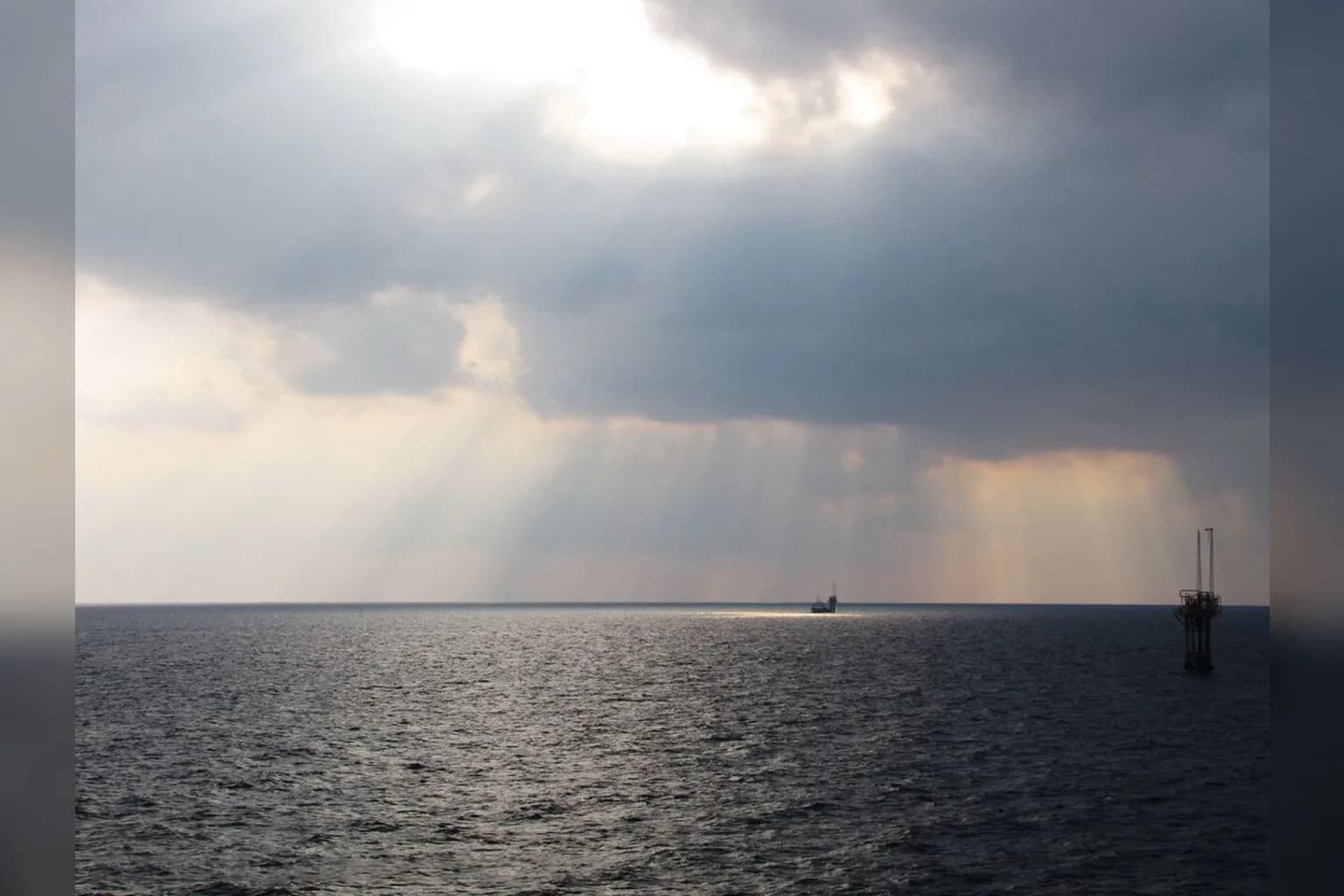
Safe passage through the Strait of Hormuz became a central concern as China and Oman set out a closer economic and diplomatic partnership in Beijing.
In a 20-point joint statement, the two governments said normal and safe navigation should resume in the strait. They also urged the US and Iran to seek peaceful options, return to the agreement struck in June aimed at ending the conflict, and restart dialogue.
Sultan Haitham bin Tariq al-Said arrived in Beijing on Sunday for a two-day visit, the first by an Omani head of state since the two countries established relations in 1978. Pan Gongsheng, governor of the People’s Bank of China, received him on the tarmac.
Xi Jinping then welcomed the Omani monarch at the Great Hall of the People with a formal ceremony that included a 21-gun salute, a military march-past and a banquet. The two leaders met there on Monday.
Xi told Haitham that China regarded expanding and deepening its relationship with Oman as a “shared strategic choice” for the two countries. He added: “I am ready to work with you to guide the China-Oman strategic partnership to an even higher level, better serve the peoples of our two countries, and contribute to peace, stability and prosperity in the region.”
He also set out Beijing’s view of the region’s wider tensions. “The Middle East Gulf region should not become an arena for great-power rivalry and geopolitical conflict. Peace and stability in the region require joint nurturing and protection by all parties,” Xi said.
Xi said China was ready to improve communication and coordination with Arab and Gulf countries in pursuit of an early return to regional peace and tranquillity, and long-term stability.
Haitham said his government deeply appreciated China’s positions on key regional questions. “We believe that development and stability are inextricably linked,” he said.
He described the visit as a “new starting point” for relations between the two countries. “We call for continued coordination with the People’s Republic of China in a manner that serves our shared interests and contributes to strengthening international security, stability and cooperation,” Haitham said.
The Sultan proposed that Oman enter a preferential bilateral trade and investment agreement with China. China is Oman’s largest trade partner, while Oman exports crude oil and energy products to China.
The joint statement also committed the two sides to deeper practical cooperation in oil and natural gas, alongside work in newer energy areas including solar photovoltaics, wind power, power transmission and transformation, and energy storage. Oman hopes to raise its trade volume with China and pursue projects through joint investment funds in fields including renewable energy, artificial intelligence, digital technologies, space and defence.
Direct flights between Beijing and Muscat began in November last year.
China’s Foreign Ministry said its special envoy to the Middle East, Zhai Jun, would visit Iran, Oman and Saudi Arabia this month to promote engagement and de-escalation.
Comments (0)