
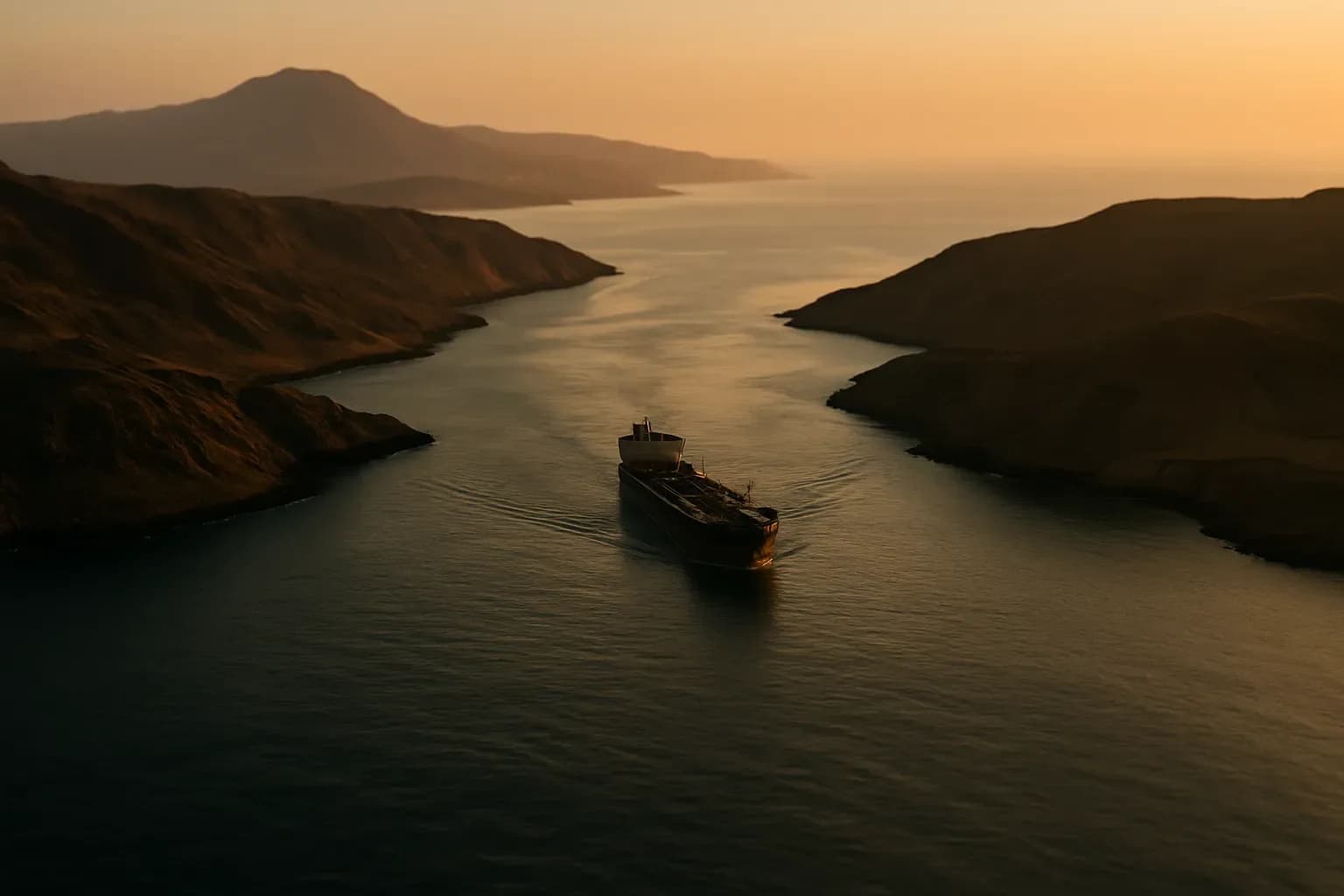
The war in Yemen has reached the narrowest point of the Bab al-Mandab Strait, placing a strategically important Red Sea passage at the centre of a conflict that has already disrupted oil supplies and shipping. Yemen’s Iran-aligned Houthis seized Perim Island on Friday, according to a source from Yemen’s internationally recognised government, after pro-government forces withdrew from the island.
Perim, also known as Mayyun, lies at the narrowest point of the strait. The Houthis also took Dhubab, a mainland Red Sea coastal town facing the island, and captured the strategic port city of Mokha from Saudi-backed pro-government forces. A Yemeni military official told the AFP news agency that the Houthis now control the entire coastline.
The territorial gains follow the effective collapse in July of a truce that had largely held for more than four years. Houthi military spokesman Yahya Sarea said a large-scale operation began on 3 September because of what he described as Saudi Arabia’s blatant aggression.
The capture brings the fighting closer to a shipping route of growing importance to Saudi Arabia. The country, the world’s largest oil exporter and a close US ally, has relied on the Red Sea route since the Iran conflict effectively closed Hormuz, through which a fifth of global oil used to flow.
The extent of the Houthis’ ability to control traffic through the strait remains unclear. The group said maritime navigation was safe for all companies except Saudi vessels. In a statement, the Houthis said: “We will continue to enforce blockade for blockade and escalation for escalation until the aggression stops and the blockade on our people is lifted”.
The conflict’s pressure on energy supplies was already visible before the seizure of Perim. Saudi crude supply fell 2.3 million barrels per day on the month in August to 6 million bpd, according to the International Energy Agency on Friday. It was the lowest level in more than three decades.
The agency said the decline was partly caused by the targeting of ships transiting the Bab el-Mandeb Strait by groups linked to Yemen’s Houthis. Global oil prices were on track to finish the week above $100 a barrel for the first time since mid-May.
Further disruption has affected Saudi infrastructure away from the coast. Drones from Iraq targeted Saudi Arabia’s East-West oil pipeline, forcing its closure as a precautionary measure and injuring several people.
Saudi Crown Prince Mohammed bin Salman has personally urged US President Donald Trump to take military action against the Houthis, according to two sources familiar with the matter who spoke to CBS News. Trump has so far declined to commit the US military directly, while offering intelligence and targeting support.
A senior Trump administration official told the BBC: “We are in continuous dialogue with Saudi Arabia and the Republic of Yemen government regarding regional stability.” The US position leaves open whether Washington may revise its approach if the fighting further affects passage through the Bab al-Mandab Strait.
The renewed campaign has also intensified Yemen’s humanitarian crisis. At least 46,000 people have been displaced since the fighting escalated with Yemen’s government and Saudi Arabia, according to the International Organization for Migration. The organisation said on Friday that the number was alarmingly rising by the hour.
For the Houthis, the seizure of Perim adds a strategic position to their campaign against Saudi Arabia and its allies. For Saudi Arabia and shipping companies using the Red Sea route, the island’s capture adds uncertainty to a corridor that has become more important since the closure of Hormuz. Whether the Houthis can translate control of the island into sustained control over shipping lanes remains unknown.



Comments (0)