El Niño has pushed cocoa prices up 250% and sugar to an over-decade high
Ghana's main cocoa processor ran at 20% of capacity as beans became too costly to buy. Now rice supplies are tightening too, with world food prices near a four-year high.
Oil, gold, metals, grain

Ghana's main cocoa processor ran at 20% of capacity as beans became too costly to buy. Now rice supplies are tightening too, with world food prices near a four-year high.

September shipments reached 1.6 million tonnes — their highest since the conflict began, but still below a quarter of pre-war levels. The Strait of Hormuz remains severely restricted, and analysts say recovery would take well over half a year even if the fighting stopped today.

The kingdom plans upgrades to the East-West pipeline and a temporary switch of a gas line to carry crude. Drone strikes and Houthi attacks on shipping have pushed Saudi Arabia to build more resilient export routes.

The Strategic Petroleum Reserve has fallen 31% since the start of the year and now sits at its lowest level in more than four decades. Energy Secretary Chris Wright has said he wants up to $20 billion to refill it.

Trump confirmed the strait is open and the East-West pipeline has recovered about half its capacity. But on 1 October, Brent was $99-100 a barrel against $72.50 before the crisis, and European gas was more than double its pre-war level.

Storage costs have fallen 93% since 2010, tipping the economics against the gas peaking plants grids rely on during high-demand periods. Wood Mackenzie expects the gap to keep widening.

Talks with Asian customers over alternative delivery routes must conclude by year-end, though pricing, freight and eligible volumes are unresolved. The push comes after a drone attack on 13 September knocked out the East-West Pipeline, Saudi Arabia's main overland route around the strait.

At least 16.5 million barrels a day left the region in September, matching pre-war averages. Producers have rerouted 40% of Gulf exports away from the strait — double the pre-war share — through pipelines, offshore loading and Red Sea routes.

An agreement is close to completion, with the first convoy expected in Syria by mid-October. The two countries are also reviving a pipeline that would give Iraq a more permanent route to the Mediterranean.

Chinese refiners stopped all exports except to Hong Kong and Macau after domestic stocks fell to multi-year lows. The move pushed oil up 4%, adding to pressure from Russia's ongoing diesel export ban and US distillate stocks running 14% below their five-year average.

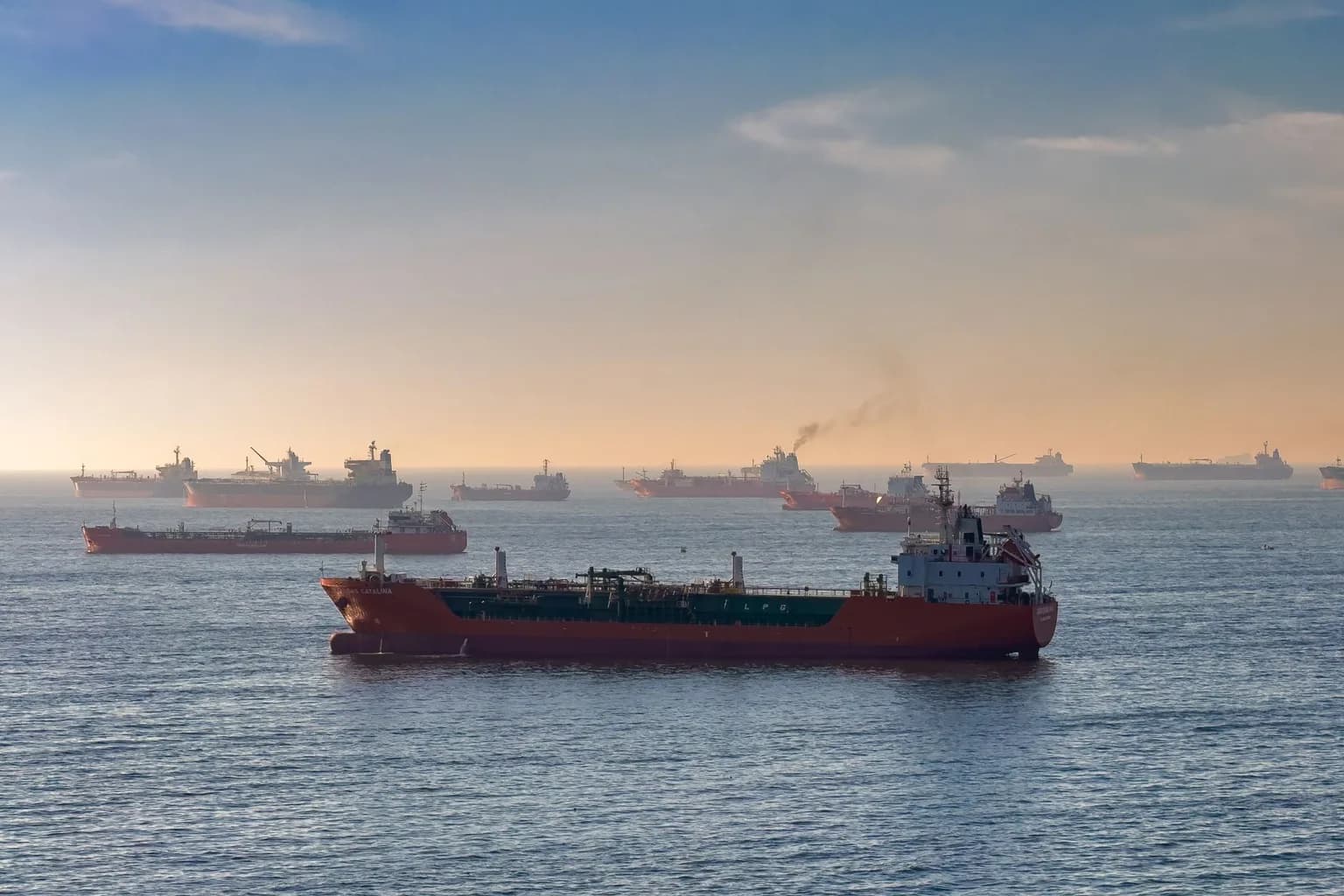
Crude is flowing again through the Strait of Hormuz under US Navy convoy, but ships are waiting days or weeks to load. Charter costs have added about $26 a barrel to cargoes heading from Houston to Asia.

The Strait of Hormuz, which once handled around 20 million barrels a day, saw just four commodity vessels cross it on Monday. Tanker shuttles, ship-to-ship transfers and overland pipelines are filling the gap, but global inventories have fallen sharply and diesel prices have hit record levels.

Indonesia has imposed an export tax of as much as 15% on gold. Across the region, countries are also expanding domestic refining and directing locally mined metal into national reserves, challenging the historic flow of supply to London and New York.

Kristalina Georgieva says oil at $100 a barrel and damaged refining capacity could keep costs elevated well beyond any ceasefire. Governments are poorly placed to cushion the blow, with global sovereign debt now exceeding three times world GDP.

The US Energy Information Administration now expects Brent crude to average $105 per barrel in the fourth quarter of 2026. East Coast diesel stocks are running 32 percent below their seasonal average, and US retail diesel hit $6.29 a gallon in September.

Russell Hardy says the real crisis is transport, not supply. Around 15 percent of the world's largest tankers are tied up in Hormuz shuttle work, leaving buyers unable to secure ships even when oil is available.

No newly exported Iranian oil has crossed the US blockade line since July. With only around 10 million barrels left in floating storage off Malaysia, Tehran is fast running out of crude to sell.

Nearly 3 billion barrels of supply have been lost since the Hormuz disruption began, and Amin Nasser says emergency reserves cannot fix the longer-term problem. Saudi Arabia is weighing a $7 billion pipeline to Oman's Duqm Port that would bypass both Hormuz and the Red Sea.

The US naval blockade has effectively halted Iranian crude exports since mid-July. Refiners that built their businesses on sanctioned Iranian barrels are now scrambling for replacements at sharply higher prices.

The IEA will roll out the oil and diesel over four months, with diesel frontloaded in the first 20 days. The move follows a 400 million barrel release in March, a third of which had still not reached the market when the new deal was struck.
Diesel hit $6.52 a gallon last month and was averaging $6.37 on Friday. The G7 deal will frontload a substantial release of diesel in the next 20 days, with the rest to follow over four months.

Hong Kong received almost 100 tonnes of Russian gold in the first seven months of 2026, as Western sanctions keep London and New York closed to Russian bullion. Most of it moves on to mainland China, whose imports of Russian gold rose about 15-fold to $3.3 billion in 2025.

Middle East oil exports have recovered above pre-war levels, but the Houthis' advance into the Bab al-Mandab Strait is keeping crude prices elevated. Brent hit $100.80 on Wednesday, its highest since late July.

Amin H. Nasser called this the most serious energy supply shock of his career. Nearly 3 billion barrels of gross supply have been lost since the war began, and fewer than 6 billion barrels of commercial inventories remain — most of it not practically accessible.

Arab Light for Asian buyers fell to $2.40 per barrel above the benchmark, ending five straight months of increases. Bank of America has forecast Brent will average $65 a barrel in 2025 as oil surpluses grow.

The drawdown is more than 80 percent of the 400 million barrels agreed by the agency's 32 members after US and Israeli strikes on Iran disrupted supplies. The G7 has separately agreed to release 100 million barrels of diesel and crude over the next four months.

EV sales rose 52.2% year on year in August 2026, pushing their EU market share to 21.7%. In Türkiye, electric sales fell as unchanged tax thresholds priced out more models, and buyers turned to hybrids instead.

Brent crude briefly hit nearly $120 a barrel after Iran closed the Strait of Hormuz, cutting passage for 15 million barrels a day. Global growth forecasts have barely moved, but inflation is rising and the supply workarounds won't last forever.

Brent crude fell by roughly 3% on Friday as markets anticipated the additional supply. Analysts warn that Gulf supply pressures are likely to limit how long the relief lasts.

More than 10 million barrels a day of Gulf production remain shut in, and global demand is falling by 2.5 million b/d this year. The IEA calls 2026–27 'essentially a lost period' for oil demand growth.

The RAC says the national average has reached 200.01p a litre, a record. The milestone comes as Trump threatens to ban US diesel exports and the EU pushes back, with G7 leaders due to discuss fuel supplies on Friday.

The White House has urged Germany and France to tap emergency stockpiles as diesel hits record highs at UK forecourts and US pump prices climb over 70%. EU officials have flatly rejected any American export ban, and it remains unclear whether either side will act.

Britain's energy minister held talks with European counterparts on Thursday about a co-ordinated release of strategic stocks. UK diesel prices have hit an all-time high of nearly 200p a litre, and the country imports much of what it needs.

The agency has not set out when or how any release would happen, or what volumes might be involved. Europe's winter outlook is described as tough, though no detail is given on where pressures are expected to fall hardest.

A valve closure on the line from El Sharara, Libya's largest oil field, has halted more than 942,000 barrels of output. The national oil company warns it may declare force majeure and says the Zawiya refinery could shut entirely if the blockade holds.

Energy commissioner Dan Jorgensen has written to member states urging them to cut demand and protect gas storage levels. The bloc is heading into winter with unusually low stocks, and France has separately warned of a fresh oil shock.

The two countries met on September 10 to build more resilient supply chains for the rare earth metal, which has no easy substitute. China has held back exports since early 2025, and Japanese yttrium imports have fallen 98%.

Gas prices have hit a three-year high after the Iran-US war choked LNG shipments through the Strait of Hormuz. Coal output across Europe is expected to rise by about a quarter over the next six months, with Germany set to run its remaining coal fleet close to full capacity.

Ship-to-ship transfers in the Gulf of Oman have risen to around 2.5 million barrels a day in September, up from 1.4 million in August. But drone strikes on Saudi Arabia's East-West pipeline and Houthi control of Red Sea approaches have left the shuttle system with fewer fallback options.

Saudi Arabia aims to restart about half the capacity of its East-West pipeline within days, after drone strikes forced a shutdown last Friday. The disruption is deepening an already tight market: the IEA has raised its forecast for this year's global oil deficit to 1.7 million bpd and pushed back any surplus to 2027.

The president says he supports halting US diesel exports to bring pump prices down. His own energy secretary warns a ban could raise fuel costs on the coasts, and no decision or timetable has been set.

Spot prices have surged 150% since February, pushing some industrial buyers in Asia to switch to coal and fuel oil. Europe is getting temporary relief as cargoes divert away from the region, but low storage stocks leave it exposed if winter turns cold.

Both sides described the weekend discussions as progress, though neither released details. Research shows that better US-China relations tend to lift oil prices gradually by raising expectations of stronger demand — a different dynamic from the sharper spikes driven by supply fears.

Of 907 supertankers worldwide, only 740 can move crude legally — and nearly 40% of those are more than 15 years old. New orders are rising but the current orderbook covers only about 17% of the global fleet, not enough to replace what is set to retire.

The 1,200-km East-West Pipeline was shut last week after drone attacks damaged two pumping stations. Aramco is selling extra crude to Asian buyers in the meantime to offset lost exports.

The bank has formally abandoned its baseline oil-market view for the first time since fighting began seven months ago. Brent is trading near $106 a barrel, about $16 above JPMorgan's fair-value estimate, and the bank says it cannot model how or when the conflict ends.

Saudi Arabia's East-West pipeline has been shut since 10 September after Houthi strikes caused serious damage. No crude has left Yanbu since the following day, and at least three European refiners have had late-September cargoes pushed back to as late as November.

Commercial crude inventories fell 0.6 million barrels to 423.4 million in the week ending 11 September, even as imports rose to 7.1 million barrels a day. Gasoline and distillate stocks both increased, pushing total petroleum inventories up 2.6 million barrels.

The 1,200km East-West pipeline, which carries around 4 million barrels a day to the Red Sea, could be down for five to six weeks. Yanbu port has enough stocks to last only five to seven days, and crude has already climbed above $100 a barrel.

Supply shocks — from fighting near the Strait of Hormuz to Russia's export ban — have tightened global markets sharply. Businesses have mostly held back from passing the costs on, but economists say households will feel the effects before the year is out.

The kingdom produced 6.238 million barrels per day in August, down nearly two million from the previous month. Houthi strikes on oil facilities and blockades of key shipping routes have forced Saudi Arabia to reroute crude, while Brent futures crossed $100 a barrel.
Oil prices have surged roughly $20 in a few weeks after tanker attacks by the US and Iran in the Gulf of Oman raised fears about the Strait of Hormuz, which carries about a fifth of the world's oil and gas supplies.
Fires at energy installations in four southern Saudi cities forced a temporary halt to operations, wounding 73 people including children. A Houthi spokesperson warned that a broader operation deep into Saudi Arabia was still to come.
Brent crude touched $98 a barrel and WTI neared $93 after the two sides traded strikes on tankers, warships and military targets over the weekend. Goldman Sachs says prices could reach $120 if attacks on shipping intensify.
Brent crude closed at $90.87 a barrel on August 17, the day a 60-day negotiating window expired without a deal. Prices are now nearly 50% higher than at the start of the year, with US gasoline averaging $4.06 a gallon.
The near-closure of the Strait of Hormuz has caused the largest oil market disruption on record, sending Brent crude as high as $120 a barrel. The windfall is going into stockpiles, not new wells.
Tehran presented a lengthy list of conditions for reopening the waterway, collapsing hopes of a near-term deal that had briefly seemed within reach. Equity markets are taking it far more calmly than oil traders are.
Tehran is now demanding billions in compensation, a US troop withdrawal and an end to the naval blockade before the strait reopens. The conditions caught markets off guard after American stocks just had their best week since April.
Tehran hit what it called hostile targets in the waterway that carries a fifth of the world's oil, sending prices up more than 1% in a single session. A deal brokered by Oman was reported close last week, but Iran presented Washington with a new list of demands over the weekend and no agreement has been signed.
The closure of the Strait of Hormuz has removed 11 million barrels of oil per day from global supply; a peace deal is expected, but infrastructure timelines and price trajectories remain deeply uncertain.
Type at least two characters.