
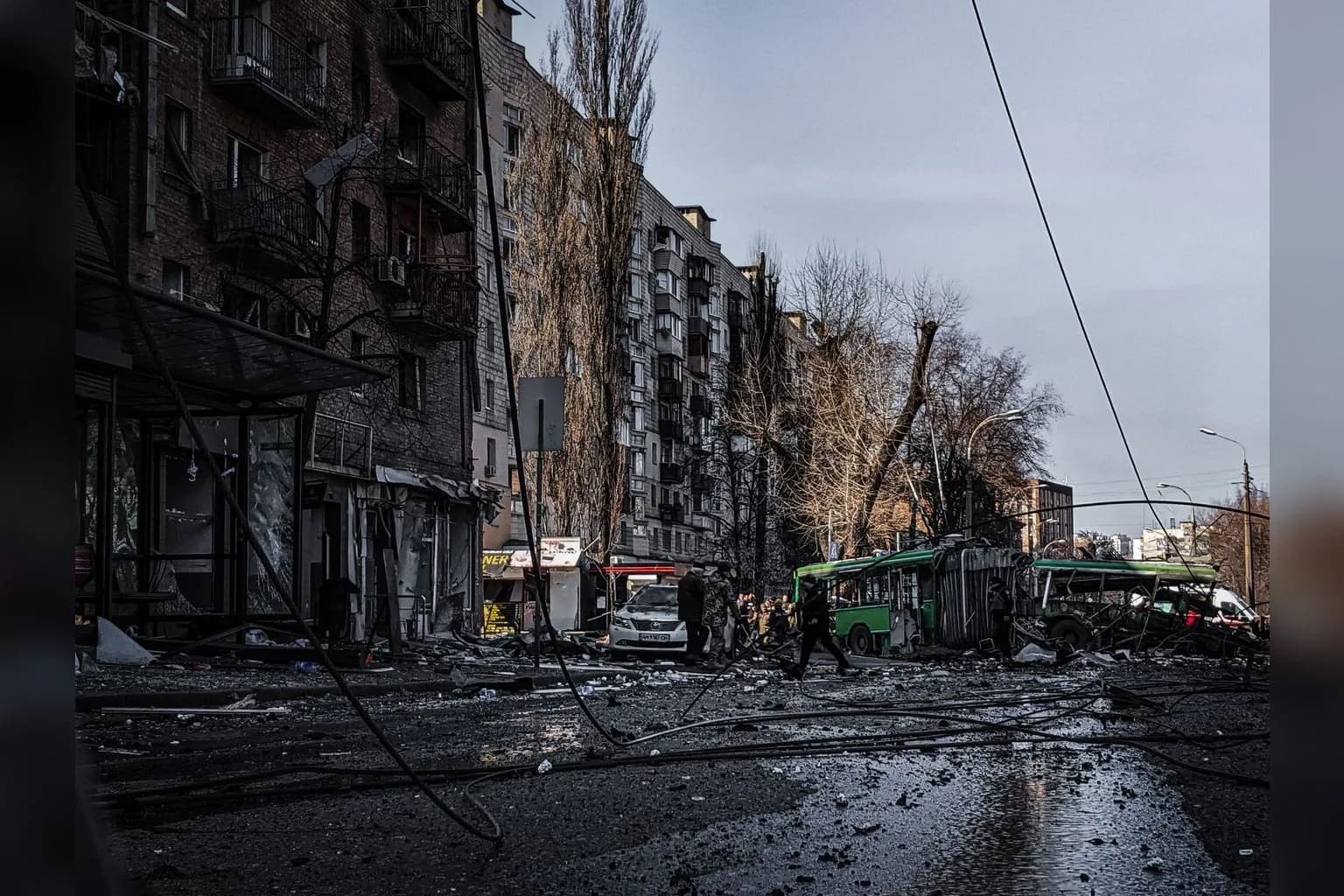
By October 2026, more than four years after Russia began its full-scale invasion of Ukraine on 24 February 2022, the war has become an attritional contest in which Moscow's claims and independent assessments of the battlefield diverge. Vladimir Putin has claimed that Russian forces are advancing faster. The Institute for the Study of War (ISW) estimates, however, that Russia has lost more controlled territory than it has gained since March 2026.
The difference reflects a battlefield made increasingly unclear by drone warfare. Hundreds of square kilometres have become a grey zone, with neither military exercising clear control. DeepState, a Ukrainian open-source intelligence project partnered with Ukraine's Ministry of Defence and General Staff, follows changes through geolocated footage, open-source reporting and direct communication with Ukrainian units. Its maps are updated daily, although they can fall behind developments during Ukrainian offensive operations because information is withheld for operational security.
Russian territorial gains were at their highest in November 2024, when they reached 731 square kilometres. Ukrainian forces have mounted local counter-attacks since Autumn 2025 and have typically recovered a few tens of square kilometres a month. Their largest monthly recovery came in August 2026, when Ukraine recaptured 128 square kilometres. It was the largest such gain since September 2023.
Ukraine first publicly acknowledged its counteroffensive around Lyman on September 15, 2026, calling it Operation Vivaldi. Brigadier General Andrii Biletskyi said forces had cleared or liberated 85 square kilometres, including the village of Serednie. He described the operation as its first phase. ISW said the area gained by Ukraine was probably greater than Biletskyi's stated figure.
Russian forces are still making advances in parts of the theatre, although many are slow. Russia gained 2.91 square kilometres a day across the theatre in August. It has been fighting for Kostiantynivka for 11 months without taking the city. In several sectors, advances have amounted to only tens of metres a day.
Russia held small portions of several oblasts by August 2026: 5.0% of Kharkiv, 1.5% of Sumy, 0.5% of Mykolaiv and 0.1% of Dnipropetrovsk. The front in Zaporizhzhia stabilised in 2026 after Russian offensives in the previous year. Russia's minimum annual objective in Donetsk remains full control of the oblast, though its progress there has been gradual and has slowed since 2024.
The cost in personnel has continued to mount. Ukraine's General Staff reported on September 9 that Russian killed and wounded had reached 1,500,870. Its daily reports indicate losses of at least 1,000 troops killed and wounded each day. Russian losses exceeded 42,000 troops in July 2026, one of Moscow's worst months of the war.
An independent analysis estimated that Russian battlefield casualties had reached around 1.4 million killed, wounded and missing by June 2026. That figure included as many as 450,000 dead. The BBC, Mediazona and open-source volunteers have identified 266,032 Russian servicemen who died during the full-scale invasion. Journalists have confirmed the deaths of over 90 thousand Russian servicemen since the beginning of 2026.
Losses have risen despite Russia's wider use of military technology. By June 2026, they were running at more than 30,000 a month. Neither Russia nor the Soviet Union has incurred manpower losses of this scale in a single war since World War II. Russia now loses more troops in one month than it lost in the two Chechen wars combined or in 10 years of war in Afghanistan.
Official records can take months to catch up with deaths at the front. Yevgeny Kutliev disappeared during a combat sortie in early July 2025. His death was officially documented on July 17, 2026, 375 days after the day of his death. An analysis of 10 thousand Russian servicemen whose bodies were found by evacuation teams during 2025–2026 found that remains were located an average of 150 days after death. Their deaths were officially recorded after an average of 236 days. The corresponding averages were 36 days in 2022 and 25 days in 2023.
The Kremlin has repeatedly increased payments for signing military contracts and is preparing for mass mobilization in response to mounting losses. Available information does not explain why Russia is trying to freeze Ukraine instead of seeking further territorial gains. The details, capabilities and operational effect of new Russian drone systems deployed against Ukrainian air defenses are also unknown.
Russia continues to attack across several sectors as Ukraine attempts to take advantage of local opportunities, including through Operation Vivaldi. The evidence available by October 2026 shows Russian progress slowing in important areas, Ukrainian counter-attacks recovering territory, and Russian casualty levels rising while Moscow maintains its offensive operations.





Comments (0)