
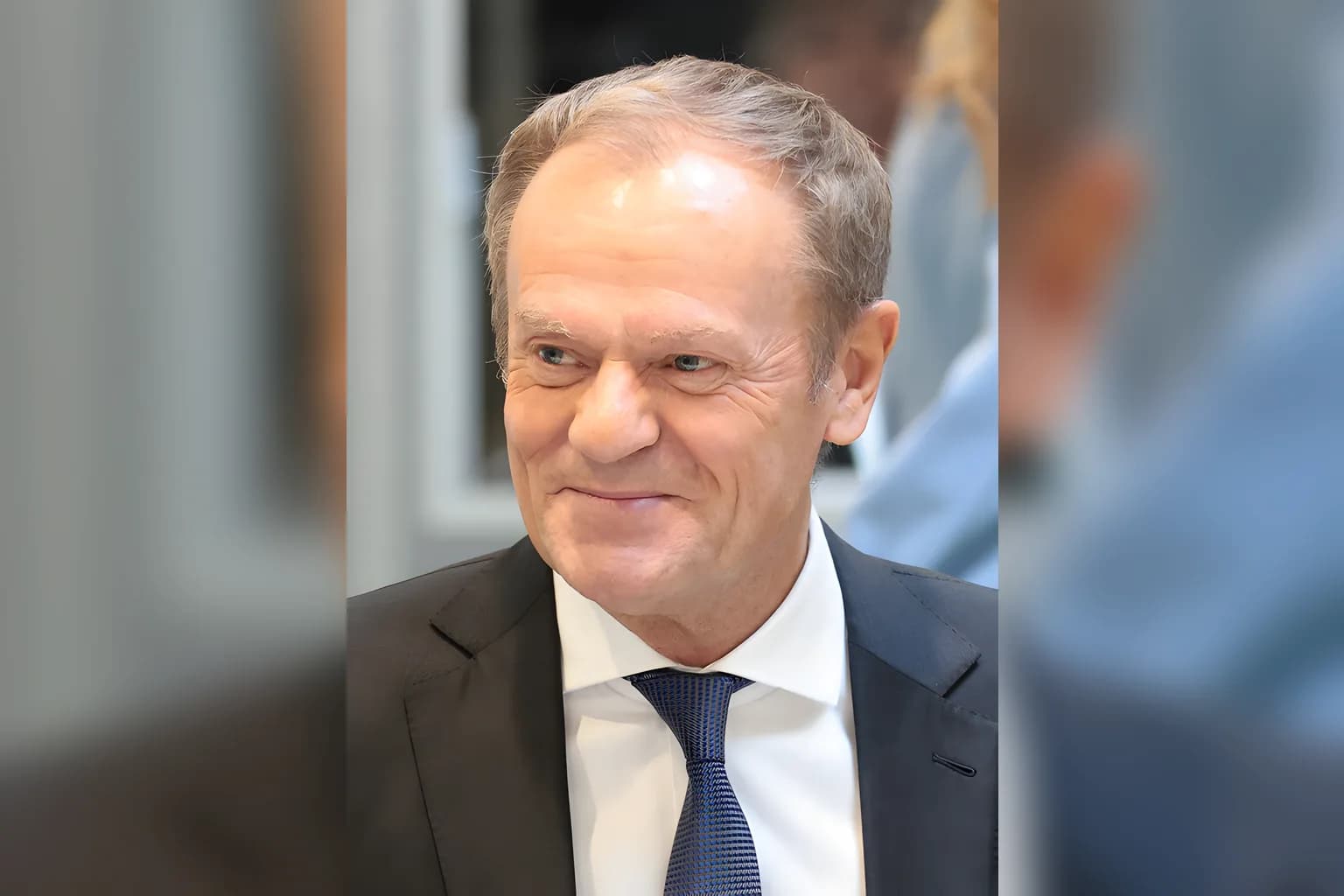
Poland’s position on NATO’s eastern flank has made it a prominent supporter of Ukraine during Russia’s invasion. On Thursday, 17 September, Prime Minister Donald Tusk told parliament in Warsaw that Polish intelligence services had assessed that Russia could mount hybrid attacks using drones and missiles against European countries backing Ukraine, including Poland.
Tusk said Moscow could seek to present any such attack as an accident. He said this approach was intended to “paralyze or at least weaken the motivation of NATO countries” to come to the aid of an alliance member under attack.
“There is a real risk that drones or other types of projectiles will enter the territory of one or several countries on the eastern flank and even cause destruction,” Tusk said.
He added: “The official narration will be that it's an accident and there is no reason for NATO to think about a response.”
The warning centred on the cohesion of the North Atlantic Treaty Organization, whose members are bound by Article 5 protections. Tusk said Russia’s objective would be to undermine that unity and convince member states that Article 5 was “more theoretical than practical”.
He said the government had received information that Russia was considering hybrid operations involving drones and missiles against countries supporting Ukraine. Such incidents, presented as accidental, could happen repeatedly, he said.
Tusk has for months warned that Russia might be preparing a more serious hybrid attack against a NATO country. His latest comments were based on assessments by Polish intelligence services, though he gave no details about the agencies involved, any timetable for possible strikes or the locations from which they could be launched.
The prime minister also said Russia was making increasing use of jet-powered drones. These aircraft fly at greater height and speed, he said, making them harder for air defences to identify before they reach their targets.
Tusk predicted that Russian attacks on Ukraine would intensify in the weeks ahead. He said a possible campaign against countries backing Ukraine could overlap with political changes in parts of Europe that give greater influence to voices advocating peace, pacifism and an end to casualties.
Those arguments could be used to call for peace, Tusk said, though he described the likely result as the total capitulation of Ukraine. His warning framed the risk as a test of whether NATO members would treat an apparent accident on the alliance’s eastern flank as an isolated event or as an attack requiring a collective response.





Comments (0)