
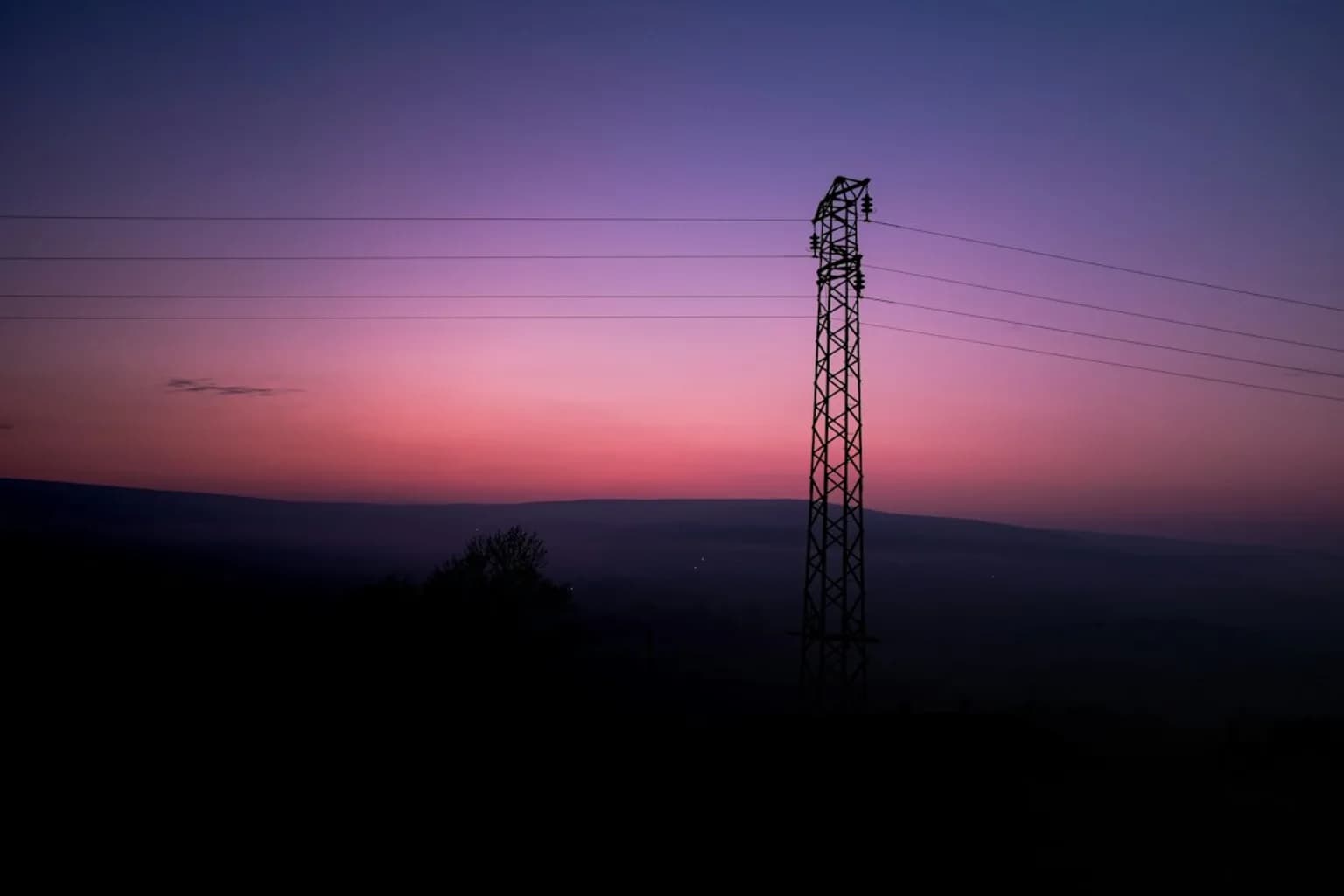
Britain’s electricity grid was largely built between the 1950s and 1970s, when large fossil-fuel stations were the dominant source of power. It was designed for that job, and is poorly suited to the way electricity is generated today.
The result is a system that can run into constraints: points at which it cannot carry electricity to users because it has reached its maximum capacity. That turns the grid into a daily exercise in managing the available routes for power, rather than simply moving it from where it is made to where it is needed.
The National Grid is the high-voltage transmission network serving Great Britain. It links power stations and major substations across England, Scotland and Wales, allowing electricity generated in one place to meet demand elsewhere. Its 400 kV and 275 kV lines are joined by 132 kV lines in Scotland.
Transmission networks carry power over long distances from generating sites to substations. Distribution networks then take it on to consumers. A capacity limit anywhere along that chain can therefore restrict the system’s ability to deliver power where it is wanted.
For customers, the effects are measurable. The average electricity customer in Great Britain lost 35.1 minutes of supply in 2024/25, compared with 36.7 minutes in 2023/24. There were 39.7 interruptions per 100 customers in 2024/25.
Those averages conceal a sharp regional divide. There was a 6.6 times gap between the best and worst served licence areas, while 11 of the 14 licence areas missed their duration target in 2024/25.
Rural networks with long overhead lines exposed to weather recorded higher numbers of minutes lost. Dense urban systems with underground cables recorded lower losses. SSEN Scottish Hydro recorded 68.9 minutes lost per customer in 2024/25, against a target of 52.9 minutes. UKPN London recorded 10.5 minutes lost per customer.
Network companies paid £50.9m in net penalties over two years. Ofgem regulates the transmission operators that own and manage Great Britain’s networks.
The day-to-day task of keeping the system operating falls to the National Energy System Operator, or NESO. In 2024, the Department for Energy Security and Net Zero established NESO as a publicly owned body.
NESO has identified over 80 transmission projects it considers necessary to meet demand and reduce constraint costs. The National Grid had already announced the Great Grid Upgrade during the 2020s, a series of 17 projects intended to increase capacity for offshore supply and demand including electric cars.
The Department for Energy Security & Net Zero is working with Ofgem and NESO on upgrades intended to carry a higher capacity of renewable energy and improve resilience under its Clean Power 2030 plan. The practical challenge is the unglamorous one: power still has to pass through ageing lines, substations and networks before it reaches a customer’s socket.




Comments (0)