
Five years after Xi Jinping told the United Nations that China would stop funding overseas coal power plants, the country has cancelled a large share of the capacity it had intended to build abroad. The retreat sits alongside warnings that Chinese companies continue to invest in overseas coal projects by using regulatory loopholes, at a time when energy-security concerns are sustaining demand for coal in parts of Asia.
A report released this week by the Centre for Research on Energy and Clean Air and the People of Asia for Climate Solutions found that China had cancelled 67% of the overseas coal power capacity planned in 2021.
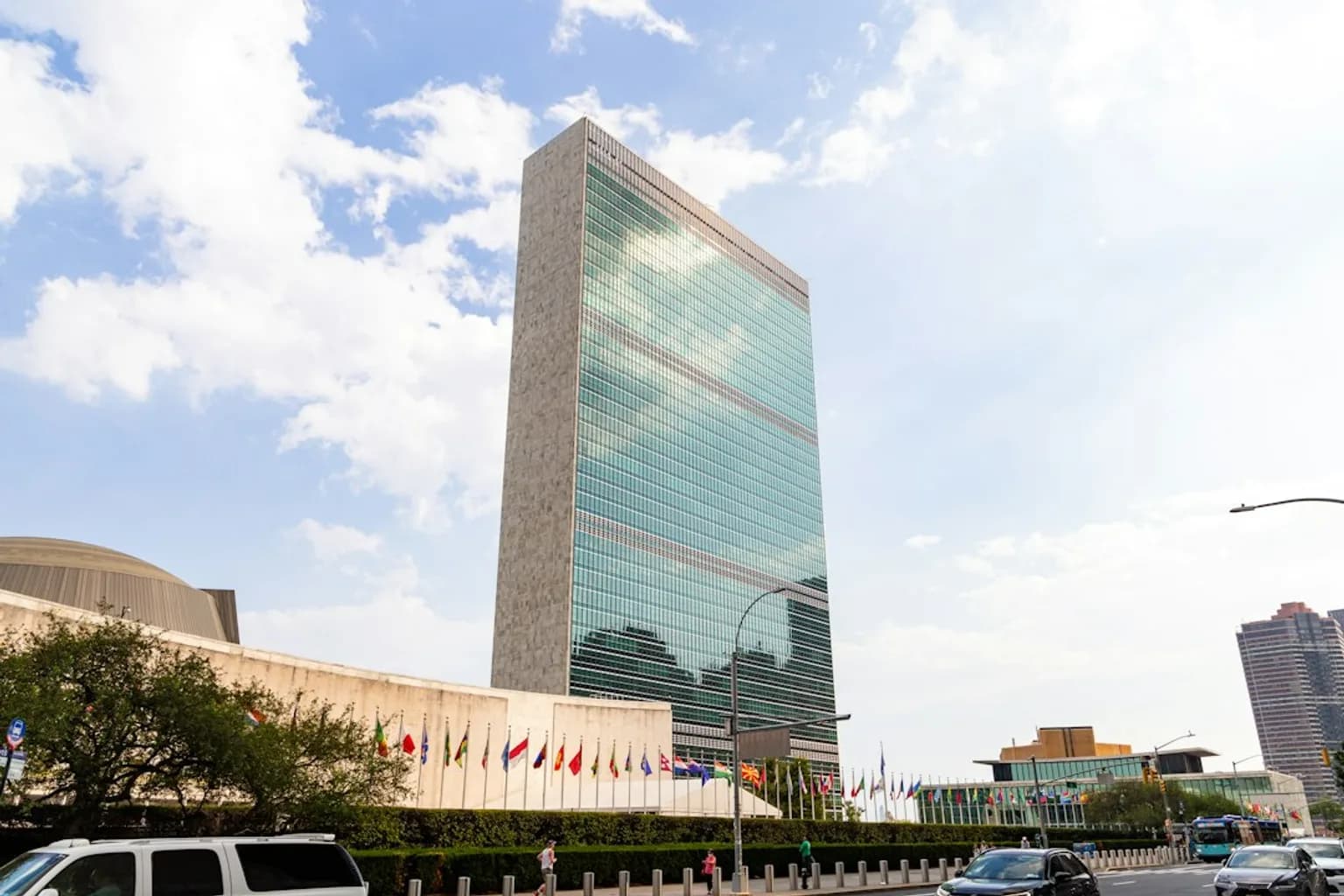
Xi made the pledge in an address to the U.N. General Assembly in 2021. Until then, China had been the world’s largest financier of coal projects abroad. Nearly 200 countries agreed in the same year to phase down coal as a fossil fuel.
The new figures point to a substantial reversal in China’s planned overseas coal development. Yet experts have warned that the promise has left room for Chinese companies to keep investing in overseas coal through regulatory loopholes. The report does not specify the mechanisms being used, the scale of projects continuing under those gaps, or how the overseas funding commitment is enforced.
The issue carries particular weight in Southeast Asia, which accounts for a fifth of the world’s growing energy demand. Multiple countries in the region have increased their use of coal after energy crises. Energy-security concerns following the Russia-Ukraine war and the Iran war have also pushed parts of Asia to maintain coal investments.
Li Shuo, director of the Asia Society Policy Institute’s China Climate Hub, said: “The growing desire among countries in Southeast Asia to secure reliable energy supplies could bring about another round of coal fever”.
China’s position in global energy markets remains divided between its continuing reliance on coal and its dominance in low-carbon manufacturing. It is the world’s largest annual emitter of carbon dioxide, responsible for roughly 27 to 30 percent of total global output. The U.S. remains the largest historic emitter globally.
China also continues to lead the world in building new domestic coal infrastructure. At the same time, it dominates the global electric vehicle market and is the world’s largest producer of solar panels and wind turbines. It produces over 80 percent of the world’s solar modules and installed a record 216.9 gigawatts of solar in 2023 alone.
Its electric vehicle exports also rose sharply. China exported over 1.2 million electric vehicles in 2023, a 77 percent jump year-on-year.
Domestic policy has included targets and a carbon market intended to increase the role of non-fossil energy. The 14th Five-Year Plan, covering 2021 to 2025, set a target of raising non-fossil fuels to around one-fifth of primary energy consumption by 2025. China’s national Emissions Trading Scheme began in July 2021, initially covering power generation. As of October 2024, the scheme covered roughly 2,000 power companies and about 4.5 billion tonnes of CO2 annually.
The cancellations documented by CREA and PACS show that China has moved away from a significant portion of its overseas coal pipeline. The remaining uncertainty concerns the projects and investments that may continue outside the scope of Xi’s pledge, while regional demand for dependable energy supplies continues to shape decisions on coal.




Comments (0)