
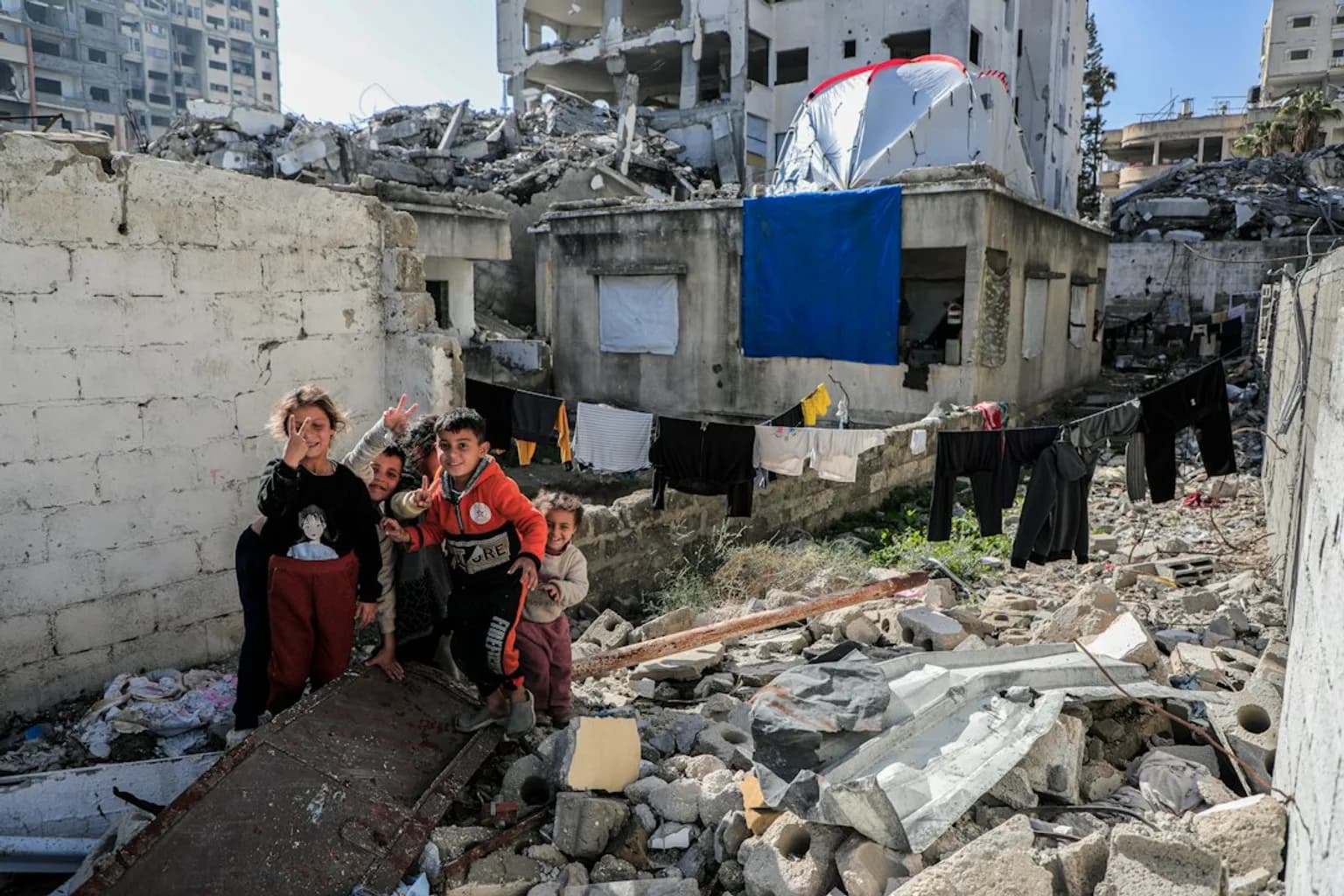
Gaza has suffered the most severe economic crisis on record, the UN Conference on Trade and Development (UNCTAD) said in an assessment presented on 24 September 2026 at its 73rd session. The report found that military operations since October 2023 had devastated the territory’s productive base, leaving its population dependent on international aid for basic survival.
UNCTAD said 92 percent of Gaza’s economic establishments had been damaged or destroyed. Total economic output has fallen by 80 percent, while gross domestic product per person in 2025 stood at $212 annually, or $0.58 per day. That represented an 83 percent decrease since 2022.
The report measures the crisis through the peak-to-trough fall in real GDP per capita and the likely length of recovery. It said Gaza’s economic decline had brought ordinary economic activity to an effective halt, and warned that systemic collapse was no longer a theoretical possibility.
Over 90 percent of the working-age population is unemployed, according to UNCTAD. Industrial activity and agricultural production have each fallen by 94 percent, while construction output has collapsed by 99 percent. Prices are 274 percent higher than in 2022, and only 1.5 percent of arable land is accessible.
A ceasefire was announced in October 2025, yet UNCTAD said the scale of damage had left Gaza with a recovery task expected to require a multi-decade commitment from international donors. The report estimated that $71.5 billion would be needed for recovery and reconstruction, including capital investment to rebuild destroyed residential quarters, water networks and public utilities.
A separate assessment by the World Bank, the EU and the UN put damage to Gaza’s physical infrastructure at $35.2 billion as of early 2026. It estimated economic and social losses at $22.7 billion over the same period. Nearly 1.9 million people have been displaced, while more than half of hospitals and clinics are non-functional.
UNCTAD said Gaza’s vulnerability had developed over 59 years of Israeli occupation, which it said imposed structural constraints that systemically stunted the Palestinian economy. Gaza’s share of the Palestinian economy fell below 4 percent by 2025, according to the report.
The assessment also described financial pressures across the Occupied Palestinian Territories. Public debt has reached $4.8 billion, while banking-sector exposure to the public sector stands at $5.3 billion, representing 42 percent of all bank lending. Hundreds of thousands of jobs have been lost across the Occupied Palestinian Territories, erasing $2.8 billion in cumulative labour income.
UNCTAD said cumulative deductions and withheld revenues between 2019 and March 2026 exceeded $3.67 billion. That amount was equivalent to 83 percent of total Palestinian net revenue in 2025. It identified the transfer of withheld Palestinian revenues and financial-system stabilisation as immediate priorities.
The report said the destruction of public and private assets, together with the loss of livelihoods, had created a coercive environment that forces Palestinians to leave their homeland. It gave no timetable for economic recovery, and the scale and duration of donor commitments remain unknown.




Comments (0)