
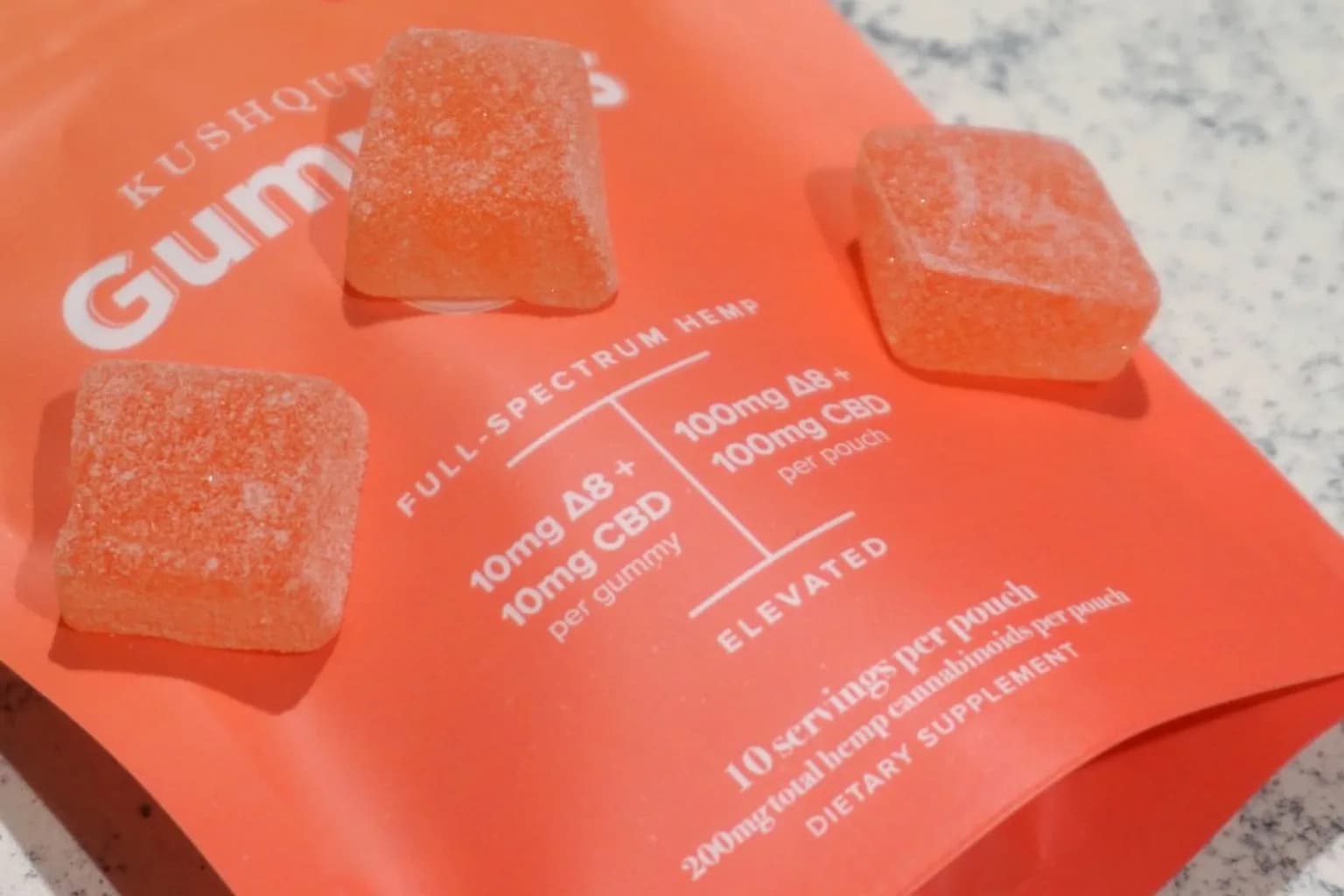
Nicholas Hohns spreads blue-green goo into a gridded mould in a commercial kitchen outside Raleigh, North Carolina, making THC gummies. Hohns entered the hemp business after losing his job as a personal trainer during the COVID-19 pandemic.
His product exists because federal law drew an unusually fine line. The 2018 Farm Bill, signed on 20 December 2018, defined hemp as cannabis with no more than 0.3% delta-9 THC by dry weight and removed hemp from Schedule I of the Controlled Substances Act.
That threshold helped create a hemp-derived THC market that has generated $28 billion in retail sales. Congress has now voted to close the legal opening that allowed the industry to grow.
The new limit allows 0.4 milligrams of THC in a hemp product container. A government-funding bill signed by President Donald Trump last month moved the ban's effective date from 12 November to 11 December. Congress had extended implementation deadlines for major restrictions by one month in September 2026.
The change reverses a course set in motion by Kentucky Republican Senator Mitch McConnell. McConnell successfully pressed for industrial-hemp legalisation in the 2018 Farm Bill, then late last year inserted the hemp THC ban into legislation that ended the longest government shutdown in history.
For years, the dry-weight rule served as the market's plumbing. It defined hemp by the concentration of delta-9 THC, while businesses developed and sold a wide range of hemp-derived THC goods.
Those goods include vape oil, gummy candies, chips, sodas, THC seltzers sold at some Target stores and smokable cannabis flowers. They have been available in gas stations and convenience stores, including to teens. An estimated 35,000 retail locations sell hemp-derived products across the United States.
The unregulated hemp THC market has proliferated since 2018. The 2018 law followed the Hemp Pilot Program created by the 2014 Farm Bill, which allowed state agriculture departments and research institutions to grow hemp for research.
The businesses at risk range from small manufacturers such as Hohns to Cornbread Hemp in Kentucky. Its co-owners, Eric Zipperle and Jim Higdon, employ 105 people, sell hemp beverages in 18 states and expect the company to bring in $65 million this year.
There are 54,000 licensed hemp farmers and 17,200 registered hemp processors in the United States. Hemp farm-gate revenue reached $824 million in 2025, according to US Department of Agriculture data. Hemp-derived CBD products accounted for $6.4 billion in sales in 2025.
Intoxicating hemp cannabinoids generated an estimated $2.8 billion in retail sales before state-level restrictions began taking effect. An estimated 14 million Americans regularly use hemp-derived CBD products for conditions including chronic pain, anxiety and sleep disorders, according to survey data from the National Institutes of Health.
Whitney Economics estimates that the ban threatens to cut retail revenue by $28.3 billion, displace 225,000 jobs and reduce potential state sales tax revenue by $2.1 billion.
The figures show how a definition written into federal law became a large commercial market. The 11 December deadline now puts its producers, growers, processors and retailers under a far tighter federal limit.




Comments (0)