
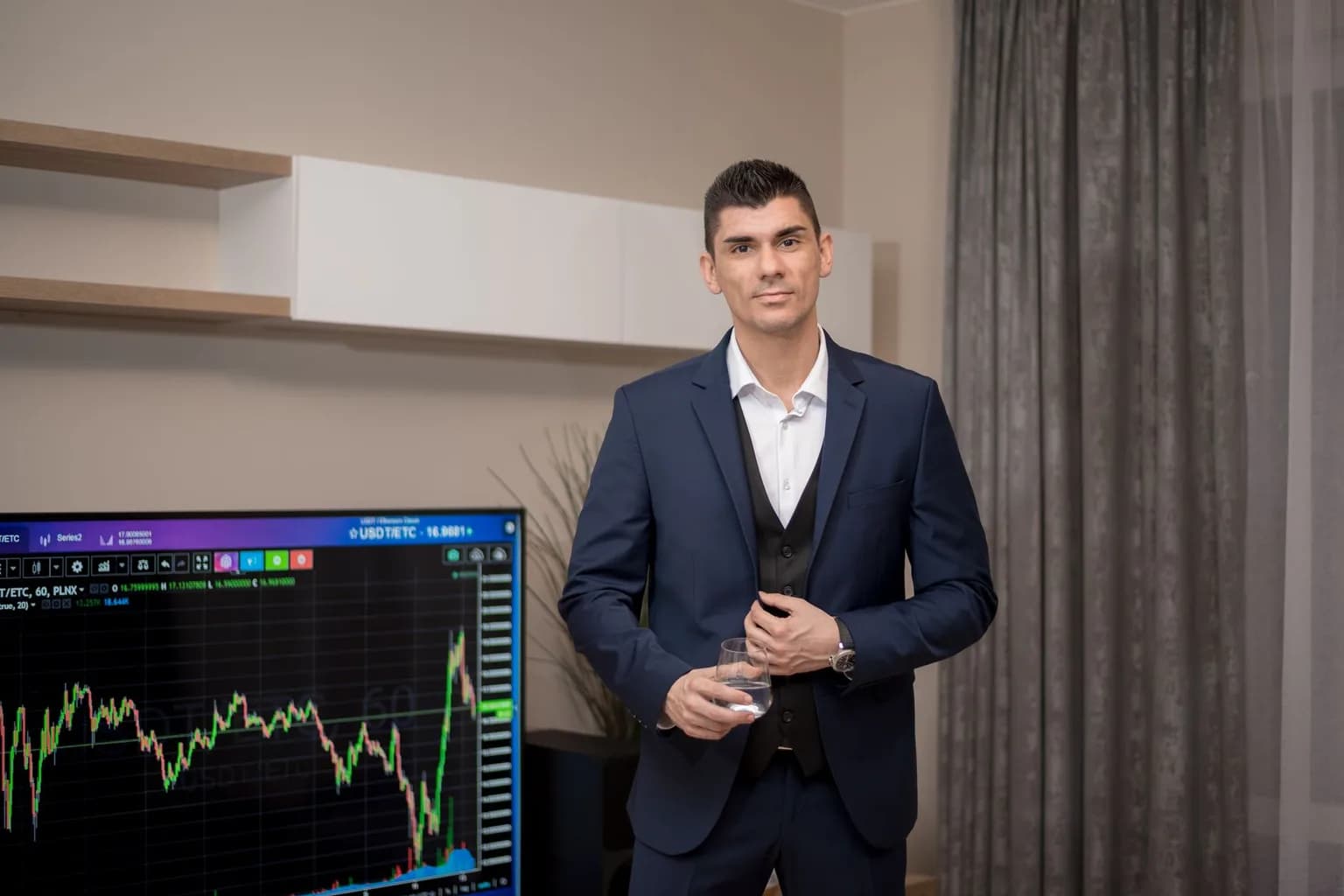
At a meeting at Kametstali to present the Golden Star of Metinvest award to leading employees, Yuriy Ryzhenkov heard from Andrii Prokofyev, an electrician at the coke shop and a Golden Star of Metinvest-2023 winner. Prokofyev said the meeting had given employees confidence that they were moving forward despite difficult times.
Ryzhenkov, Metinvest’s chief executive since 2013, oversees production, sales, debt and personnel at Ukraine’s largest steelmaker. He now says the company is fighting to keep its industry alive after a succession of attacks and new barriers to selling steel abroad.
“If nothing is done, it's almost inevitable,” Ryzhenkov said when asked whether Ukraine’s steelmaking industry could disappear.
Metinvest employs 33,700 people. More than 8,000 of them are fighting Russian forces, while hundreds of their colleagues have been killed in the war.
Since Russia’s full-scale invasion more than four years ago, Metinvest has repeatedly sought to restore operations after Russian strikes. Ryzhenkov said the company had been weakened with each repair effort. “We've been hit numerous times. Our facilities have been hit over the last four and a half years, and even though we were restoring them after every hit, you lose. You get weaker with every such attack.”
In wartime, he said, restoring a plant fully is beyond reach. “In wartime you cannot afford to restore to the original state. You do the best you can to continue operating and that best is never the ideal.”
August and September 2026 brought one of the most severe bombing campaigns against Metinvest’s facilities. Russian bombing forced the company to halt operations at both of its steel mills.
An attack on Metinvest facilities in Zaporizhzhia on 11 August killed eight employees and injured 28, forcing a full shutdown. Zaporizhstal was then struck on 27 August and again on 12 September, damaging production, power, transport and logistics infrastructure.
A ballistic strike on Kamet Steel on 5 September killed four plant employees and one contractor, stopping production. Ryzhenkov described a recent single bombing that killed 14 people as probably the company’s largest single loss since 2023.
The military pressure has arrived alongside a shrinking route to market. New EU tariffs on steel imports took effect in July 2026, cutting Ukraine’s key steel tariff-rate quota by 60%. The reduction is expected to cut steel imports from Ukraine to the EU by 1.3 million metric tons per year.
Ryzhenkov also said the blockade of Ukraine’s seaports was more severe than in 2022, preventing the normal export of steel products. “There is pretty much no future without a market to which you can sell,” he said.
Ukraine produced 21.4 million metric tons of crude steel in 2021, before Russia’s full-scale invasion. Ryzhenkov said the present period was as tough as any Metinvest had faced since the invasion began.
He argued that supporting industry would strengthen the country’s wider capacity to endure the war. “If you want to support a country, it is better to give its industry the opportunity to work and pay taxes. These funds will strengthen the country's defense capability and economy.”



Comments (0)