
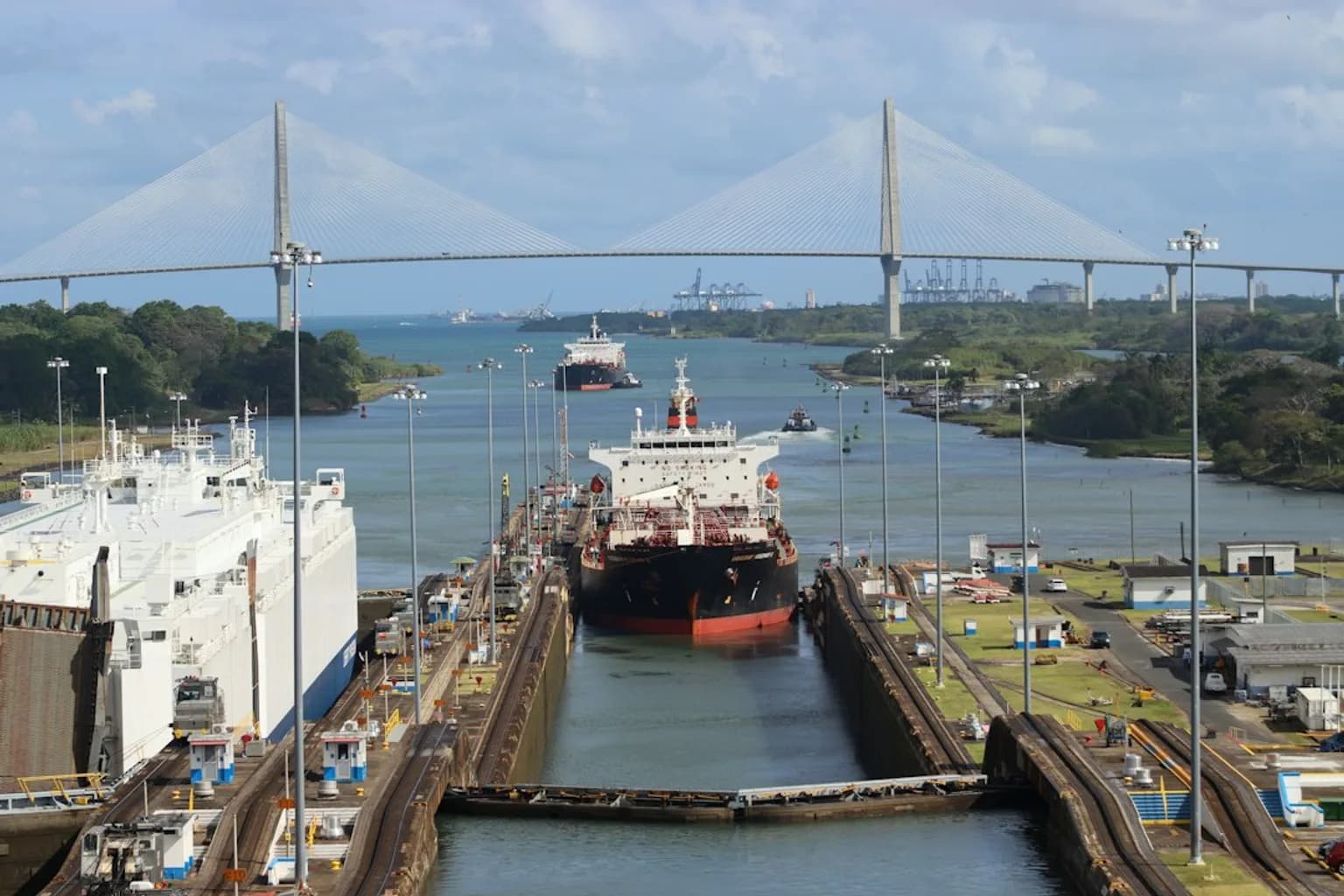
Ilya Espino de Marotta, the 64-year-old engineer and first woman to run the Panama Canal, is leading the canal authority’s response to what may be the waterway’s most severe drought.
The immediate decision is to reduce the number of ships allowed through each day from 36 to 32, effective September 15. The authority is also lowering the maximum allowable draft from 15.24 metres to 14.63 metres.
For shipping companies that cannot fit within the reduced capacity and draft limits, the alternative is a route around Cape Horn. Vessels are being diverted either through the Drake Passage or the Strait of Magellan rather than through the canal.
The canal is an 80-kilometre waterway between the Atlantic and Pacific oceans. Its locks lift and lower ships across the isthmus, and the route handles 5% of global maritime trade.
That system relies on freshwater held in the artificial lakes Gatun and Alhajuela. Each canal transit uses about 200 million litres of freshwater.
An El Niño weather pattern has brought severe drought across Panama’s watershed, with rainfall well below forecast and water levels in the two lakes falling sharply. The lakes also supply drinking water for over half of Panama’s population, and have dropped to critically low levels.
Panama declared an emergency over El Niño as the drought developed into what is shaping up to be the most severe ever recorded. The effects of El Niño are intensified by climate change, although a World Weather Attribution study found El Niño was mostly responsible for the low rainfall that disrupted canal shipping in 2023.
This is only the second time in the canal’s history that authorities have imposed drought restrictions. Between 2023 and 2024, El Niño-related restrictions resulted in 2,700 fewer ship transits.
In January 2024, authorities cut ship crossings by about 36 percent after drought reduced the water available for lock operations. Ricaurte Vásquez, then canal administrator, told AP that lost revenue might reach 'between $500 million and $700 million in 2024'.
The route south brings its own operational risks. Ships using the Drake Passage face harsh open-ocean conditions, including slamming, cargo shift, green seas on deck, excessive vessel movements and heavy-weather damage.
The Strait of Magellan avoids much of that exposure. It is narrower, however, with strong currents, restricted waters and compulsory pilotage, and it is slower and costlier to transit than the Drake Passage.
Long stretches in colder conditions can also create fuel problems. Many vessels were not designed for prolonged cold-climate operation, and limits in their fuel-heating arrangements can complicate a Cape Horn diversion.
The drought is expected to continue until mid-2027. A long-term reservoir project is not due before 2031, leaving the canal exposed to further restrictions in the years between.




Comments (0)