
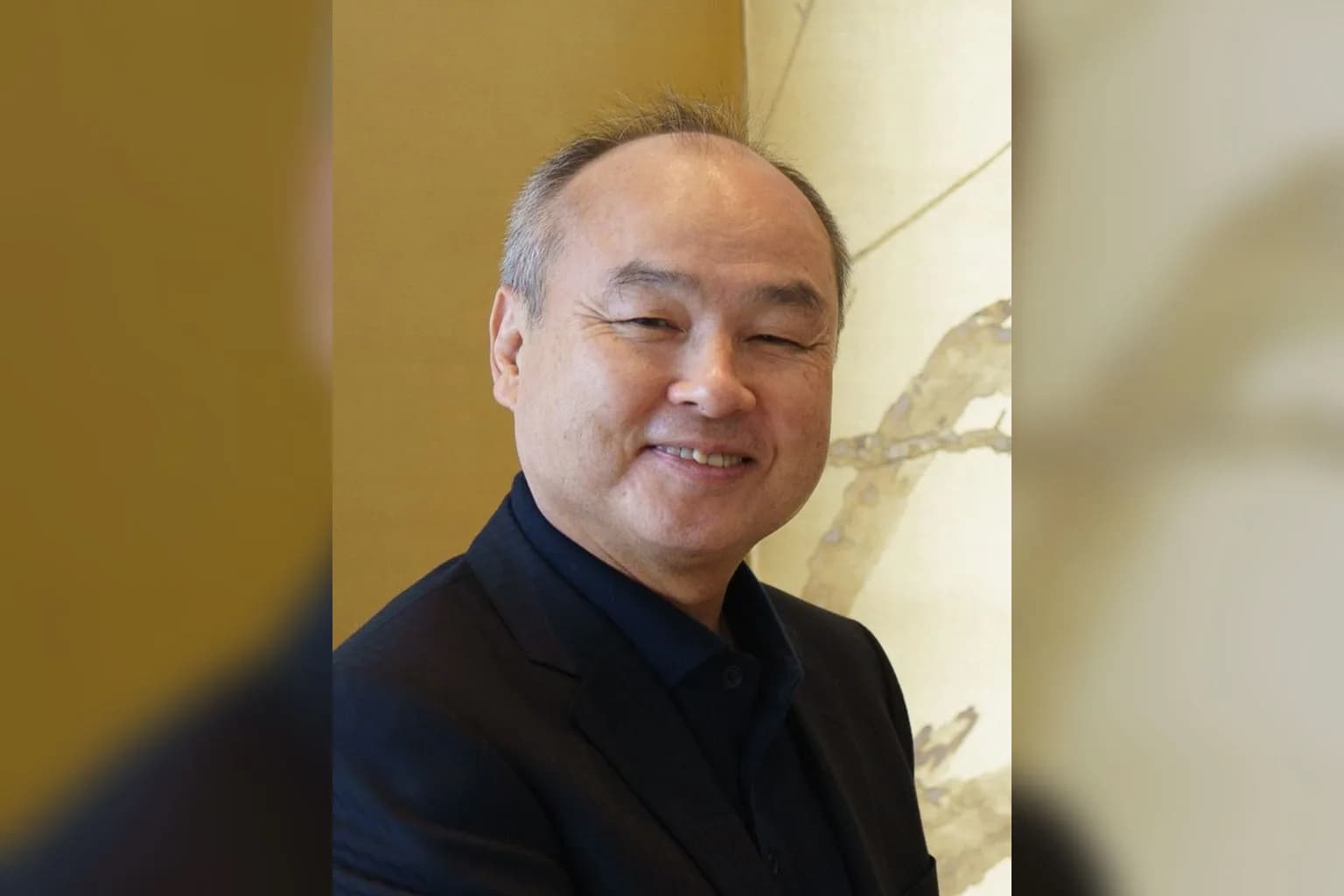
Masayoshi Son stood alongside US President Donald Trump, OpenAI chief executive Sam Altman and Oracle founder Larry Ellison at the White House on 21 January 2025 to announce Stargate, an artificial intelligence infrastructure project valued at $500 billion. An aide placed a step stool for Son as he took the podium in the Roosevelt Room, and Trump and the SoftBank chief shared a laugh.
For Son, Stargate was part of a far broader attempt to place SoftBank Group Corp at every layer of artificial intelligence. The company pledged $19 billion of Stargate’s initial $52 billion in commitments for a 40% stake, while Son has directed a war chest of roughly $180 billion towards AI.
The scale of that programme has made financing the central challenge. SoftBank’s total investment in OpenAI is $30 billion, and Son is leading a $40 billion OpenAI funding round at a $300 billion valuation.
Son, 67, founded SoftBank in September 1981 and has remained its chairman and chief executive throughout its history. He built the company from a software distributor into a global technology investment house, including through the $100 billion Vision Fund, launched in 2017 with backing from Saudi Arabia, Abu Dhabi and others.
At SoftBank’s annual shareholder meeting in Tokyo on 21 June 2024, Son set out the personal urgency he attaches to artificial superintelligence. “I think I was born to realize ASI,” he said, describing it as ten thousand times smarter than any human genius. He also told shareholders: “Two years ago, I am getting old, rest of my life is limited, but I haven't done anything yet and I cried so hard.”
Son describes the strategy as controlling “all four corners of AI”: models, chips, robotics, and AI infrastructure. Yet SoftBank carries the memory of earlier investment reversals. Its two Vision Funds recorded 4.3 trillion yen ($32 billion at the time) in losses in the 2022–23 financial year, and Son’s multibillion-dollar WeWork bet nearly destroyed the Vision Fund.
His relationship with Altman began in 2017, when Altman ran the startup incubator Y Combinator. Beginning in 2024, Son committed to OpenAI and Stargate as the two companies’ financial ties deepened.
Earlier in the summer, lenders questioned the risks of a planned $10 billion loan secured against SoftBank’s OpenAI stake. SoftBank reduced the size of the loan and used its own balance sheet as collateral instead.
Separately, Altman said OpenAI would not go public in October and indicated that an initial public offering could be delayed until 2027. SoftBank had expected to use October IPO proceeds to repay the unpaid portion of a bridge loan.
SoftBank’s shares fell 12% after Altman’s announcement, wiping out $38 billion in market capitalisation in a single session.
On 15 September, SoftBank said it would refinance nearly $12 billion of a $40 billion bridge loan due in March 2027. The company also said it would issue $10 billion in junk bonds to support a third investment in OpenAI on 1 October.
In November 2025, SoftBank sold its entire remaining Nvidia stake for nearly $6 billion to fund its OpenAI investment. The group reported net profit of ¥5 trillion ($31 billion) on sales of ¥7.8 trillion ($49 billion) in FY2025–26.
SoftBank’s investors now face unanswered questions over whether the group can maintain its AI spending without further asset sales or fresh capital, and whether lenders will impose further constraints. Son’s plan to realise artificial superintelligence depends on keeping the funding in place.




Comments (0)