
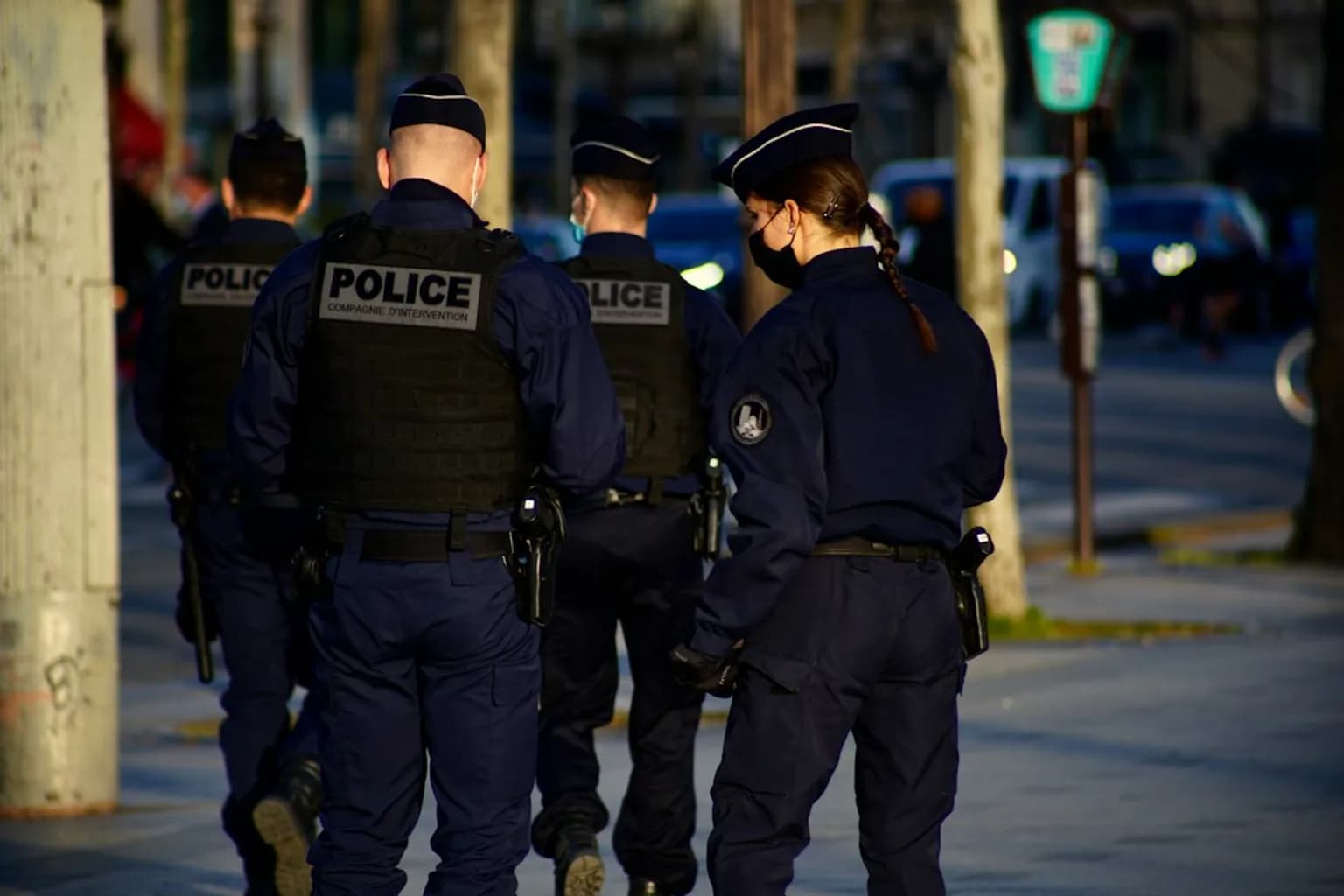
A 17-year-old was trying to activate an improvised explosive device near a building containing Bank of America offices in central Paris when police stopped the attempt on the night of March 27-28. The teenager was later released under electronic monitoring, after the Paris Court of Appeal’s instruction chamber upheld an investigating judge’s decision that allowed him to return to school.
The FBI has told French investigators that it believes an Iraqi man detained in Turkey, Mohammad A. S., was the alleged organiser of the thwarted attack. Mohammad A. S. was detained in May, and French authorities received the FBI’s information at the end of July.
The alleged plot unfolded over two nights. Three adolescents made an initial attempt on the night of March 26-27, but a marked police vehicle outside the building prevented them from proceeding. Two adolescents returned the following night, when police intervened and detained the 17-year-old at the scene.
Investigators say the adolescents had been recruited through Snapchat and offered €500 to €1,000 to place the device and film its detonation. An operator who accompanied the teenager was later detained, along with an alleged coordinator accused of hiring the adolescents.
Six people have been charged with participation in a terrorist community and manufacturing explosives with the aim of committing a terrorist act. Two Belgian women were extradited to France this summer, charged over their alleged roles in the plan and remanded in custody.
The FBI’s assessment places the Paris case within a wider alleged campaign. It says Mohammad A. S. may have been involved in organising 18 different actions in Europe against American and Israeli targets. The bureau says he has connections to radical groups including ‘Kataib Hezbollah’.
American investigators believe that, after US and Israeli attacks on Iran, Mohammad A. S. was tasked with ‘activizing terrorist cells’ in European countries. They say he was instructed to recruit people from criminal circles to carry out violent acts.
French prosecutors had already said in April that the Paris plan “appears to be able to be linked” to the pro-Iranian group ‘Harakat Ashab al-Yamin al-Islamiya’ (Hayi). They added that the connection had not been formally established at that stage. Harakat Ashab al-Yamin al-Islamiya (HAYI) has claimed responsibility on Telegram for attacks across Europe.
The material provided by investigators does not establish whether Mohammad A. S. communicated directly with those involved in Paris, or whether he acted through intermediaries. It also does not identify the specific actions included in the FBI’s figure of 18, or establish whether Kataib Hezbollah formally authorised the Paris plan.
Security concerns have also been reported in Britain. A local farmer alerted authorities on Sunday after seeing five balaclava-clad suspects metres from RAF Fairford military base near the Cotswolds, which was used by the US military to conduct air strikes on Iran. Three vans packed with explosives were positioned near the base, according to the account.
In October 2025, MI5 director general Sir Ken McCallum said security agencies had tracked “more than 20 potentially lethal Iran-backed plots” in the previous year. Parliament’s Intelligence and Security Committee said in a July 2025 report that Iran posed a “wide-ranging, persistent and unpredictable threat”.
Foreign minister Ed Miliband has also told his Iranian counterpart, Abbas Aragchi, that Britain will “not tolerate intimidation, threats or hostile activity on UK soil” by groups connected to Iran. The two met on the margins of the UN General Assembly in New York.





Comments (0)