
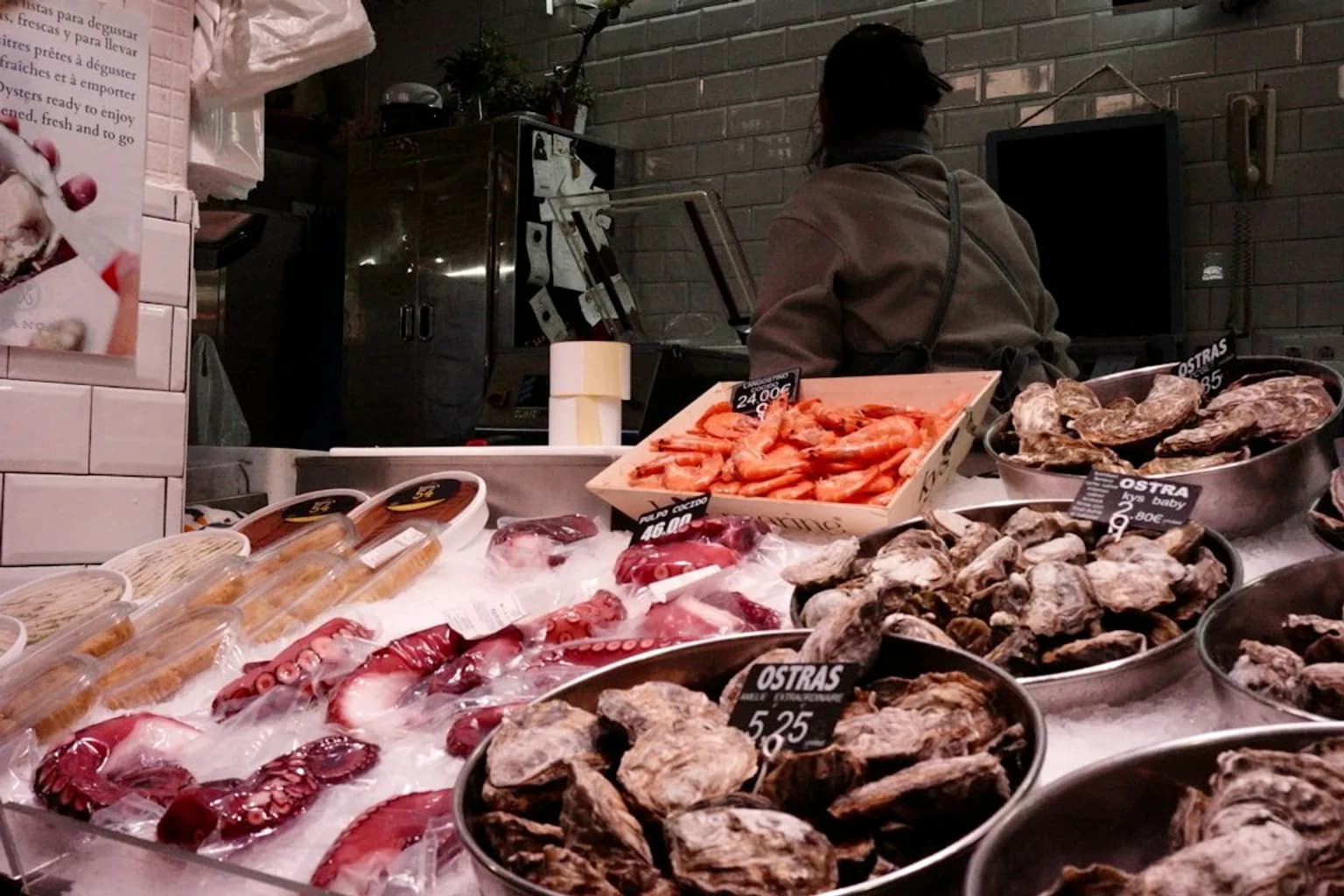
David Leck remembers going to Hood Canal as a child with his parents, using a screwdriver to take oysters from the beach while his family dug for clams, set crab pots and fished for salmon. Leck, now an oyster buyer for Elliott's Oyster House in Seattle, recalls a shoreline so full of oysters that “you couldn't walk without oysters everywhere”.
That abundance has faded. Warmer summers have brought more people in pursuit of fewer fish and shellfish, while concerns over bacteria and toxic algae have narrowed the times when crabs, clams and oysters can be harvested.
At Elliott's Oyster House, an oyster that sold for $1 apiece now costs $4.50.
The pressure extends far beyond one shoreline. The Food and Agriculture Organization estimates that more than 30% of world fish stocks are overexploited. In the Northwest Atlantic, 44% of fish stocks assessed in 2023 were overfished.
Fishing crews also face a steep increase in the cost of getting to sea. US retail diesel has climbed to $6.529 per gallon, its 11th consecutive weekly increase, and fuel can make up as much as 40% of the cost of a fishing trip.
In Maine, lobster boats have stretched their trap-hauling cycles from every 4–5 days to every 7–10 days. Gulf shrimp operators have skipped voyages because a roughly 15,000-gallon fill-up can overwhelm the revenue they expect from a trip.
An Alaska industry representative described the calculation plainly: “You can't just go out and hope to break even”.
For shrimp operators, the squeeze comes alongside weaker returns. US shrimp value fell by about half from 2021 to 2023.
The effects reach consumers and fishing communities alike. Fish and shellfish once provided reliable, affordable protein for working people in the Pacific Northwest, while constrained harvests, reduced catches and costlier operations have made seafood less accessible.
An estimated 600 million people around the world depend on fish for their livelihoods. Nearly seven million people in West Africa rely on fishing activities for food and employment, where food insecurity is associated with rising hunger, conflicts and high food inflation.
Fish farming now supplies half of the seafood eaten globally. Yet two-thirds of global aquaculture produces species fed fishmeal and fish oil, and a farmed seabass or sea bream at some Mediterranean farms consumes more than two-and-a-half times its weight in wild-caught fish.
Diesel supplies remain tight. US diesel inventories stood at 107.9 million barrels as of 11 September, the lowest level for that point in the year in EIA records dating to 1982. The EIA forecasts average US retail diesel prices of $5.07 per gallon in 2026 and $4.40 in 2027.




Comments (0)